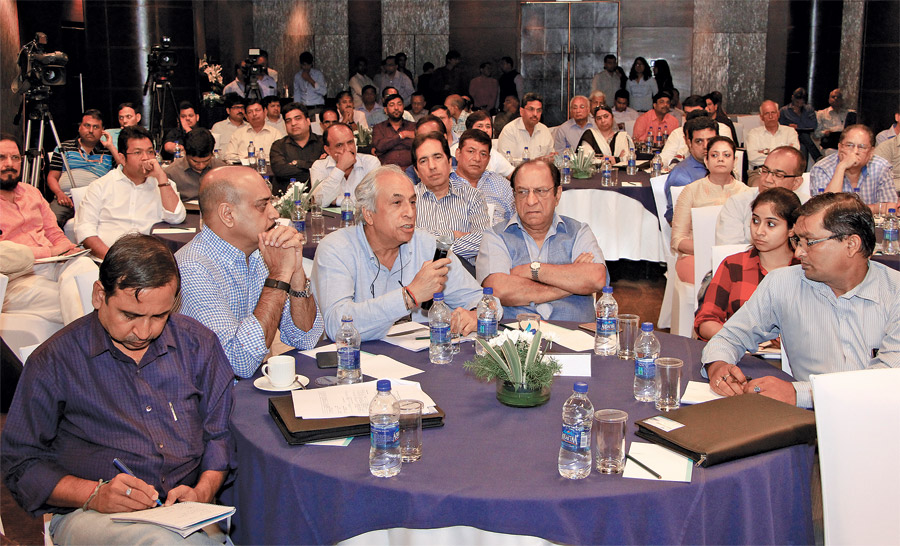
The ‘Special Package’ for the Textile and Apparel Industry of Rs. 6,000 crore (US $ 923 million), basically targeted at enhancing the competitiveness of the apparel exporters, announced recently by the Central Government, has begun to show its impact as 35 Indian apparel exporters have already announced investment plans of Rs. 623 crore (US $ 96 million) over the next three years that will create employment opportunity for more than 30,000 people. This is just the tip of the iceberg as many other exporters are also ready with their investment plans but are waiting for the fine print of the ‘Special Package’, which Sunaina Tomar, Joint Secretary – Exports, Ministry of Textiles (MoT), assured exporters that it would be out soon during an event organized by Apparel Export Promotion Council (AEPC) to thank the Government for the path breaking initiative. “This package will work as a social transformation tool, as the apparel industry provides ample opportunity for employment, majority of who are women. Now more and more women will get jobs and financial security, a must for the upliftment of the society,” she added.
Rs. 623 crore investment announced in 120 hours
Commitment of 30,120 additional jobs in three years
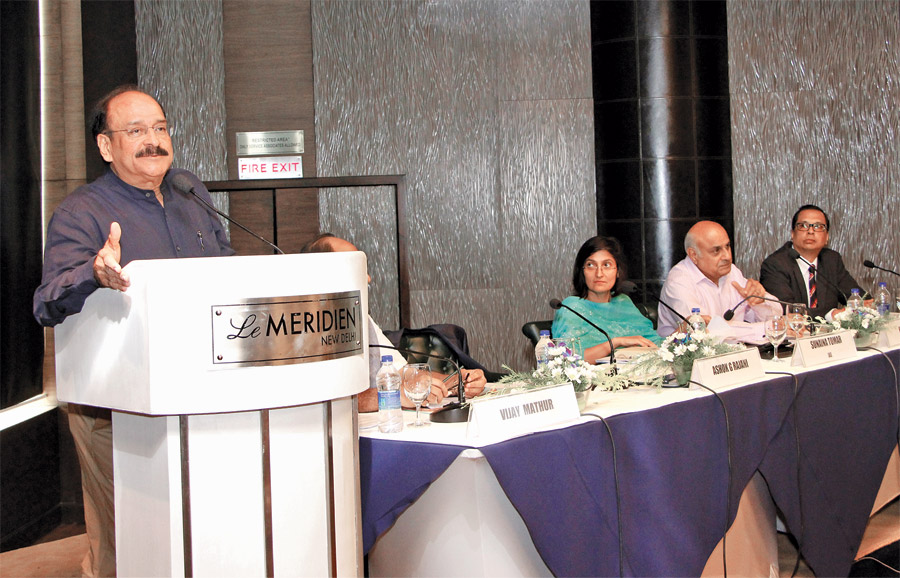
Many top apparel exporters from across India were present at the event and all of them are eagerly waiting for the fine print of ‘Special Package’ as some of them do have apprehensions about the terms and conditions regarding the implementation of the incentives announced by the Government. Meanwhile, AEPC has assured MoT that it will be ready within a week with its action plan to achieve the target of creating 1 crore new jobs along with raising an investment of Rs. 74,000 crore (US $ 11,385 million) for the sector, which is expected from this package.
Fine print to be announced soon
AEPC to be ready with roadmap in a week’s time
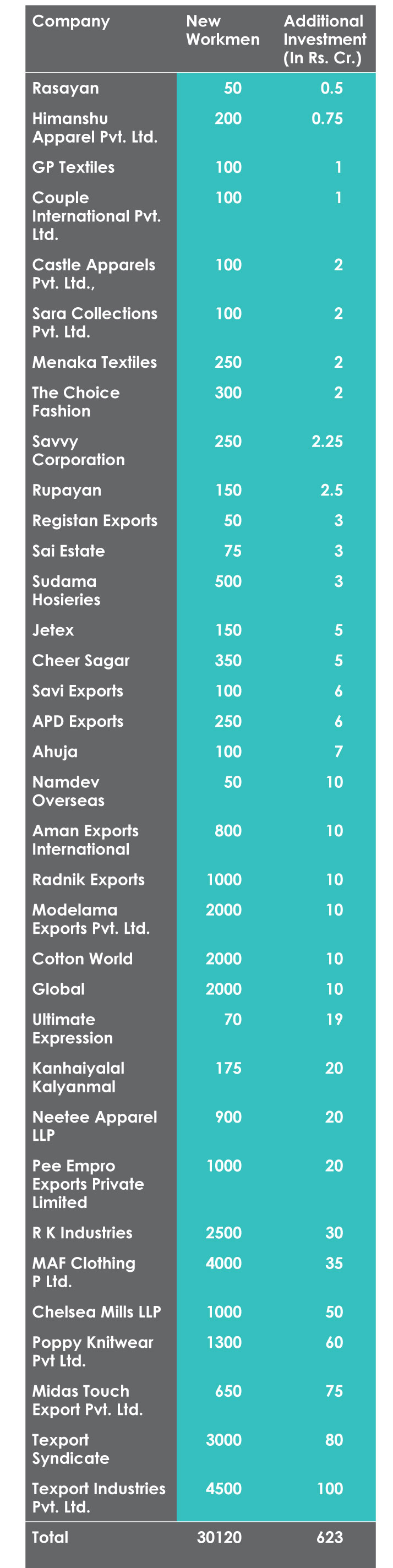
Ashok Rajani, Chairman, AEPC indicated that the action plan will also include focus on HS Code-wise promotion of garments, to accelerate export growth rate in preferential markets and market diversification, facilitate input availability for enhancing competitiveness and speed to delivery, and a roadmap for publicity plan and review. He added, “We not only have to reach the target of US $ 30 billion, which the Government has set for us, but we also have to go ahead and exceed that target. With our strategies and reforms in place, I don’t think that this is going to be difficult.” He reminded the gathering that it was now a challenge for the industry players to perform. “We have discussed with machines and fabric suppliers to provide for ready stock/proper bonded warehouse so that the exporters need not wait to get the machines/raw material in their quest for expansion,” he added.
 Championing for long-term solutions to competitiveness, Sudhir Dhingra, CMD, Orient Craft, Gurgaon put in a word of caution, claiming that the package by itself was not enough. “This package will make us price-competitive to a certain extent, but real exponential growth will only come in if bi-lateral trade agreements are entered into with both the US and EU, which constitute the largest share in India’s export basket,” he said. Narendra Goenka of Texport Industries, who has already pledged an investment of Rs. 100 crore, said that the proposed package is not for us or for our buyers, but is in fact for our workers and to make them more efficient and competitive.
On a lighter note, Sunaina Tomar remembered the days when Virender Uppal, Ex-Chairman, AEPC and fellow exporters were ‘sick’ of the many meetings they had with the MoT and said, “Kuch hota to hai nahin” (nothing happens), was the common rejoinder from the team, but now the Government has given a level playing field to the exporters and the onus is now on the exporters to perform.”
Apprehensions/Suggestions
Exporters were of the opinion that the package is for only three years but it should be extended to five years as it takes almost one year to start a new factory; so they will have most of the benefit for two years only. One of the exporters at the event was of the opinion that as PF-based incentives are for new workers; exporters will prefer to hire new workers rather than continue with the existing ones. If a worker does not complete 150 days in a particular fiscal, than will he get bonus, etc. of that period in next year, and do the factory owners get rebate of his working days in next fiscal? Anil Peshawari of Meenu Creation said, “Currently we don’t even know the definition of ‘new worker’, and how it will be implemented; package is one thing, but sense of implementation is another thing. It is too early to say how it will roll out. Government needs to check the sealing of overtime, like it should have the same on a yearly basis.” Rajiv Mehta, Rainbow Fabart, Noida informed, “Expansion plan majorly depends on demand from international market not just on special package, so it will take some time to decide about further investment.”
Special Package…
The ‘package’ increased subsidy under Amended-TUFS from 15% to 25% for the apparel sector.
A new scheme will be introduced to refund the state levies which were not refunded so far. Drawback at All Industries Rate to be given for domestic duty paid inputs even when fabrics are imported under Advance Authorization Scheme. This move will greatly boost the competitiveness of Indian exports in foreign markets and is expected to cost Rs. 5,500 crore (US $ 846 million) to the exchequer.
The Government shall bear the entire 12% of the employers’ contribution of the Employers Provident Fund Scheme for new employees of garment industry for first 3 years who are earning less than Rs. 15,000 per month. At present, 8.33% of employer’s contribution is already being provided by the Government under ‘Pradhan Mantri Rozgar Protsahan Yojana (PMRPY)’. Ministry of Textiles shall provide additional 3.67% of the employer’s contribution amounting to Rs. 1,170 crores (US $ 180 million) over next 3 years. EPF shall be made optional for employees earning less than Rs. 15,000 per month.
Overtime hours for workers not to exceed 8 hours per week in line with ILO norms.
Reduction in number of working days from 240 to 150 under section 80JJAA of Income Tax Act.
Considering the seasonal nature of the industry, fixed term employment will be introduced for the garment sector. A fixed term workman will be considered at par with permanent workman in terms of working hours, wages, allowances and other statutory dues.