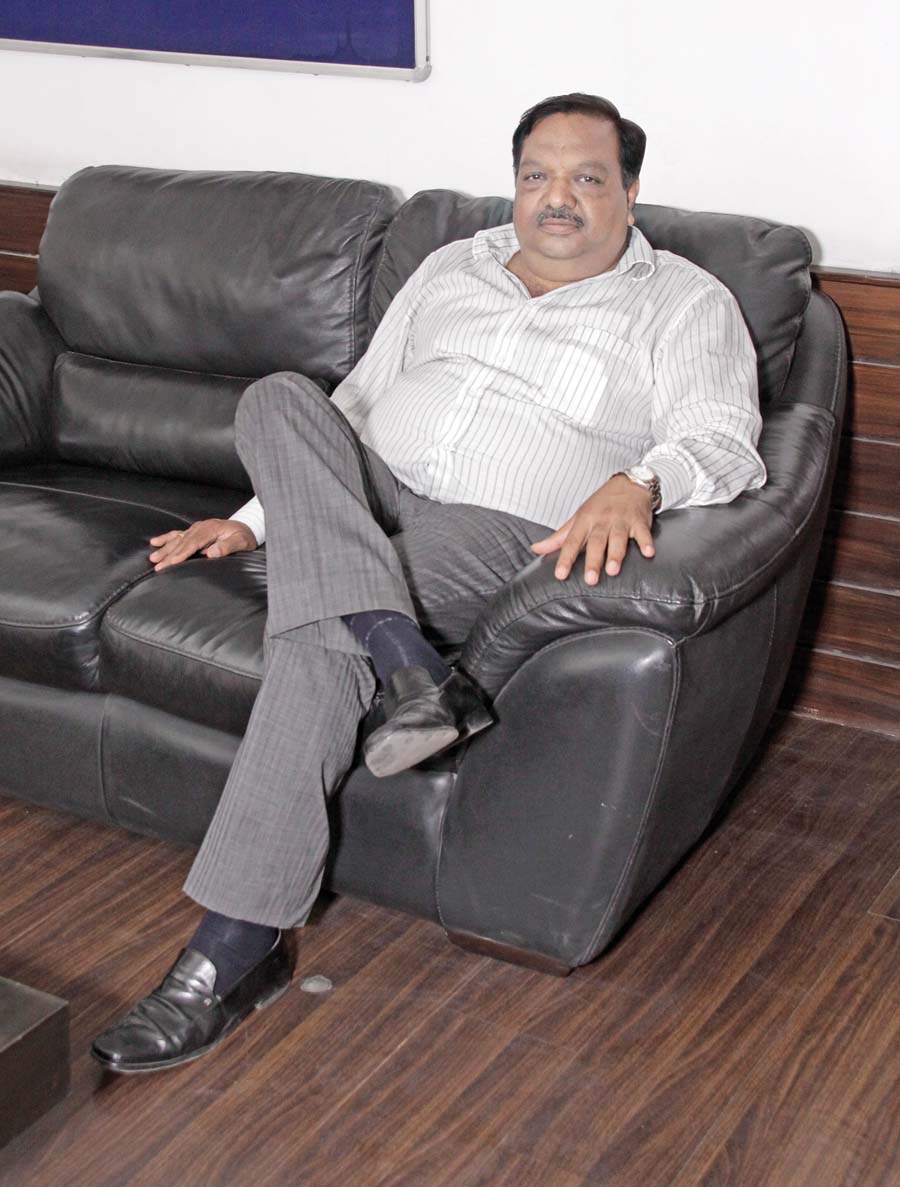
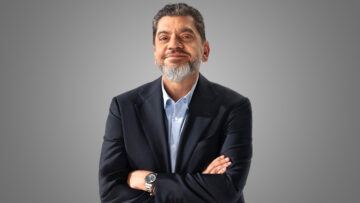
Narendra Aggarwal, Chairman & Managing Director, Shivalik Prints Ltd.
It is always exciting to unearth companies which have maintained a low profile, but seen consistent growth, setting higher benchmarks with strategic competence. The latest to come into our radar is Shivalik Prints, which is set to clock a turnover of over Rs. 800 crore this FY with Rs. 600 crore coming from garments alone… Narendra Aggarwal, Chairman & Managing Director, Shivalik Prints Ltd. shares with Team Apparel Online the strategy which has backed the phenomenal growth of the company, while his son Nishant, now Director in the company details the vision…
Shivalik Prints has come a long way from the small family business, set up in 1998 in Faridabad with one factory. Today, the company boasts of 9 factories with production capacity of 5.5 million pcs./1400 tonnes of garment per month. With integrated strength, the company had the confidence to enter the exports arena in 2008, when recession was impacting the markets and most players were at a crossroad. The move has handsomely paid off with Shivalik Prints emerging as one of the frontrunners in the knits export industry. Interestingly, while the company agrees that the domestic market is giving better margins, but still it concentrates majorly on export market and is looking for growth from the same. With SPL now fully integrated into the company and all debts taken care of, Shivalik Prints is confident of reaching much higher goals in exports in the next few years.
Indeed the company has with its 9 associate concerns grown phenomenally in the last 5 years. “On an average we are consuming around 900 tonnes of yarn every month and our knitting capacity is around 50 tonnes per day. We have more than 153 knitting machines and 6,000 sewing machines with 100% in-house processing. We also have 5 garment manufacturing units employing more than 10,000 people,” informs Narendra. 98% of the knitted fabric manufactured gets consummated in-house for garment manufacturing. The company owns machines from Fukuhara, Terrot and Mayer & Cie for circular knitting and Shima Seiki for flat knitting, compatible to run all gauges and produce fabrics like single jersey, jacquard, interlocks, rib and waffle structures and auto stripers.
Narendra subscribes to the view that a vertically integrated system facilitates a lot of opportunities for the manufacturers. “Normally, exporters face problems and delays in fabric knitting or processing, but because of being self-dependent, and having 2 huge processing units, even for dyeing one tonne of fabric, we can use our processing unit. And there is also advantage of doing job-work for other exporters as well,” avers Narendra. From knitting to processing to printing, the company works with high-quality machines to add on to its infrastructure. The company has dyeing machines from Brazoli Soft THIES and SCLAVOS, giving a dyeing capacity of 50 tonnes of fabric per day, Spectra flash from Data Color and Macbeth spectra light color matching cabinet for ensuring consistent dyeing and fabric finishing machines including tubular twister machine from Bianco, hot air stenter, Korea and compaction machine from Lafer compaction machine from Italy with finishing capacity of 55 tonnes per day.

Other than dyeing and processing the company runs 3 rotary printing machines for both knitted and woven fabrics. Knit being a stretchable fabric, suffers through spiralling issues at the edges and on account of that the company has invested on a new rotary machine from Stormac, which is entirely dedicated for printing knits. It has reduced the hosiery fabric wastage while printing to as low as 2% from the earlier 7-8%. Printing is and will always remain in fashion, and though digital printing is picking up, the company is currently not making any investment on the same. “Digital is never going to overshadow other printing techniques, as it is not suitable for bulk printing, because of being expensive and mostly designers and very high-end players are looking at the option,” opines Narendra. He adds, “I agree that at the end the output is excellent and process wastage is zero, but still, when we are printing at Rs. 20 a metre, digitally it is Rs. 100 or even more. Volumes are less and only 1% of the market reaches out to that segment.”
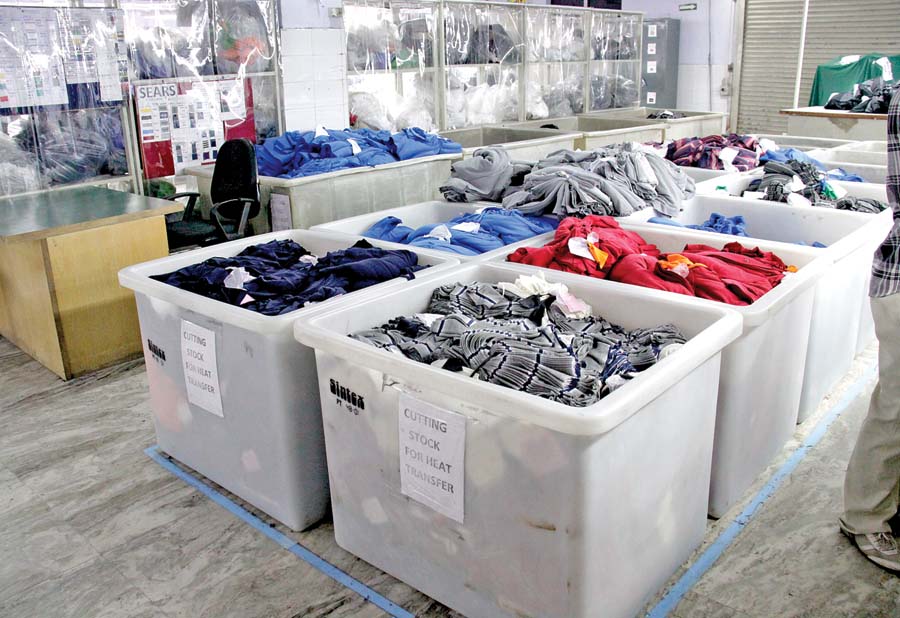
In India, pigment printing is given more preference, which is a non-breathable printing technique, and that is one big reason, India is lagging behind in printing and is getting less export orders. If you coat the total surface area of a fabric with pigment dye, then it behaves like an umbrella cloth and due to lack of aeration and moisture it is bad for the skin as well. Narendra suggests the use of reactive dyes as an alternative to pigment since the colours are bright, they are harmonious with the climatic conditions, water discharge is less damaging, and the printed fabric retains its natural properties with 100% breathability. “I am very confident that, if a garment is printed with reactive dye, then there are more chances of getting repeat orders,” says Narendra.
[bleft]Shivalik Prints Limited is today equipped with in-house facilities of knitting, washing, dyeing printing and manufacturing around 3.5 million pieces of garments per month in its various facilities in Faridabad working with Walmart, JCPenney, Kohls, H&M, Target Sourcing Corp., Sears/Kmart to name a few. Shivalik, strongly supported by the next generation together with a strong team of professionals. Shivalik plans to produce 5 million pcs. per month in the next two years. The company has been honoured with the Vendor Partner Excellence Award by Target Sourcing Corporation, Customer Excellence Award by the Indian Overseas Bank and Export Excellence Award by the Chief Minister of Haryana.
[/bleft]
While in hosiery, the capacity utilization at Shivalik Prints is 100%, in woven the annual capacity utilization is not more than 30%, because of the seasonal nature of the business. “In woven dyeing and printing, we can comfortably do 80,000 metres every day, but from August 1st onwards, the average has been around 60-65,000 metres, which is a good for us because until end July (April-July), it was roughly only 15,000 metres per day.” Doing 100% job-work for exporters in all kinds of woven fabrics, Shivalik Prints caters to 70-75 exporters including Orient Craft, Richa Exports, Shahi Exports. Narendra agrees that in September the industry has picked up, but he also states that woven industry has been really bad since the last 2 years.
Working towards sustaining the environment, the company installed a water recycling unit with an investment of Rs. 3.5 crore, 3 years ago, which recycles 85% of the waste water produced. Everyday more than 20 lakh litres of water is recycled and reused and only 14-15% of water is treated and discharged.
With both the sons, Nishant and Mukesh Aggarwal, concentrating on the export activities of the entire business, Narendra is convinced about the bright future of the company. “I am an administrator by virtue of experience and my experience plus my vision is what helps me run the business and take it to new highs,” he reasons.
Nishant joined the family business about 10 years back and is managing the exports for textile and garmenting, while also marketing of the entire business. His core focus is majorly on implementing new concepts and ideas into the old system to make Shivalik Prints the frontrunner in the industry. “Right now we have reached a level where we need to stabilize our growth, but 5 years down the line I want to be amongst the top 10 textile players across the globe. In the next 2 months, we will start working with our new unit with centralized yarn warehouse, fabric warehouse and garmenting unit comprising of 1800 machines. This unit will be able to deliver 1.4 million units per month making the total production capacity to around 5.5 million units per month,” concludes Nishant sharing his business strategy and vision for the company.



 Bharat Tex Special Report 2026