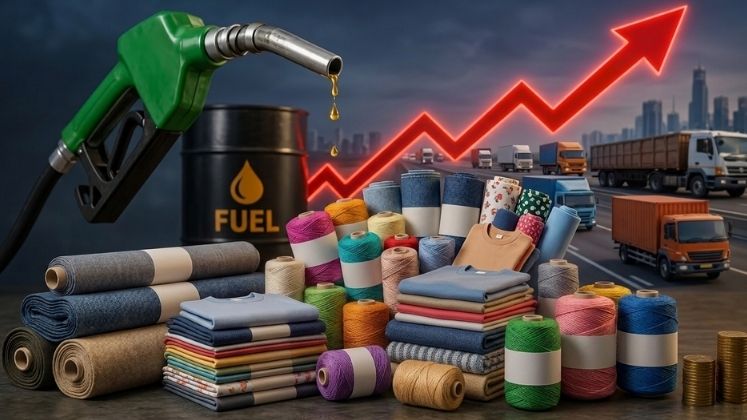
Transport costs for raw textile materials moving between Bengaluru and major textile hubs such as Mumbai, Surat and Ahmedabad have more than doubled in recent weeks, increasing operational pressure on textile traders and processing units already grappling with higher fuel and energy costs.
Industry participants said freight charges for a 60-kg shipment have risen to over Rs. 700 (US $7.29) from the earlier Rs. 300-350 (US $3.13-US $3.65) range, following increases in petrol, diesel and commercial LPG prices.
The latest rise in fuel prices has further intensified concerns across the textile sector. Petrol and diesel prices were recently increased by more than Rs. 3 (US $0.031) per litre across variants, while the price of a 19-kg commercial LPG cylinder also witnessed a sharp increase. Traders and processing unit operators warned that the combined impact could raise fabric costs and disrupt production cycles.
Trade activist Sajjan Raj Mehta said transport costs from Bengaluru to Mumbai and other textile hubs had risen sharply, with transporters citing supply issues and the possibility of further increases in freight charges.
According to traders, transporters had already begun revising rates upward in anticipation of rising fuel costs even before the latest petrol and diesel price hike was announced.
A trader said that they regularly source grey fabric, yarn and other raw textile inputs from Surat and Ahmedabad, while processed materials are sent back to Mumbai for distribution. He noted that higher transport costs were expected to directly impact the movement of raw materials throughout the textile supply chain.
Beyond transportation, textile processing units are also facing rising operational expenses due to higher commercial LPG prices. Industry participants said the recent Rs. 993 increase in the cost of a 19-kg commercial LPG cylinder has pushed textile processing costs higher by as much as 10%.
Commercial LPG is widely used in dyeing, washing, drying and finishing operations, all of which require large quantities of heat and steam during textile processing.
A tie-dyeing unit operator explained that fabric dyeing requires controlled heating for colours to set correctly, while washing, drying and finishing processes also depend heavily on heat generated through LPG-fired boilers.
He added that small textile processing units continue to rely on commercial LPG because switching to electricity remains expensive, piped natural gas infrastructure is unavailable in many areas, and alternatives such as diesel or coal are either more costly over time or face operational restrictions.
Many dyeing units operate under fixed-rate supply contracts, limiting their ability to immediately pass on higher operating costs to buyers and placing additional pressure on margins.
Traders and processing unit owners warned that sustained increases in fuel, freight and energy costs could eventually lead to higher garment prices and weaken the competitiveness of Indian textile manufacturers against production hubs such as Bangladesh and Vietnam.