Although the current times are definitely characterized by entrepreneurship, we rarely see fresh blood entering the apparel manufacturing business with new sophisticated set-ups, and the guild of apparel manufacturers continues to be dominated by companies established in the 1970s and 1980s. This status quo of the sector makes the entry of young individuals like Naveen Agarwal, Managing Director, Naval Exporters worthy of optimism. In an exclusive tête-à-tête with StitchWorld, Naveen shares his experience of the first year in the industry.
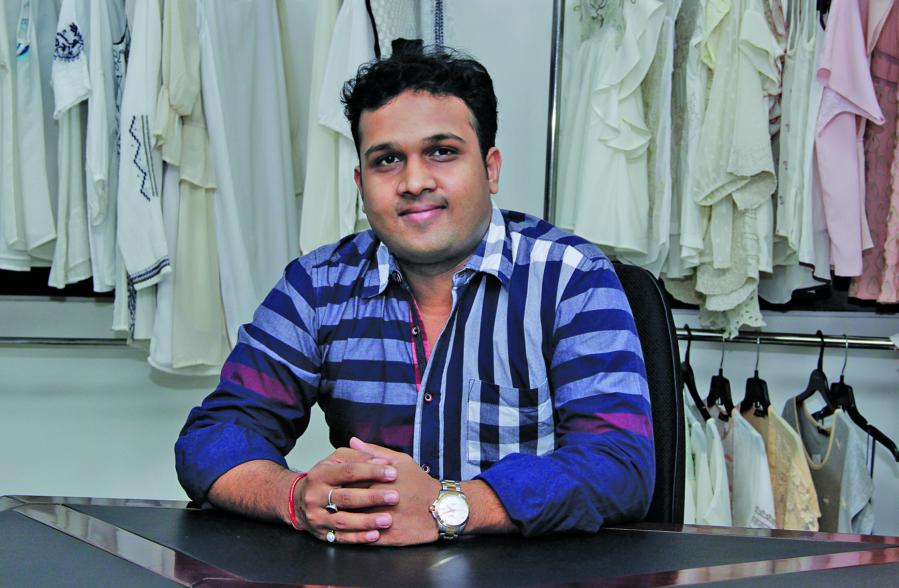
An idea, the seeds of which were first sown during Naveen’s college years while he was pursuing his MBA in International Business, urged Naveen to join an apparel manufacturing unit, which he did as an apprentice. The apprenticeship lasted three years and framed his mind on being a part of the industry. “Although the factory was known to me, I spent most of my time on the floor to get the maximum learning. It is here that I learned why planning fails despite all the efforts, how to resolve contingencies and how to handle the labour,” shares Naveen.
“Although the factory was known to me, I spent most of my time on the floor to get the maximum learning. It is here that I learned why planning fails despite all the efforts, how to resolve contingencies and how to handle the labour.” – Naveen Agarwal, Managing Director, Naval Exporters
Armed with his learning, Naveen took the final plunge in 2014 and set up Naval Exports in Noida. Manufacturing activewear and high-fashion kidswear and women’s wear, with an average FOB of US $ 4-5, the factory has clocked an impressive turnover of INR 10 crore (US $ 1.5 million) in its first year of existence. Boosted with confidence, Naveen plans to double the turnover in the coming year. “The strategy is to mainly improve our productivity and add new buyers,” Naveen explains. He is already in talks with leading buying houses of the country to tap upmarket mass volume buyers like Debenhams, George and NEXT, although the SEDEX-compliant factory already has an impressive line-up of buyers like Lager 157, Jamo, Jennifer, Splash, a French kidswear buyer, an Italian women’s wear buyer Twinset and a Japanese women’s wear buyer Snidel to name some. Naval is also catering to domestic buyers like Pantaloons and FREECULTUR. “The European market is slightly gloomy right now, while on the other hand, the domestic market is moving up and the order quantities are good,” shares Naveen, explaining the mix of buyers.

Infrastructure
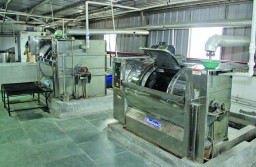
The Naval factory is equipped with 400 sewing machines, an in-house washing unit, embroidery machines and 4 digital sublimation printers. Interestingly, pattern making is done manually as well as on Optitex CAD. “We have both the arrangements because, there are times when the Optitex technician is not comfortable with a pattern, in that case the Pattern Master is useful,” shares Pramod Rana, GM of the factory. The factory also has its own RO plant and an ETP plant. “It is the right infrastructure which helps bring in the business,” argues Naveen. For an upstart, Naveen also has a strong design and product development team delivering 25-30 new samples in a day.
Competencies as a newcomer
Being a new factory, Naval is vying for the same business as the veterans of the industry through the same set of buyers. However, amidst this growing competition is exactly where Naval has developed a competency. “When there is some new or technically difficult product and all the old factories are not ready to do it, maybe because it is too difficult or the margin is less, such styles come to our factory. We get all the toughest things to do, it is challenging, but an opportunity as well,” Naveen shares. All the styles that go into production are tested on a pilot run before the production commences. “We make 50 odd garments of each size to check the effects post-washing and assess how the style can be simplified. This helps us to handle our production in a better way,” reasons Naveen.
Giving credit to the people working with him and who all understand the nuance of handling apparel manufacturing units, Naveen shares, “They all have a free-hand to run their operations.”


Managing Production
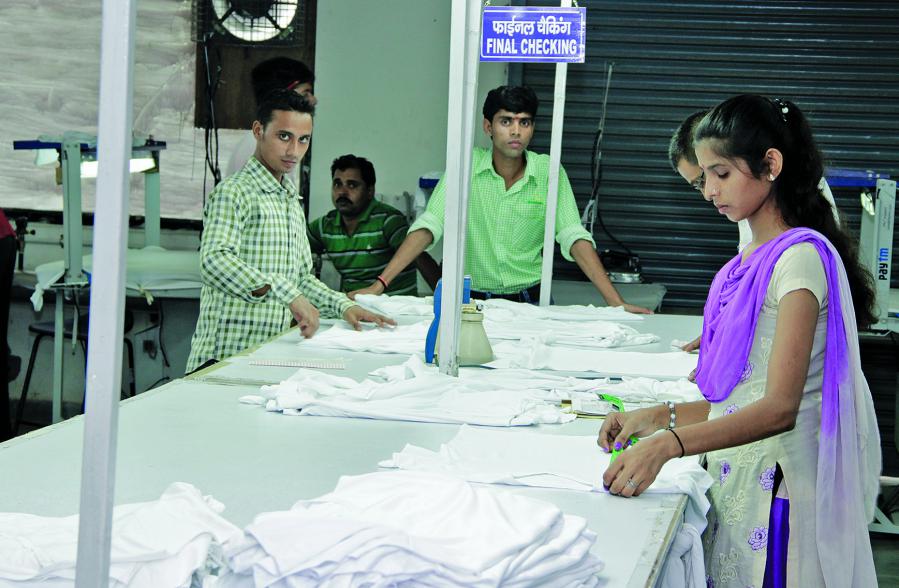
The factory is manufacturing both woven and knit garments. These two different types of garments are manufactured on different floors with dedicated operators for each category as the material handling skills required for each of the category is different. The sewing machines are arranged as 11 assembly lines and run on a single piece flow system. “The loading in the line is equal to the output. This helps keep the WIP and style changeover time low,” shares Pramod on how the single piece flow is maintained. The value chain is kept lean as even the cutting room stores a WIP of only two days. In case the style being produced has a high SAM value, WIP of 4-5 days is stored. The sewing floor is monitored on an hourly basis through an input-output register maintained by the line feeder. Other important documentations on the floor include the daily production report, dispatch report and defects per hundred units (DHU) reports. Interestingly, the factory does not have any incentive system and still registers negligible labour attrition, though Pramod does not directly take credit for this. “Why it has worked like this for us till now, is for no particular reason except that the entire industrial area is bereft of any incentive system,” Pramod avers.
The factory’s performance is currently being monitored through excel sheets. The KPIs which Naveen monitors include line-wise daily output, adherence of daily costing of the product to the cost approved, rejection rates and related reasons. Apart from giving a nearly live lowdown on the production status, these reports work as a database for reference when the factory will take up bigger orders in the future.
A finishing section of the factory has been reserved for catering to FREECULTUR – a domestic retailer of digital printed T-shirts. “On some days we are required to deliver 1,200 units and on other days the quantity goes up to 2,000. The fluctuations are too much for this line to be merged with the rest of the buyers,” Pramod explains. The reason why the program from FREECULTUR keeps the Naval team on its toes is that this set of operations works on a lead time of 24 hours and the orders are received three times a day. Given how swiftly the company is expected to deliver, it keeps in stock about a 1,00,000 T-shirts sewn in different colours and styles and delivers as per the orders received – printing, finishing, packing and dispatching the T-shirts as per schedule given.
The factory’s performance is currently being monitored through excel sheets. The KPIs which Naveen monitors include line-wise daily output, adherence of daily costing of the product to the cost approved, rejection rates and related reasons. “Apart from giving a nearly live lowdown on the production status, these reports work as a database for reference when we take up bigger orders,” concludes Naveen, hopeful that the systems and people will help achieve milestones in the future also.