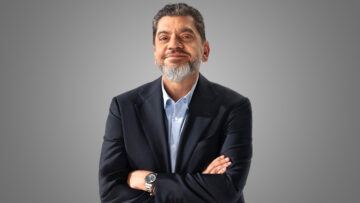
Vertically integrated apparel manufacturers generally focus on producing basic products with high volumes, and many believe that it is not possible to do value-added products in such a setup, profitably. An exception to this model is Mahmud Group, a completely vertically integrated denim jeans manufacturer with in-house spinning, weaving, sewing and washing. In just 9 years of existence, Mahmud has established its niche in manufacturing denim jeans for the European market with an annual turnover of US $ 120 million, producing 2.5 million metres of fabric and 9,00,000 denim bottoms per month. In an exclusive interaction with Apparel Online, Gazi Mahbubul Alam, Director, Mahmud Group highlights the niche of the company in a booming but competitive market; he also shares his future plans.

Long before the Prime Minister of Bangladesh declared that value-added products are the key for the apparel industry to achieve the US $ 50 billion export target, Mahmud Group had created a niche in the value-added segment, manufacturing yarns, fabric and jeans with Lycra content. “90% of the fabrics manufactured and 30% of the jeans manufactured by us are certified by Lycra for content, a niche we have focused on since our inception,” asserts Gazi Alam. This focus of the company requires strong backward linkages as stretch yarns and fabrics cannot be stored for a long period of time in the warehouse, otherwise they lose their stretchability. This is also the reason why yarns with Lycra content are not procured from China, and other denim fabric manufacturers in the country prefer buying it from local mills, which has made Mahmud Group a preferred supplier of stretch yarns in Bangladesh. “Due to our niche in stretch denim fabrics, we have automatically created a niche in manufacturing denim jeans for girls and women. On an average, 70% of all our production is for females and 30% of all the denim jeans produced by us has Lycra content,” shares Gazi.
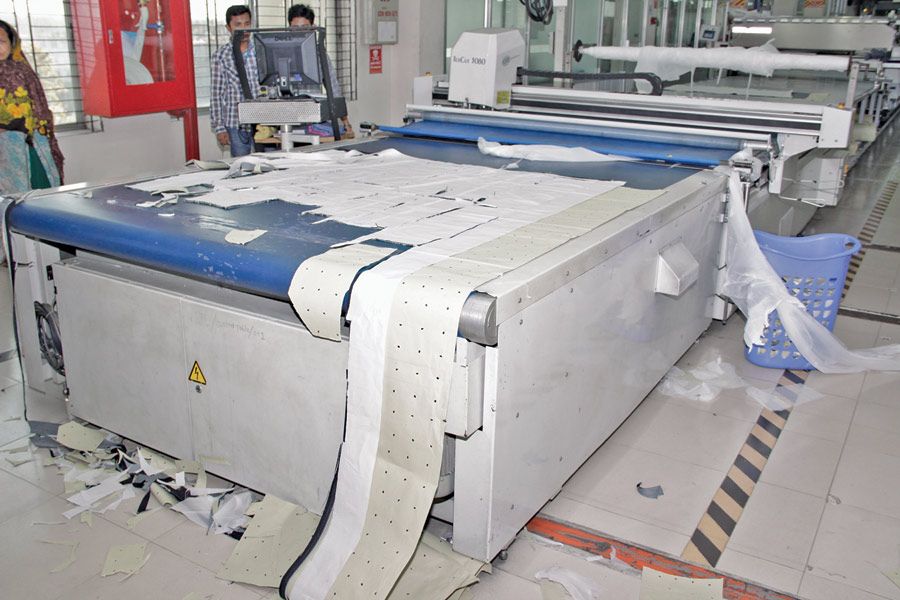
Working with stretch fabric is a challenge and requires experienced workers while sewing, as even a slight degree of pull while sewing can alter the size and fitting of the end product. “For handling stretch fabric in sewing, automation from Vibemac has helped us a lot as the operations are being done without any stress or stretch in the garments. The feed-off-the-arm machine from the company has got double rollers for pulling the fabric evenly while sewing,” explains Gazi. Since similar tension control is required in the cutting and spreading of the fabrics, an automatic cutter from Kuris and four spreaders have been installed by the company. Mahmud Group would be adding another cutter from Kuris shortly.
“I want my employees to understand the economic impact we are having on the European economy. We might just be exporting US $ 9 million per month, but that is being retailed at 5 times more, an impact of US $ 45 million per month. The contribution is small, but significant. Similarly, if Bangladesh is exporting US $ 25 billion, the impact in the global markets is that of US $ 100 billion.” – Gazi Mahbubul Alam, Director, Mahmud Group
The success of Mahmud Group with stretch fabrics and jeans is endorsed by the support of the Swedish buyer H&M, who has been buying 50% of the company’s fabric output and 30% of the company’s denim jeans output.“We recently got the gold supplier certification from H&M which means that we will get business commitment for three years from H&M with an assured 20% increase in capacity year after year,” elaborates Gazi. The company has now set its eye on the Platinum rating, the highest vendor rating, in which the biggest advantage is the assurance of business even in the lean periods. “The market has improved a lot and apparel manufacturers have made their factories safe and compliant, so it is easier for buyers to make long-term commitments. Like in our case, most of the buyers first give us the PO and then discuss the price points, which means business is there for sure you just have to finalize the price. Due to this practice the price war has minimized in the country as every company has created its niche in some way or the other, which has been realized by the buyers and the orders have been placed accordingly,” points out Gazi. As a company, Mahmud does not give more than 35% to 40% of its sewing capacity to any one buyer, which helps in balancing unpredictability in the market and even the buyers have similar capacity allocation plans as no one wants to put all eggs in one basket.

Mahmud Group attributes its product development capabilities to its vertically integrated setup. “Value addition in denim jeans is all about washing and not that every fabric can be washed to get desired results. Hence with our control over fabric manufacturing, we can give a better wash or finish by giving special attention at the weaving and processing stages,” reasons Gazi. He adds that having fabric strength is a definite edge. “For making red denim jeans, we make greige denim fabric without any colour, make denim bottoms out of it and then garment dye it for the red colour, and this eliminates the process of bleaching; hence saving time while giving the fabric better colour depth and quality. Similarly, if the denim jean has a lighter shade of indigo denim, we use indigo accordingly in the dyeing stages,” elaborates Gazi.
Vertical integration also empowers the company to work on just-in-time inventories, avoiding wastages such as purchasing 5% to 10% extra fabric. “Our target is to use at least 30% of our own fabric for manufacturing our denim jeans. Right now we are producing 9,00,000 jeans per month which we intend to increase to 30,00,000 jeans per month and which will require approx. 5 million yards of fabric per month,” shares Gazi. With these ambitious plans Mahmud Group is looking to touch the US $ 300 million mark in the coming two years and expansions are already under way.
Going Green…
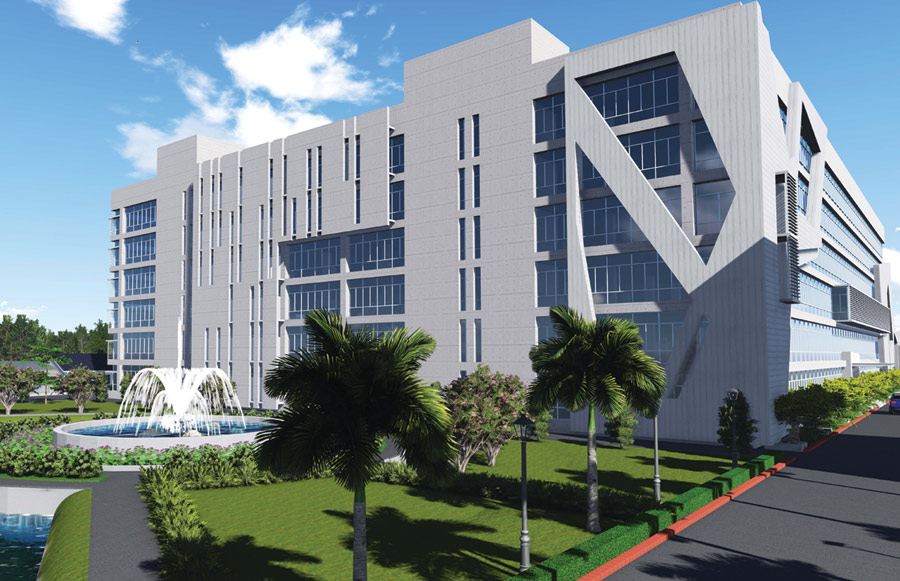
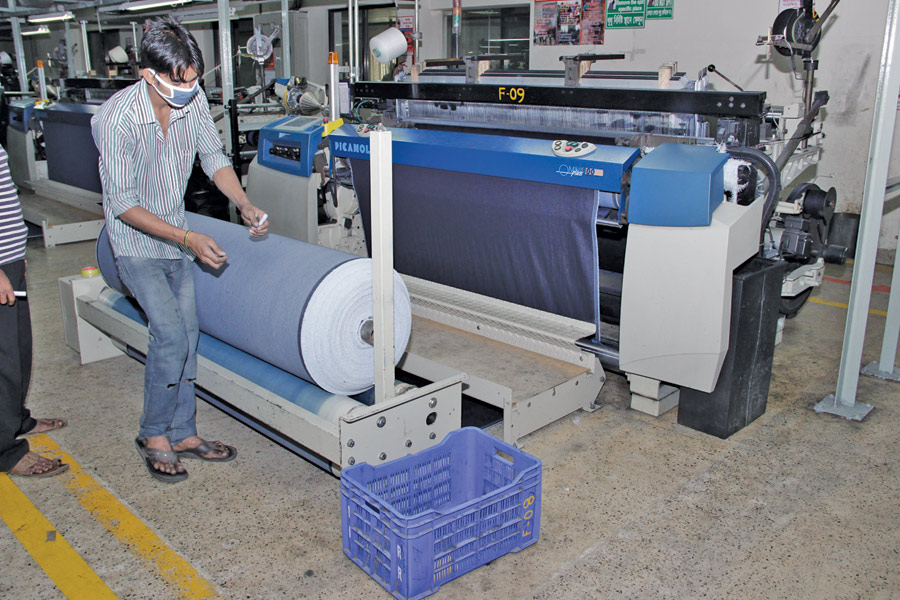
The expansions would be executed in the existing facility and in an upcoming Green facility with centralized laundry and additional sewing capacity. In fabric, 90 looms from Picanol and rope dyeing will be added in the existing unit – an addition of 1.5 million yards of fabric per month to the existing output of 2.5 million per month from the existing 200 looms. After completion of expansion in the existing fabric facility, Mahmud will be producing 4 million yards per month or 48 million yards per annum. Also under construction is a 6-storey warehouse in the fabric unit, for which the company has already applied for a Green certification. “Since it is a warehouse, it will have no electricity supply as per the compliance norms and all the lights would be battery powered. Electricity would be there only to operate the cargo lift for which solar panels would be installed on the roof of the warehouse.The warehouse would also have a vertical garden on the outside walls,” shares Gazi.

In the sewing, Mahmud Group plans to produce 1,00,000 denim jeans per day, which would be more than three times of its present daily output of 30,000 denim jeans per day. In the upcoming Green facility, sewing capacity of 40,000 denim jeans per day will be added while in the existing sewing facility, an additional capacity of 30,000 denim jeans per day will be added, taking the capacity of the existing unit to 60,000 jeans per day. Presently, the washing department is at the ground floor of the existing sewing facility from where it will be shifted to the Green facility and developed as a centralized washing department with a capacity of 1,00,000 bottoms per day. The cutting from the top floor of the same facility would be shifted at the ground floor and developed as a centralized cutting department. “The expansions will happen in three phases. The first phase will be completed in coming 9 months, in which the Green factory will be ready and sewing capacity of 40,000 pieces per day will be added. Then after a year, I will expand the capacity of the existing facility by another 30,000 pieces,” shares Gazi.

The most remarkable feat of the upcoming Green factory would be the centralized washing with a capacity of 1,00,000 bottoms per day as it is difficult to go for a Green certification with an in-house washing because of the waste discharge from the department. “For reducing the discharge from the washing department, we will install ozone washing machines from Tonello with ECOFREE, which guarantee 50% to 80% less water consumption compared to conventional machines. This reduces the pressure on the water purification system and the overall washing time.Tonello claims to account for savings of Euro 100,000 per year in terms of water, power, chemicals, dye stuff and steam,” elaborates Gazi and claims that due to such interventions, the Green factory will consume 35% less water once fully operational, compared to non-Green denim jeans factories of similar size.The total investment done by Mahmud Group for achieving 1,00,000 bottoms per day output with a Green factory is BDT 500 crores (US $ 64 million), from which the company has taken a loan from the BGMEA Green fund at a subsidized interest rate.
With the addition of rope dyeing facilities, Mahmud Group is looking at penetrating the American market, and is targeting VF Corporation for starters. The Group is already producing low ounce shirting fabric for VF, but with the rope dyeing facilities, they would be able to cater to their portfolio of denim bottoms.
The Green facility is being developed with the consultancy of EDS Global, which has done 140+ Green building projects in India, and Mahmud Group’s Green facility is their first Green project in the country. “We are using special windows in our factory which will reduce the load on the HVAC system and the window glass is coated on both sides to minimize heat exchange with the outside environment,” avers Gazi. Similarly, only LED lights will be installed in the facility due to which the electricity consumption would be reduced. Even the boiler in the new factory is sustainable as it will utilize waste fabric and other such waste like poly bags and cartons generated in the factory, as fuel. On the recommendation of H&M, Mahmud Group will install one of the largest ETP plants of Bangladesh in the Green facility, from an Italian company. “Initially, we would have to absorb the financial impact of going Green, but in the longer run we would incur significantly lower operating overheads. Moreover, it is about being a responsible apparel manufacturer and sooner or later everyone has to take steps in this direction,” concludes Gazi.