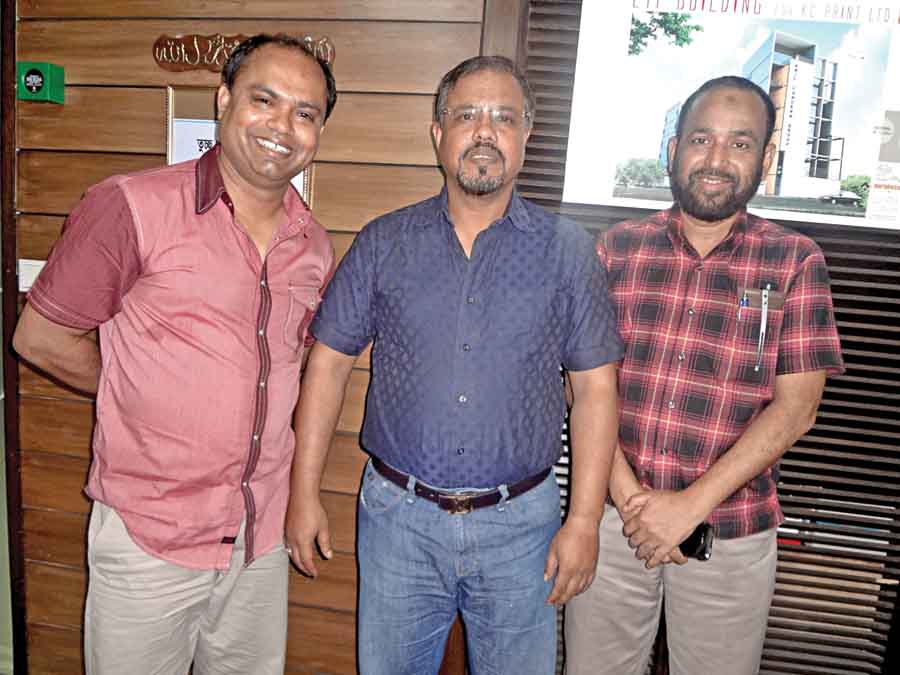
Focusing on value addition and multiple style management for sustainable growth, Knit Concern Group, an integrated setup for yarn, knitting and manufacturing of lingerie items, has clocked a turnover of over US $ 75 million this Financial Year. Joynal Abedin Mollah, President & CEO of the group in an exclusive interaction with Apparel Online, throws light on the stupendous growth of the company and the strategies that have kept the momentum going.
At the onset, Joynal admits that the industry in Bangladesh is facing on some serious roadblocks in growth and it is becoming difficult to build a sustainable strategy to move forward. “Today buyers are not as confident of Bangladesh as before as our prices have already increased about 30% and there may be another 20% increase as wage rates are again being revised; moreover there are ongoing labour, political, and gas problems. For the last two decades I have been able to record growth every year with sustainable changes, which include investing in new infrastructure and technology, but this year because of scarcity of gas I haven’t been able to add any new setup and the situation is true for most businesses in Bangladesh,” says Joynal.
for the past 8-10 years
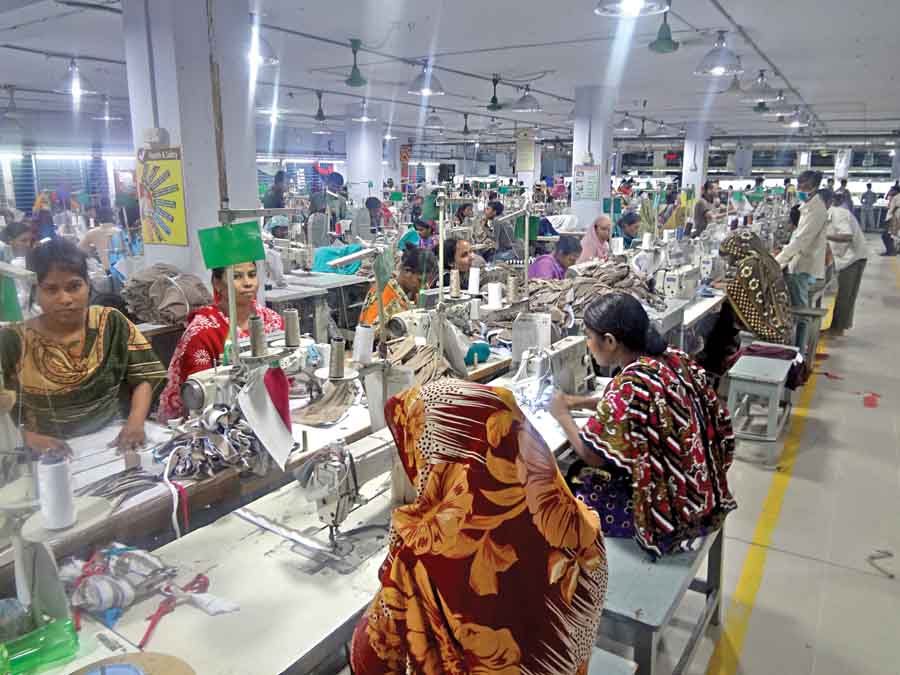
Knit Concern has since its inception in 1990 seen consistent growth and today the group holds 100 garmenting lines with facilities from yarn to finishing in both woven and knitted garments along with lingerie items; the company also does business for buyers like Disney which accounts for value added garments manufactured by the company. “We are proud of our strength, as a composite factory. We buy huge quantity of cotton and greige yarn from India and do everything in-house including printing and embroidery,” says Joynal. He is extremely upbeat of their latest product venture – lingerie. “We recently ventured into lingerie items which have now become the niche product for the company. We are already exporting 6,00,000 pieces of lingerie every month,” informs Joynal.
Though lingerie is a new addition for the group, they have been in the field of knitted apparels for the past 23 years, with production capacity of 1,20,000 pieces per month. “Our products go to buyers like H&M, so quality has always been our top priority.
These buyers who come with million dollar orders know the difference between ‘the good’ and ‘the best’ and if there is no consistent upgradation, we cannot deliver quality and ultimately it will be a huge loss for us. In order to deliver quality products, we firmly believe in the slogan ‘Knit to Young’, that is not getting old, but adapting new machines and equipments that comes into the market to replace the old, so we are always new and changing,” he avers.
[bleft]The company takes care of even the smallest of details – from welfare and safety of its workers, like installing fire detectors, providing medical assistance, giving compensation and benefits, to adopting eco-friendly measures.[/bleft]
Between all these investments, Knit Concern is continuously involved in strengthening its systems and working conditions. From the welfare of its workers, like installing fire detectors and strong fire-fighting systems to providing necessary medical assistance, giving compensation and benefits, adopting eco-friendly standards and setting up ETP plants, the company takes care of even the smallest of details. “Our internal systems have always been our focus. Initiatives like method improvement studies and busbar trunking system were not taken because of any buyer pressure. The buyer knows that if you go for good machinery, systems, planning and facilities, one can survive and run the business successfully. “It is our own business strategy to grow ethically while increasing our output that has strengthened our resolve to be a preferred supplier,” continues Joynal.
Being a veteran in the industry, Joynal has a strong hold on the vein of the market and believes that Bangladesh industry has a strong future and is in preparations to face strong competition from India and Cambodia, both well known in textile business. “Bangladesh is gearing up in line with its competitors. Today, Bangladesh is in tough competition with Cambodia and there is not a big difference between the two. The wage rate in Bangladesh is US $ 70-80, while in Cambodia it is US $ 100-120, and the way wages are increasing in the country the difference will narrow down further.”
Talking about Myanmar, Joynal feels that the country still has a long way to go to pose any serious threat to Bangladesh in the near future. “As compared to Burma we are much ahead; textile industry in Burma needs more time to develop as the people are not very keen on this sector and are more inclined towards agriculture items like rice, besides timber,” claims Joynal.
He points out that one of the biggest limitations that Bangladeshi factories have suffered from is the lack of technical education at the management level. “However, the situation is improving now; we have a permanent industrial engineer from Sri Lanka from past 8-10 years and he can very easily calculate how many minutes it takes to make full T-shirt, moreover we have hired 80 merchandisers and 200 trainees to be developed; so more dynamic professionals and passionate people are joining the industry,” reasons Joynal.




 Bharat Tex Special Report 2026