The Inditex juggernaut is getting bigger and better as the Spanish company that boasts of brands like ZARA, Bershka, Pull&Bear, Massimo Dutti, etc. has logged its highest sales growth in the past three years mainly due to additional physical stores, rising Spanish consumption and its expanding online presence worldwide, resulting in 2015 sales increasing by 15.4 per cent to US $ 22.9 billion. Specifically, ZARA and Bershka’s steady stream of on-trend fast fashion clothing has kept sales robust against other clothing retailers such as GAP, J.Crew, Urban Outfitters, A&F, etc.
Setting benchmarks in fast fashion, Inditex has exceeded analyst’s expectations with the retailers profit growth in 2015 aided by the opening of 330 new stores in 56 markets last year bringing its total number of stores to 7,013. Apart from offering fashion clothing, the company has focused equally on e-commerce and brick & mortar stores to clock in profits, making e-commerce the gateway for consumers to enter the stores. “The business is integrated from every point of view. Two-thirds of returns are in-store because our customer prefers to go to the stores. In many cases this is an online return but at-store sale, because the customer goes to the store and is changing the size,” reveals Pablo Isla, CEO, Inditex. Recently, ZARA has opened a new three-floor store in the heart of SoHo, designed entirely by ZARA’s architecture team having original cast iron facade, brick wall, airy interior that features beauty, clarity, functionality and sustainability.
 Continuously, Inditex is expanding its integrated store and online sales strategy globally by opening ZARA’s online store in Spain, France, Germany, the UK, Italy and Portugal, and more physical stores in markets such as Vietnam, New Zealand, Paraguay, Aruba and Nicaragua in 2016. As the company’s new sales rose by 15.4 per cent, with ZARA chain posting a 17.5 per cent rise to € 13.6 billion, Bershka sales were also up 12.7 per cent to € 1.87 billion, making it the second-biggest chain for Inditex, followed by Massimo Dutti with sales of almost € 1.5 billion, up 6 per cent, and Pull&Bear jumped by 10.4 per cent to € 1.41 billion. The trend also continues in the new financial year with 15 per cent increase in sales in 2016 as of now. Moreover, the company had 1,52,854 full-time equivalent staff last year, up from 1,37,054.
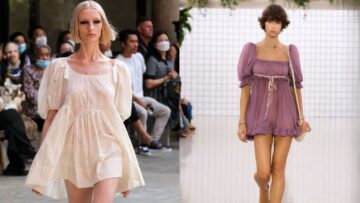
Items including broderie anglaise blouses and floral lace dresses from ZARA’s spring collection have proved popular with consumers.
Inditex, which has a market value of almost € 92 billion, said it would increase its dividend by 15.4 per cent to € 0.60 a share.
What attracts the customers to the company’s wide array of brands, specifically ZARA and Bershka is its weekly distribution of limited new products to shops worldwide, creating an environment of buy now or miss out for consumers. This is much in contrast with GAP’s business model that lets its seasonal collections to sit in the stores for weeks, providing consumers lesser reasons of checking it out frequently. This makes store traffic a challenge for the retailer which is the third biggest retailer, just behind ZARA and H&M. With a new store in the US, ZARA is getting an edge over other American brands such as GAP on their home turf itself. According to Andrew Loft, Citron Research (on Bloomberg TV), “Go to the mall today, walk into Banana Republic or GAP, you could swing an umbrella and not hit anyone.” This is very unlikely for ZARA stores anywhere in the world! Also, ZARA beats GAP on price as the retailer has reduced the price on its less-expensive products by 36 per cent in the last 18 months through November 2015. According to analysts, all these cheap clothes are adding up to lot of sales.
Moreover, Amancia Ortega the man behind ZARA who transformed the clothing group Inditex into Spain’s biggest company overtook Bill Gates to be the world’s richest man. Currently holding 59.3 per cent stake in what is now the world’s biggest fashion retailer, ahead of GAP and H&M, the company has grown from a humble beginning in the rainy northern region of Galicia to more than 7,000 stores in some 90 countries with a sound stable of brands including high-end label Massimo Dutti to homewear chain Zara Home. He has turned ZARA into a byword in chic for the money-conscious, transforming the apparel business with its ‘fast fashion’ model. ZARA’s success story shows the strength of its cross-functional operations strategy, coupled with its vertically integrated supply chain, enabling mass production under push control, leading to well-managed inventories, lower markdowns, higher profitability, and value creation for shareholders in the short- and long-term.
Apart from ZARA, Bershka is another brand under the Inditex umbrella that is garnering profits through its trendy affordable fashionable clothing targeted towards the young audience. Currently, the brand is present in 69 countries with 1,000 stores catering around 4,000 fashion offerings by 60 professional designers. In the stores, each section – Bershka, BSK & Man, the products are placed according to their style, creating a wide spectrum ranging from casual wear to sports and from basic garments to more fashionable items. Spurring growth from not just ZARA, Bershka is also pushing Inditex’s profit margin which is resulting in the successful growth of the Spanish company and as one sees it, there is no stopping!



 Bharat Tex Special Report 2026