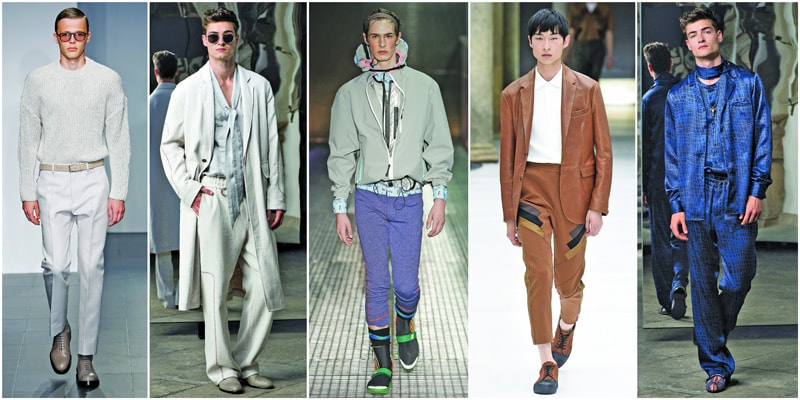
 In 2016, menswear grew at a faster pace than womenswear – up 4.5 per cent versus 3.7 per cent, and indications are that by 2019 the segment will reach US $ 40 billion in worldwide sales. This shifting focus of retailers and brands from womenswear to menswear is due to the birth of the style-savvy male consumer on whom the fashion industry is relying on for growth as the overall luxury market growth continues to slowdown.
Continuously, retailers are re-strategizing to gauge the male consumer through assortment of products that not just appeal to them fashion-wise but also resonate with their identity. Such is the case that multi-brand retailers, Nordstrom has grown its menswear offering by 26 per cent and Mr. Porter by 33 per cent. Whereas, premium retailer J.Crew has grown its men’s offering by 68 per cent and contemporary luxury brand Acne by 47 per cent. This further trickles down at the mass market end, where Zara has witnessed smaller margins for growth, upping its menswear by just 3 per cent over the year, in contrast to H&M, which went aggressively, increasing its men’s offering by 260 per cent. H&M’s menswear drive in 2015 was enormous with a 360-degree marketing strategy, proving how valuable menswear market is becoming for the next few years. The menswear push also extended into the retailer’s collaborations, such as 2015’s H&M x Balmain collection, of which 43 per cent was for men, which was quite a move-on from 2014’s Alexander Wang collaboration with its 27 per cent share of menswear.
By 2019, menswear is expected to contribute close to US $ 40 billion in sales to the global apparel market, reveals Euromonitor International latest reports. This growth is being driven by cultural shifts as men become more concerned with their appearance, coupled with large disposable income levels for men, which remain 50 per cent higher in comparison to women’s disposable income levels. Apart from this, online shopping and internet has made it easy for many fashion-conscious men to stay fashionable and trendy through dedicated blogs and websites that concentrate on menswear alone that has helped many take decisions and dress appropriately. According to a report from Mintel’s on consumer research, as many as one-third men shop online and hence there are lot of apparel retailers offering casualwear and even bespoke suiting and shirting facilities.
Despite facing worldwide retail losses at the end of 2015, new research conducted by banking and financial services company Barclays reveal one market is absolutely thriving: men’s fashion. According to Barclay’s, menswear saw an overall growth of 24 per cent last year with a significant rise in sales since Spring 2015 and has been steadily moving in an upward climb with the movement cementing as a trend to watch out for. On the other hand, market research analysts at Technavio have predicted that the global menswear market will grow steadily and post a CAGR of more than 4 per cent from 2016-2020. The consumer’s desire to look fashionable and trendy is one of the primary factors driving the menswear market globally. Therefore, celebrity endorsement has played a significant role in setting fashion trends and also helping to build product and brand awareness. For instance, brands like Adidas, Reebok, Dolce & Gabbana, Giorgio Armani, Givenchy, and Gucci invest heavily in employing popular male brand ambassadors to endorse their products. Moreover, department stores are also increasingly investing in celebrity endorsements for their retail apparel brands to attract customers and compete in terms of brand awareness and recognition.
It is predicted that the global menswear market will grow steadily and post a CAGR of more than 4 per cent from 2016-2020.
While main markets such as US, UK and Europe are witnessing rapid growth in menswear, rigid markets such as China, where men were once hesitant to spend money on clothing, are also seeing increasing focus by brands on them. One of the largest luxury menswear brand Ermenegildo Zegna reported revenue of US $ 1.72 billion and the major share came from China, followed by Europe and Americas. Whereas the luxury apparel retailer, Trinity Ltd., of high-end menswear in China accounted to increase in sales by 19.5 per cent, while owning more than 400 stores in the country. This further is substantiated by Bain & Co, a consulting firm, which predicted that the global luxury menswear segment is to grow at 14 per cent every year.
“Menswear presents a great opportunity for fashion brands looking to diversify their product portfolios and reach out to new consumers. The more effectively brands are able to harness wealth and unique consumption cultures of male consumers, the more successful they will be,” reveals Magdalena Kondej, Head of Apparel and Footwear research. Today the menswear market is not just restricted to trouser, shirts and coats, but has also spread into an array of product categories such as activewear, casualwear, outerwear, formalwear and essentials. The rise of the new age work environments coupled with technical innovations are helping consumers to break free from the Monday to Friday work uniforms and casual clothes during weekends. As the global luxury market slows down, all eyes are on menswear market as it is giving the much-needed push to many retailers and brands, not just luxury but mass market as well.