Increasingly it’s becoming possible to walk into a store, flip through a rack of hangers and find a pair of bamboo-made pants, shirts constructed out of corn or dress made out of wood pulp. These fibres often blended with luscious organic silks, cashmeres, etc. have become a staple for sustainable fashion, with new fibres such as seaweed, soy, etc. hitting the shelf the horizon is only expanding. In conversation with AO, Sachin Doshi, Director, Doshi Group, Mumbai, the sole marketing partner of Anhui Tenbro Textile Co. Ltd’s Tenbro brand, talks about the market for innovative sustainable fibres such as bamboo and soybean and how Indian customers are reacting to it.
Primarily known for its easy growth without pesticides, bamboo quickly replenishes itself and is naturally anti-bacterial and repels odour, which makes it a better option than viscose. Globally, if you cut 5 trees, it is mandatory to grow 10-20 trees, but according to statistics if you grow 100 trees, you only get 20 per cent full size trees in a span of 20 years, whereas on the other hand, the growing process of bamboo is 2½ years. “You are giving something new to the market, where the brands and the merchandisers have one more new product on their shelf. Why you want to cut trees when instead of trees you can use bamboo as it is not going to affect the environment. You get full value of bamboo in two-and-a-half years. Now when the quantities have gone up drastically, there is no real price difference between viscose and bamboo,” claims Sachin. The company enables marketing of Tenbro brand in Europe, US, Vietnam, China, Taiwan and Japan and from fibre making to spinning to weaving to knitting, the brand has application in towels, bed sheets, garments and socks.
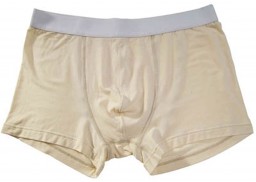

Apart from bamboo, Doshi Group also caters to niche innovative fibres such as soy, milk, bamboo charcoal, chitosan (crab shell powder), pearl, sea weed, etc. where the lustre, colour and feel of the product is similar to viscose. For bamboo charcoal, charcoal powder is added to bamboo to give it the natural colour and the garment similar to bamboo, is anti- odour and is being made by the company in Germany. In order to come up with various natural products, R&D is important to bring out various functions of the fibre such as anti-bacterial, odour-free, quick-dry, etc. “Customers are not interested in anything technical. They go for the feel of the product.
Today what the market needs is new names for products, such as soybean which is very famous in Europe and has been a substitute of silk as it has a similar lustre and feel and is also cheaper,” reveals Sachin. He adds, “Now that the costing has also come down, one can get soybean for US $ 6 a kilo, which one can use instead of silk and by adding cotton or some other fibre cost can be further brought down.”

These natural fibres are open to innovation by spinners, in India and the world alike with appealing innovations happening in combination with cotton, silk, designing, etc. Currently, the company works with brands such as Reebok, Adidas, ZARA, etc. and provides technical know-how to first time users of the products. Though these products are certified by Japanese Spinner Association and Chinese National Textile Committee, Sachin does admit that they are facing a challenge of credibility in acceptance of the Chinese certification. Still, internationally the products are continuously growing, which is paving the way for the newcomers to tap on to this growing market. “I visit all my customers every 3 months and I also carry their finished product samples with me. I send these samples to the liaison offices of buyers saying that this mill has started with this new combination. You can try this combination or try that. That’s how the market grows,” maintains Sachin.
“You are giving something new to the market where the brands and the merchandisers have one more new product on their shelf. Why you want to cut trees when instead of trees you can use bamboo as it is not going to affect the environment…” – Sachin Doshi, Director, Doshi Group
Within the 650 tonnes a month bamboo market, world leader Tenbro controls 60-65 per cent of the market as these products are being widely accepted in the international market. In China, the company has more than 200 retail outlets for terry towels, bed sheets, pyjamas, and other garments made of bamboo, etc. shares Sachin. However, in India the demand has yet to pick up volumes and the company feels that though the demand for such fabrics is growing, the market is still at a nascent stage, with many domestic brands and retailers sceptical about its acceptance by the Indian consumers. Though Arvind Denims is using Bamboo charcoal in its collection, but others such as ITC, Tata, etc. still fear to test these products in the domestic market. “At this point of time, the market is not good but I have been trying for the past 6-8 months by talking to the retailers. People feel that it is a new product and everybody is in it for better margins, so they feel that it won’t work in the Indian market. They fear to venture into new waters and wait for the gestation period so that people start accepting the new products. Any newcomer will either take over the market or they will lose. Over here in India there is a ‘herd’ mentality,” informs Sachin.
Though Indian mills like Raymonds and Jaishree Textiles are buying fibre from Tenbro to manufacture bamboo products, but again it’s only for exports. “These people are actually missing the opportunity. India’s spending power is increasing but people still don’t understand,” adds Sachin. Going forward, the company is planning to create greater awareness about using this product in India rather than exporting it wholly. “All Indian brands have shown interest but all of them want these natural fibres at the price of polyester. They should understand that it’s a new product. I always say that make life simple and don’t talk about attributes. Think logically!” reasons Sachin. Importing and exporting different types of fibres and technical yarn, Doshi Group has trained and cultivated a large number of specialists giving rise to a sustainable revolution in terms of fashion and urges people to use bamboo rather than cutting trees for fibre!