- Traditionally catering to low-end market segment with PV fabrics
- Currently manufacturing for many Indian suiting brands
- Capable of world class PV processing and finishing
- Over the counter sales in PV declining; more garment manufacturers buying fabrics
- In exports, the city is catering to Middle East & Latin American markets
- Players now entering into denim, cotton shirting, home furnishing and uniform fabrics
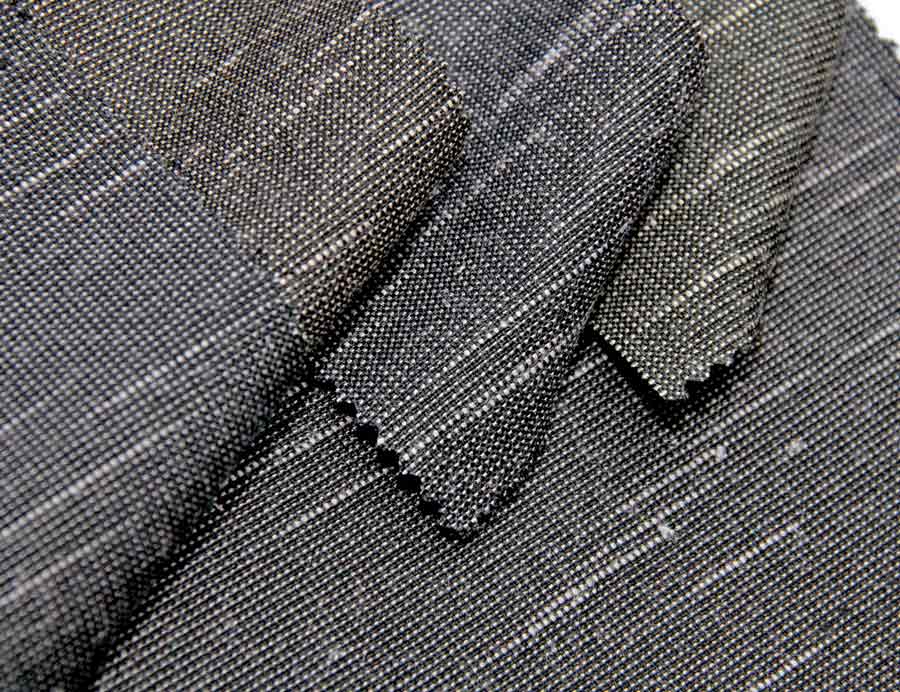
A new thrust and momentum to the industrial development of the district, which ultimately puts Bhilwara’s name on the world map came with the foundation of the LNJ Group by Laxmi Niwas Jhunjhunwala, who put up the first spinning unit in the town. And since then Bhilwara has emerged as one of the most important and largest textile centres of the country in PV suiting. Testimonial to the vibrancy of the region was evident when the Rs. 4500 crore LNJ Group, which is still firmly rooted in Bhilwara, proudly celebrated its Golden Jubilee last year. Team Apparel Online recently revisited the town for a fresh update on the hub, meeting a new set of entrepreneurs…
Growing at a steady pace, it was after the multi-fibre agreement in 2005 that Bhilwara saw major growth as a PV fabric manufacturing hub, housing around 350 weaving units. The most attractive aspect of Bhilwara is that it is a self-sufficient hub in PV fabrics. Right from fibre, yarn, weaving and processing, the city is well-equipped and there is never dearth of business as still 95% of the total production is of very basic suiting fabric ranging between Rs. 80 to Rs. 120 per metre, which is in demand the year around. Out of 350 weaving companies in Bhilwara, there are around 30-40 companies which are into exports, constantly looking at new markets and buyers from countries like Afghanistan, Dubai, Latin America which keep visiting the hub.

According to R.P. Agarwal, Chief Executive, Sarvodaya Suiting Ltd., one of the main reasons for the growth of Bhilwara is the spirit of entrepreneurship, where every company got into manufacturing of PV suiting fabrics with low margins. “Bhilwara has not faced any drop in manufacturing despite market conditions and there has never been a shutdown of any company. Entrepreneurs here are motivated to take new initiatives and the quality of fabric has definitely improved in terms of finishing, and designs,” states Agarwal. Sarvodaya is planning to add more finishing machines as new finishes are being demanded by the buyers. “Sheen in the fabric is a requirement for today’s market, initially people demanded good weight in fabric, but now people ask for a good bounce and feel in fabric. Keeping pace, the quality of finishes being offered has really upgraded in Bhilwara in the last three to four years; in fact, many companies in Bhilwara have installed state-of-the-art machines during this period,” adds Agarwal.

Yet, not all agree that processing facilities and capabilities have upgraded as significantly as it should have. “We are ahead in technology for weaving and spinning, but in processing, we have not advanced as much, and no new processing units are being setup here,” avers S.L. Panagaria, Managing Director, Subh Laxmi Syntex. The company is famous for its product development skills and is catering to all top PV brands and garment manufacturers like Madura and the likes. Almost 80% of its products are developed in-house, while the balance 20% is created as per buyer’s specifications. Working with the corporate sector, quality consciousness is very high. “These top-end brands work on ‘Four Point Gradation System’. Every minor defect is countable under the system and if there are more defects than permitted, the fabric is rejected,” informs Panagaria.
[bleft]
- The infrastructure in Bhilwara has developed over time, the only limitation now is that it does not have RMG sector, which is more developed in Delhi and Bangalore. The reason why RMG is not that much developed here is because of weak designing, once that develops here, there is no problem in the raw material segment.
- Bhilwara is majorly making spun based fabric, the feel for that is different from the textured feel. That is one of the reasons India’s fabrics are lighter than Chinese fabric. As far as Italian fabrics are concerned it’s all about finishes.
Bhilwara does not have the expertise to finish Surat kind of fabrics which is for ladieswear as it’s all basically filament based fabric. Most of the woman wear fabrics have stretch with spandex; and are 100% polyester. The machines here are suitable for doing only 218s, 230s, 240s counts. [/bleft]
Completely dependent in local resources, not even a single PV manufacturer in Bhilwara is using imported fibres. In dyed PV yarn, LNJ Group is one of the biggest suppliers, followed by Sangam, SRS, Birla Group, Banswara Syntex and Asian Tex to name a few, who are feeding the hub with their PV fibres and yarns. Recron staple fibres from Reliance Industries are major source of the polyester fibres for most of the Bhilwara players. The PV manufacturers in Bhilwara shared that a lot of orders which were earlier catered by China are pouring into Bhilwara and they are confident that they can beat China in PV fabric as they are equipped to do small lots which is the USP of India and the current pattern of demand in the international market. “China will never do 800 metres per colour shade; they would not even talk about it, while India is very capable to do that,” argues Agarwal.
Mumbai based Galundia Textiles, specializing in cotton and linen shirting fabrics entered into Bhilwara about 15 years back to put up a PV weaving setup. “The entire region is doing so well,” says Sudeep Galundia, Managing Director, Galundia Textiles. Though PV is well placed in Bhilwara, as it has demand throughout the year, but it is also a very stereo kind of market with a fixed domestic clientele with a certain price barrier, and one cannot go beyond that price bracket. “We eventually shifted the domestic business to our Mumbai office and now we are only doing our export orders from here,” points out Sudeep, who is exporting his fabrics to places like Peru, Guatemala and Panama which are still selling fabrics over the counter. However, there are certain markets which are ready-to-wear for which Sudeep deals with agents who cater to the garment manufacturers.
Product Diversification
Many Bhilwara manufacturers feel that the suiting market is saturated now and most of them are not looking at making any expansion in the same category, but are rather looking at diversifying into other fabric types. Following the footsteps of Sangam India, Kanchan Group doing a turnover of Rs. 1600 crore and looking at touching Rs. 2200 crore by next year, has recently ventured into denim manufacturing. “You can see our strength and credibility through the fact that Sangam ventured into denim manufacturing four years ago and has five lines; we started eight months ago with five lines,” says the young Managing Director Jayesh Banger proudly. Relating the history of his company, Jayesh says, “My father was into wool yarn manufacturing for the carpet industry and my brother after completing his CA ventured into PV fabric manufacturing. After completing my graduation, I also joined the business and subsequently in 2000 we invested in processing. The next expansion came in 2009 when we setup a spinning unit, and last year we have added denim manufacturing to our profile.”
Chhabra Syncotex Ltd. is another PV manufacturing company which has diversified into other fabrics, primarily for home furnishing and uniform fabrics. According to Sandeep Chhabra, Director of the company, to have a sustainable growth it is important to diversify into other fabrics. “The first diversification for us was making a slight shift to manufacture uniform fabrics as the demand is growing and next we added furnishing fabrics basically for upholstery,” avers Sandeep who maintains that Bhilwara is still not upfront in terms of product development and a majority of players only produce fabrics as per buyer’s specifications in terms of counts, numbers, weight and colours.
Shirt fabric manufacturing is a very recent development in Bhilwara, just about two years old. One of the main reasons that it has developed in Bhilwara today is due to the low manufacturing cost in the city with many Mumbai based companies outsourcing shirting fabrics from Bhilwara and getting it finished in Mumbai. Even Topman from Mumbai, known for its shirting fabric is now in Bhilwara in technical tie up with a process house.
Janki Corp. Ltd., which started its operations in 1994 as a process house, entered into weaving in 2000 and two years back the company forayed into manufacturing cotton shirting fabrics and bed sheets. “The main thrust for diversification came in the last one-and-a-half years when the PV market went down; every weaver was looking for diversification, however sizing is one of the main limitations of Bhilwara. We are using only those yarns that can be used directly without sizing. We have also started cotton bed sheet manufacturing. In last few months I have seen a tremendous change in the culture of Bhilwara where most air jet looms have shifted from PC shirting to 100% cotton shirting fabric manufacturing,” claims Lalit Kumar Babel, Director.
Undoubtedly, Bhilwara has taken a huge leap in developing as a prime textile hub in India, but the industry feels that there is need for State Government support to improve and grow the industry further. They want major cut in the power costs along with some rebate on the VAT which is presently 5% in Rajasthan, as they have to compete with Gujarat and Maharashtra where there is no VAT. There is also shortage of labour especially the skilled ones which affect the quality of the products. “The main problem right now is that Bhilwara doesn’t have any form of Government aid. Budget is also very disappointing, which has proved to be a major setback for the Bhilwara industry. Due to these reasons only, we are planning to put our five line denim project in Surat instead,” concludes Jayesh.
[tabs_container style=”style2″ maincolor=”#000000″ overcolor=”#c4c4c4″]
[tab title=”KANCHAN GROUP”]
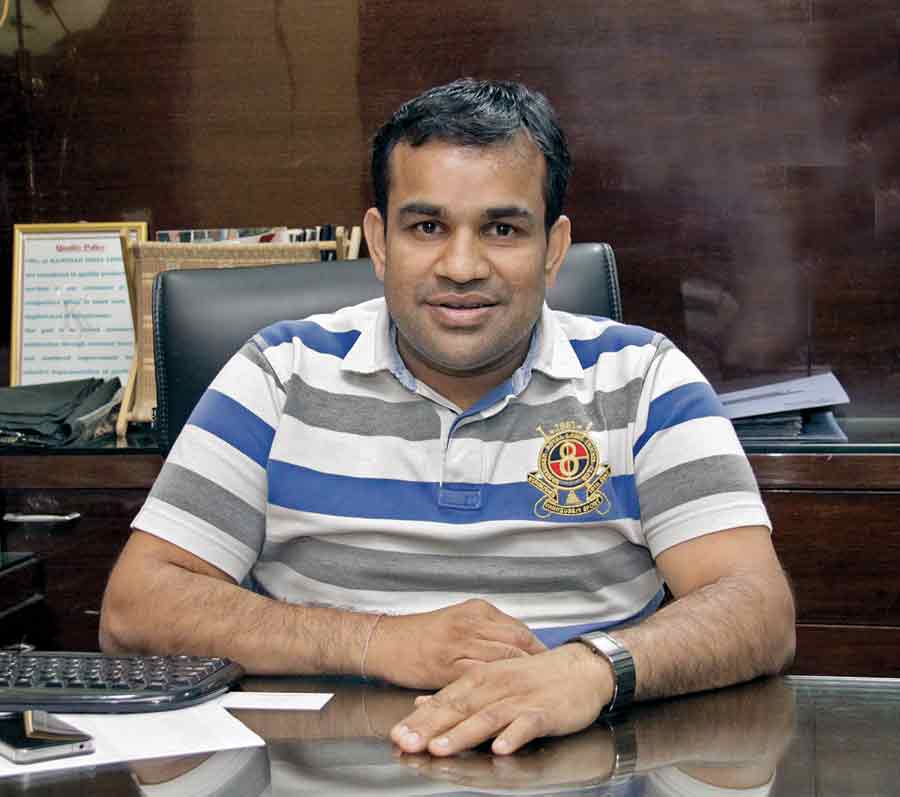
Initiated in 1996, Kanchan entered the textile segment with PV yarns. Moving on the path of constant growth and expansion, the company started its operations in processing in 2000, setup a spinning unit in 2009, a denim unit in 2012 with five lines, and added another feather to their cap by starting work in 100% cotton fabrics in January 2013. The company’s current production capacity is 50 lakh metres/month, which comes to around 6 crore metres per annum. As per the company’s reports, the organization will start manufacturing around 20 lakh metres of cotton fabric from March itself, that will take up the total fabric production of the group to one crore metre per month.
Working majorly with domestic brands and markets, Kanchan Group is planning to expand its operations to international market as well. The present turnover of the company is Rs. 1,600 crore, which is expected to reach around Rs. 2,200 crore by next FY. The company is currently working on their upcoming expansion of five lines for denim in Surat. The estimated investment is around Rs. 700 crore.[/tab]
[tab title=”SUBH LAXMI SYNTEX “]

Bhilwara based Subh Laxmi, known for manufacturing, processing and finishing of blended suiting and shirting fabrics, is providing its products for various market segments. The fabric range of the organization includes different blends like polyester viscose, poly cotton, polyester viscose lycra, poly viscose linen, poly viscose cotton flex and other functional finishes. Primarily focusing on premium brands like Raymond, Turtle, ITC and Blackberry, the company caters to clients all over the country. The company’s specialty in designs and the capability to stay ahead of market trends six months in advance gives it an edge over its competitors. The current weaving capacity of the company is around 5-6 lakh metres/month.[/tab]
[tab title=”CHHABRA SYNCOTEX “]
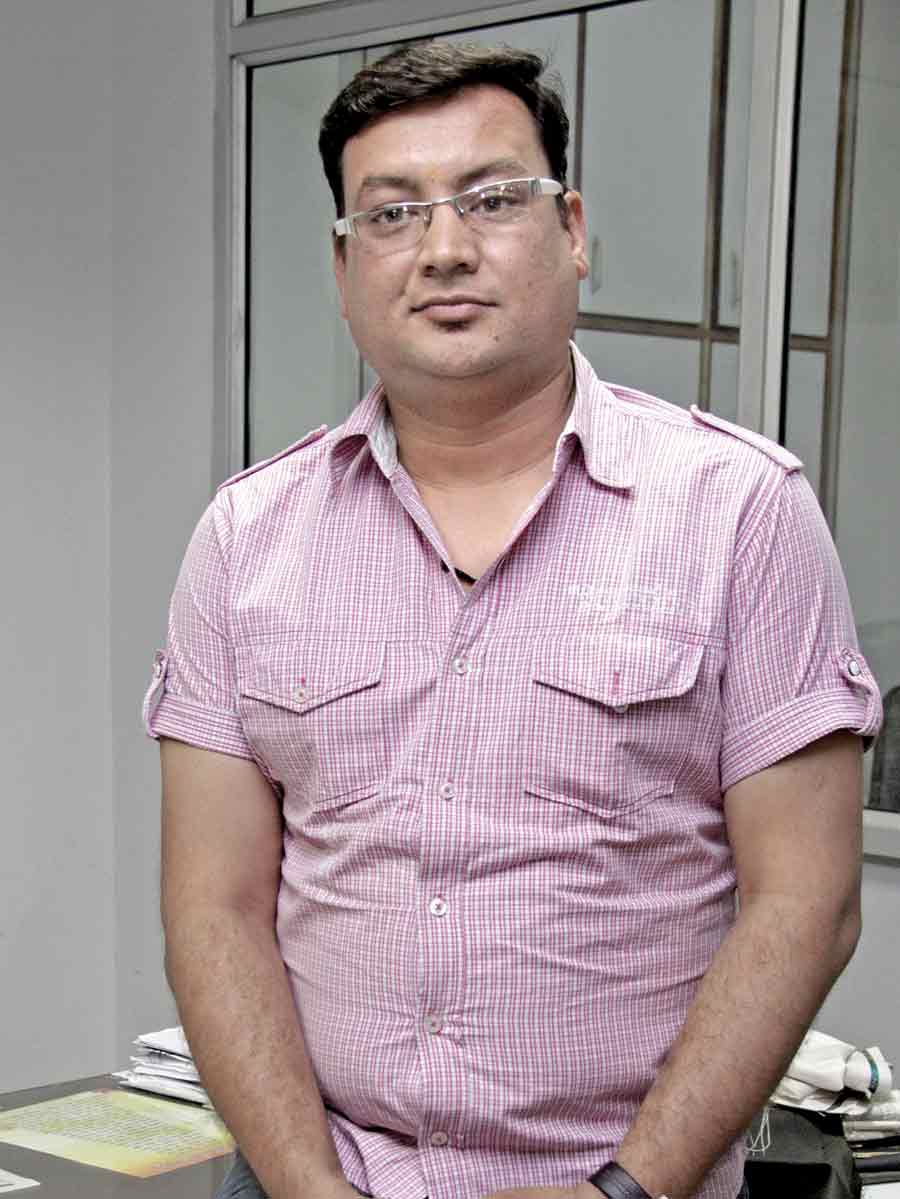
Working with the domestic market for synthetic fabric bases for suiting and upholstery products, Chhabra Syncotex was initiated in 1988. Majorly dealing with wholesalers, the group is a cluster of three companies namely Chhabra, New Point and Newton, all completely dedicated to the textiles segment. While Chhabra and New Point work with suiting bases in PV, PC, polyesters and cottons for menswear, Newton is manufacturing fabric for the home furnishing segment.
With a total fabric production capacity of around 1.5 crore metres per annum, the group’s current turnover is Rs. 70 crore. Apart from their weaving, the company also has an in-house unit for processing and finishing that processes somewhere around 30 lakh metres of fabric every month.[/tab]
[tab title=”GALUNDIA TEXTILES”]
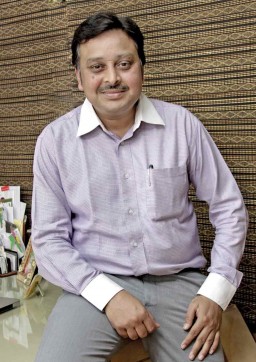
Mumbai based company, Galundia Textiles, started off as traders for corporates like Raymond, BSL, Mayur and Digjam. With time the company went in for backward integration and started manufacturing fabrics. The company works with projectile, Sulzer looms from Switzerland and manufactures 100% polyester and PV blended fabric for suiting, in Bhilwara. The Mumbai unit looks majorly after the manufacturing of linens in shirting and suiting, 100% wool and garments. The company is catering to buyers in the Latin American market and Europe. The companies FOB’s for Latin America lies anywhere between US $ 2.25 to US $ 2.75 per metre. While all the basic qualities are being outsourced from Bhilwara, the company’s current fabric manufacturing capacity is 4 lakh metres/month. [/tab]
[tab title=”JANKI CORP. LTD.”]

Janki Corporation, which commenced in 1994, started its operations with the processing of fabrics, after adding weaving in 2000; the company is today dealing with both processing and weaving of fabrics in Bhilwara. Working with bulk quantities the capacities of the fabric being processed and woven in the company is around 60 lakh metres and 15 lakh metres per month, respectively. Catering to the current market demands, while the organization is processing polyester based fabrics including PV, PC and RFD (fabrics that are dyed after the stitching process); they are also weaving cotton fabric for shirting material.
Operational with 86 air jet looms and 205 sun jet looms, for both the domestic and the export market, the organization is exporting its material directly to South America, Gulf and the African countries. The turnover of the organization in the textile segment is somewhere around Rs. 75 crore.[/tab]
[tab title=”SARVODAYA SUITINGS”]
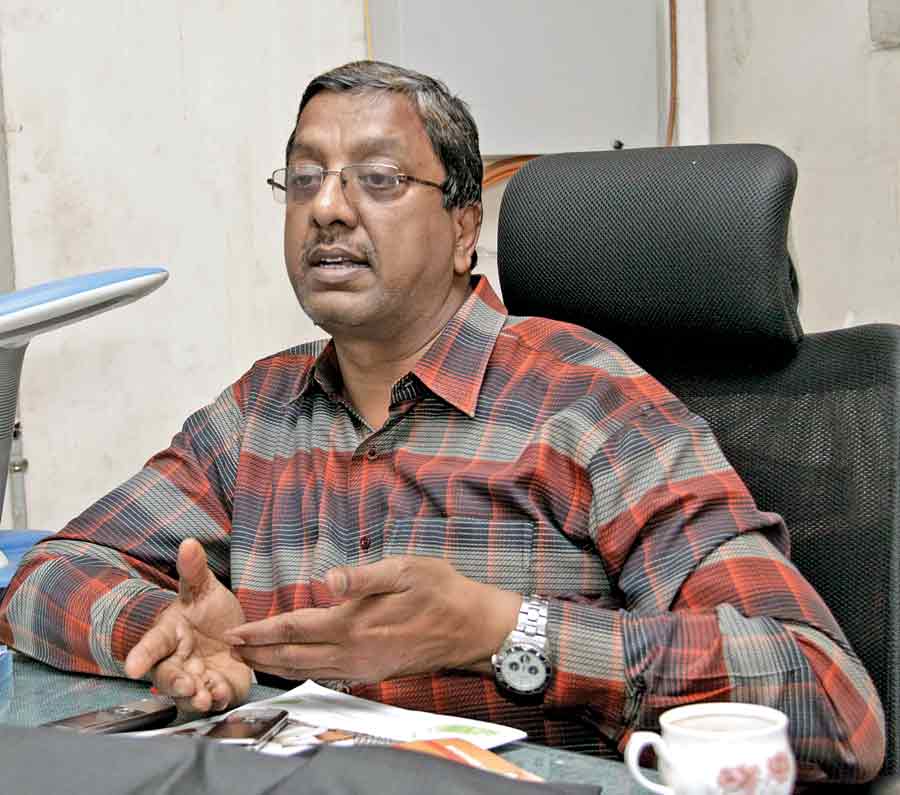
Initiated by brothers Abhay Jain, Sushil Jain and Kamlesh Jain, Sarvodaya is a wholesale supplier of fabrics that deals with both weaving and processing of fabrics suitable for shirting and suiting requirements.[/tab]
[/tabs_container]




 Bharat Tex Special Report 2026