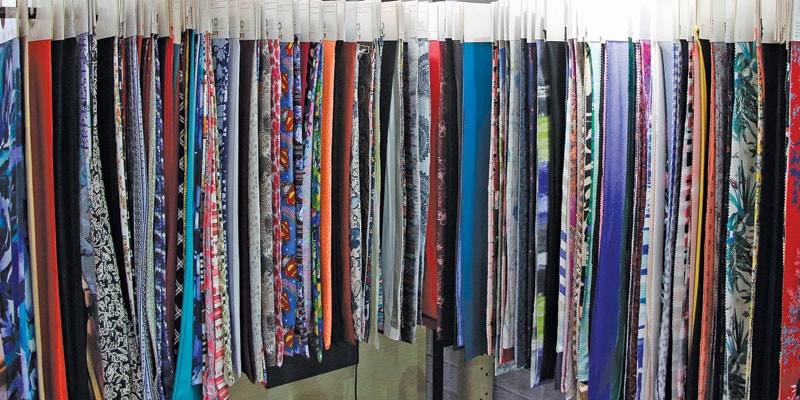
 With increasing focus on comfort and fitness, there has been a rise in the demand for knitwear in the global market. Products like T-shirts, polos, sportswear, undergarments and leggings are popular categories with the bigger umbrella of knitwear. While flat knits are more high-end and season-driven, circular knits have a very wide spectrum from very basic tees to specialized sportswear. India has traditionally been a woven garments industry with shirts, ladies’ blouses/dresses, shorts and skirts being among the key categories in exports, but the shift towards knitwear is are now evident, and besides the knit capital of the country – Tirupur, other destinations like Kolkata, Bangalore and Delhi-NCR are also increasing their share in the export basket.
The export of knitwear from India accounts for around 45 per cent of total garment exports and of that 44.29 per cent is coming from Tirupur. Riding high on increasing demand, the hub is looking at around 15-20 per cent growth year-on-year over the next few years. In fact, the hub is so well established that many buyers are not really exploring the potential of upcoming hubs. “We have been doing knits from Tirupur since last 20-22 years and have a small office set up there. We tried Delhi-NCR too but our prices are very competitive and only Tirupur suppliers are able to meet them,” admits Shalini Bhindra, Manager Admin/Finance, KappAhl.
With time buyers have categorized the hubs on their strengths and understand from where to source, depending on global demand. So, while Tirupur is the competitive hub, giving even Bangladesh a run for its orders in certain categories, it is the Delhi-NCR manufacturers that are the preferred choice if fashion or semi-fashion knitwear is the demand.
“The core strength in this region is fashion garments as this region is not good for basics. Any kind of embroideries, embellishment or hand-work is good to do here,” says Sanjeev Jain of TQM Buying. According to a rough estimate, more than 700 big and small factories are working on knitted garments in the region.
Though no new players are coming in, exporters who already had strength in value addition are now using it to gain share in knitwear too. “We started our knit operation very recently as we don’t want to miss any buyer or any order which we can do. Knits is currently 20 per cent of our total business and every buyer wants styles with value additions for which Delhi-NCR is known for, like we do hand-work/adda work etc., while Tirupur or any other hub can’t do such work. As labour is cheap in all other hubs compared to this place, they still prefer and will continue to focus on majorly basics items,” reasons Praveen Sharma, Director, Click Clothing Company, Faridabad. The company is committed to increase capacities in knits after six months, once the buyer demand for their products become clearer.
It cannot be denied that with the changing scenario across the world and greater emphasis on knitwear, as both casual and formalwear, exporters are compelled to add/enhance knit segment. “Knits market is overall growing across the world so I feel that Delhi-NCR as a hub will also grow at least by 10 to 12 per cent in knitted segment. As far as buyers’ interest for knitted garments of Delhi-NCR is concerned more than any other hub, innovations, product development which is the strength of Delhi-NCR is driving buyers to come here for knitted products too. And this is despite the fact that Delhi-NCR is costly compared to any other knitted hub. But the factories working with proper systems are managing cost too,” argues ML Yadav, Marketing & Merchandiser Head, Pasupati Spinning & Weaving Mills, Dharuhera (Haryana).
The big names of the knitting segment in the region include Shivalik Prints, OC Knits, Dhruv Global, Shahi Exports, Pearl Global, Maral Overseas, Celestial Knits, Matrix Clothing and Shree Bharat International. While integrated setups are quite common in knitwear, as installing circular knits is much easier than having weaving capacities, there is always a need for differential fabrics and different processes to meet buyer demands, which are not necessarily viably available in-house.
Earlier Faridabad was the centre for fabric and processing units, but now many of them have moved to the outskirts to be more compliant to environmental concerns, and also expand capacities to meet the growing demand. Some of the best suppliers of international quality knitted fabric are Mercury Fabrics, Richa Knits, Shyam Tex, Syndicate Fabrics, Bir Horizon, Hotz Industries and Raj Knitter to name some.
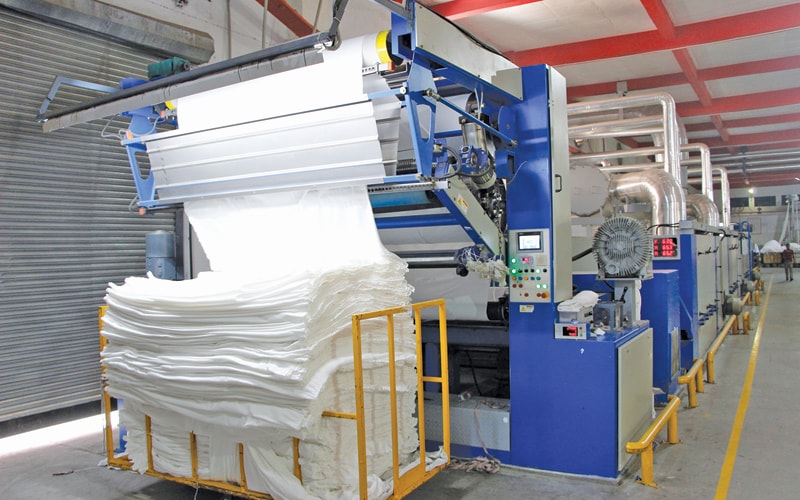
Most of the companies have invested in latest technologies in knitting, printing, washing and finishing to give fabric that is being appreciated by global buyers. Mercury Fabrics, being one of the largest knitted fabric manufacturers in India, is a significant supplier to many leading fashion labels of the world including H&M, C&A and M&S.
The factory in Bawal, Haryana on the outskirts of Delhi-NCR has been built on the lines of a European factory and equipped with best technologies from Europe. Currently, the company produces 600+ tonnes of finished fabric every month out of which more than 50 per cent of its production is into blended fabric. “The range and quality of knitted fabric, especially in prints that we have, no one else has in the Indian market,” claims Tajinder Sachdeva, MD, Mercury Fabrics. Though the company has clients across the country, Sachdeva agrees that in the last five years the demand from the Delhi-NCR has increased manifolds.
Printing on knits has become strength of the region and there are now two strong companies in the north doing all-over prints – Mercury and Bir Horizon. Also with most of the processing units moving to the outskirts for both environmental reasons and to expand, the processing strength of the region is now among the best in the country. Buyers acknowledge this strength and appreciate the potential. “Technically the Delhi-NCR supply chain in knits is very sound and workable, but only from a high-end product point of view,” says Jas Mahindru of MEGA BRANDS. Even knit exporters in other regions accept that the Delhi-NCR has certain unique niches. “Delhi has its unique strengths, be it connectivity or image of established export hub, after Tirupur; Delhi is much more organized as a sourcing hub than other smaller hubs; also the type of value-added strength in processing of knits that they have, is not there with Tirupur even, despite being the ‘knit capital’ of India. No doubt, the Delhi-NCR is a very potential market and will be much more potential in the future with the recent initiatives of Government, as we anticipate more expansions in knitted segment across the country, including in Delhi-NCR,” avers Manoj Tandon, VP – Garments, TT Ltd., who is stationed in Delhi to interact with buyers for their knit products.
Though the region has all that it takes to be different, the buyers are still sceptical. “Though in terms of technology and PD, it has worked very well for players in the region, but the price economics is pushing it down. Secondly, the quality aspect and time commitments of small players are not trust worthy, which needs to be improved. The mantra to success is to put up big factories as the prices are workable only on huge scale, that is what other hubs are doing,” argues Sanjeev. Jas bats for better policy support for the knit industry in general. “The knit segment as a whole in India suffers and the problem is the import duty structure for the goods shipped from India in comparison with Bangladesh. Customers save straight 11-12 per cent. Even if we compare with our Tirupur source, then also the bigger-budget customers, especially from Europe, prefer to visit Bangladesh because they save 12 per cent. We need some sort of treaty to promote manufacturing and that will benefit the industry as a whole,” implores Jas.
Yet, buyers are sure that the Delhi-NCR will survive as a knitting source for its inherent qualities. “Bangladesh has very big factories, I have been buying from there for past eight years. The smallest factory I find is like 250 machines, and I work with factories even as big as 4,300 machines. So, there is literally no competition. In Tirupur, still there are factories which are workable (on price), but the advantage we have in this region is that Bangladesh cannot do fashion jobs and thus sticks to basics and gets volumes; this forte is not easy to replicate in a hurry,” concludes Sanjeev.