The Central Silk Board (CSB), a statutory body of the Ministry of Textiles (MoT) recently notified about the newly developed groups of silkworm seeds of mulberry and Vanya silk. The Textile Ministry claims that the new development will boost productivity and help in enhancing growers’ income.
In an official statement issued by the MoT, it was marked out that these silkworm groups will enhance the income of the farmers with its improved productivity and quality.
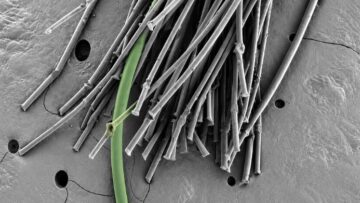
Notably, Silkworm breeds for a particular agro-climatic location are necessary for accelerating the productivity of cocoons. Tropical Tasar Silkworm (BDR-10) group is developed by the CSB and it can be 21 per cent more productive than the traditional Daba breed.
This silkworm range will aid the tribal farmers belonging to various parts of the country such as Jharkhand, Chattishgarh, West Bengal, Maharastra, Madhya Pradesh, and Uttar Pradesh etc., as they can get 52 kilograms of cocoons per 100 disease free layings (Dfls).
Additionally, Multivoltine x Bivoltine Mulberry hybrid (PM x FC2) group of silkworm can make 60 kilograms per 100 Dfls and the Ministry claims that this group of silkworms are more productive than earlier race PM x CSR. The high-quality silk and significant egg recovery make this race more appropriate for the farmers.
While for the farmers belonging to Arunachal Pradesh, Assam, Bihar, Maharastra, Madhya Pradesh, Manipur, Meghalaya, Mizoram, Nagaland, Odisha, Sikkim, Uttar Pradesh, Uttarakhand and West Bengal, Eri Silkworm (C2) race has been termed more sufficient than the local breed. It can create 247 numbers of Eri cocoons per 100 Dfls.