For the last two decades the garment industry has been a priority sector for Bangladesh with the Government giving every possible support to increase revenue. No wonder, today Bangladesh is one of the biggest garment manufacturing centres of the world with almost every brand/retailer sourcing from the country. While the success story of the industry is phenomenal, it has unwittingly also resulted in a major dependency on the industry for measuring the health of the Bangladesh economy with nearly 75% of earning coming from garment exports. Though many may argue that this goes to show the strength of the industry, the counter argument is slowly taking root that such dependency on one sector could in the long run be deterrent to long-term growth of the country… Apparel Online talks to leading Associations and basic support organizations like banks and infrastructure developers to understand the direction of future growth…

The one fact that comes out very strongly when talking to anyone associated with the garment industry is the honest fact that it is cheap labour which has contributed to the growth of the industry. Most of the people realize that till Bangladesh continues to give edge in worker wages, the country will continue to prosper, but with cheaper countries like Cambodia, Myanmar, Vietnam moving up fast, there is a realization that Bangladesh needs to prepare an alternate growth plan. There are two approaches… one, take the China route and move up the value ladder to give products that are ‘value for money’ and not just basics; or two, develop other industries like pharmaceutical, IT, fibre glass to reduce the chances of a backlash if buyers move to other low-cost countries.
[bleft]There are two approaches… one, take the China route and move up the value ladder to give products that are ‘value for money’ and not just basics; or two, develop other industries like pharmaceutical, IT, fibre glass, etc. to reduce the chances of a backlash if buyers move to other low-cost countries. [/bleft]
Both the BGMEA and BKMEA are focusing on encouraging their members to improve working conditions and provide ‘better quality’ to retain the edge. “We are working closely with the industry to retain our edge in knitwear, which has been a major growth driver in the last decade as many fresh competitors offer cheaper alternates,” says AKM Salim Osman, President, BKMEA. He is not a man to mince words, and openly admits that the industry has been thriving on cheap labour, but now it is time to review and work to improve the image of the industry. “In order to make growth sustainable, we are working with our development partners to institutionalize standards in the areas of compliance and environment. We have successfully vented in a sense of awareness regarding the urgency of compliance among our entrepreneurs and I am sure that days are not far when Bangladesh will be projected as the most reliable sourcing destination,” says Salim Osman. Worker benefits is a major focus area and only recently the association has been successful in increasing the insurance amount to Taka 2 lakh from the existing Taka 1 lakh for workers who lost their life in unfortunate incident like fire.
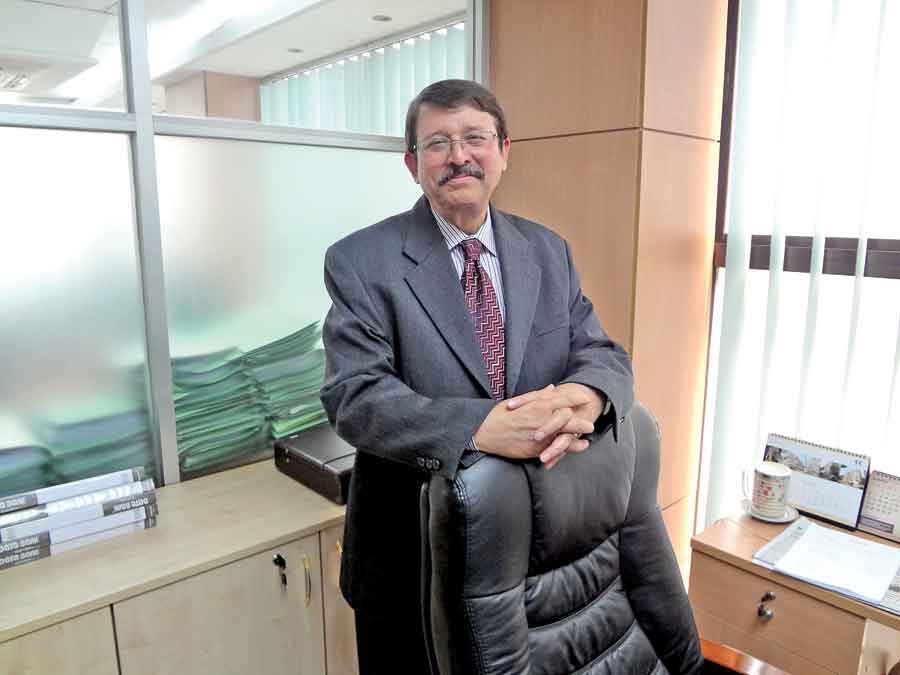
In the area of technology improvement, which has been a long standing demand from the industry the BKMEA has equipped the BKMEA Institute of Apparel Research and Technology to discharge its role in the dissemination of modern technology and management practices. “We are placing a lot of focus on training, especially in the middle level management and a whole new generation of students is preparing to join the industry as professionals,” informs Salim Osman. The organization is working relentlessly to listen to the problems of the industry and also address needs of the buyer to ensure that they are satisfied and continue to place orders in the country.
[bleft]It cannot be denied that changes do not happen overnight and the BGMEA has put its weight on the accelerator to improve human resource conditions, from training to transportation facilities to dormitories and better spaced out factories, but where the lacuna arises is in the communication of the efforts to the right sources. [/bleft]
Away from the association, it was interesting to note that though garment sector is an important business provider, but the thrust is no longer only on garments. “We are not giving any special privileges to the garment industry and the focus is providing facilities for industry to open units at the various EPZs in Bangladesh whether it is garments or any other,” says Major General KM Mominur Rahman, the newly appointed Executive Chairman of Bangladesh Export Processing Zones Authority (BEPZA). Interestingly, Rahman points out that the only real advantage for any industry to open a unit in the EPZ is the proximity to all facilities in a defined radius as against having a unit outside the zone. The labour wages are fixed in the zone irrespective of the industry and support structure that includes electricity, water and gas, enclave for workers dormitory and day care centre, warehouse, bank, courier, post office, C&F agents, shipping agent, customs office, police station, in-house security, fire station, public transport, medical centre, restaurant, health club, investors club, recreation centre, school and college, sports complex, exclusive telephone exchange, electricity substation, business centre to name a few.

While the 8 EPZs are not focusing on apparel exports as a thrust area, however, realizing that many foreign companies including Indian companies want to take advantage of Bangladesh wage rates and setup units in the country, the Government of Bangladesh is planning to establish new Special Economic Zones (SEZs) in various parts of the country in an effort to promote industrial manufacturing and services for export – specifically in the textile and garment industry. SEZs are designated geographic regions that possess economic regulations and liberal tax laws that differ from the country’s national laws and are more conducive to foreign direct investment.
In Bangladesh, there are many private banks and over the year these banks have played a very crucial role in supporting industrial growth. Yet, they are not differentiating between industries and are looking to play safe. “We prefer to work with bigger companies and any garment exporter with less than US $ 5 million turnover is a risk for us,” admits Dewan Anuwarul Latif, Deputy MD, Premier Bank, a leading bank of Bangladesh. The Management of the bank does in its own way support growth, providing lower rate of interest to companies with bigger business orders, but there is no preference to the garment industry.
[bleft]The only real advantage for any industry to open a unit in the EPZ is the proximity to all facilities in a defined radius as against having a unit outside the zone. The labour wages are fixed in the zone irrespective of the industry and support structure which includes electricity, water and gas, enclave for workers dormitory, day care centre among other facilities. [/bleft]
Yet, the Government is not backing from its responsibility and the Government-run Central Bank of Bangladesh has recently enhanced the credit facilities available to apparel exporters after increasing its Export Development Fund (EDF) from US $ 500 million to US $ 600 million. The move is intended to help exporters – especially apparel exporters – faced with lower export growth due to the ongoing global economic meltdown. Under the EDF scheme, the Central Bank provides short-term liquidity to exporters through commercial banks to help with financing imports of raw materials, accessories, spare parts and packing materials under export letters of credit (L/Cs) with a single borrowing limit of US $ 10 million.
Exporters feel that more than anything it is the perception of the country that needs to be changed for further growth…
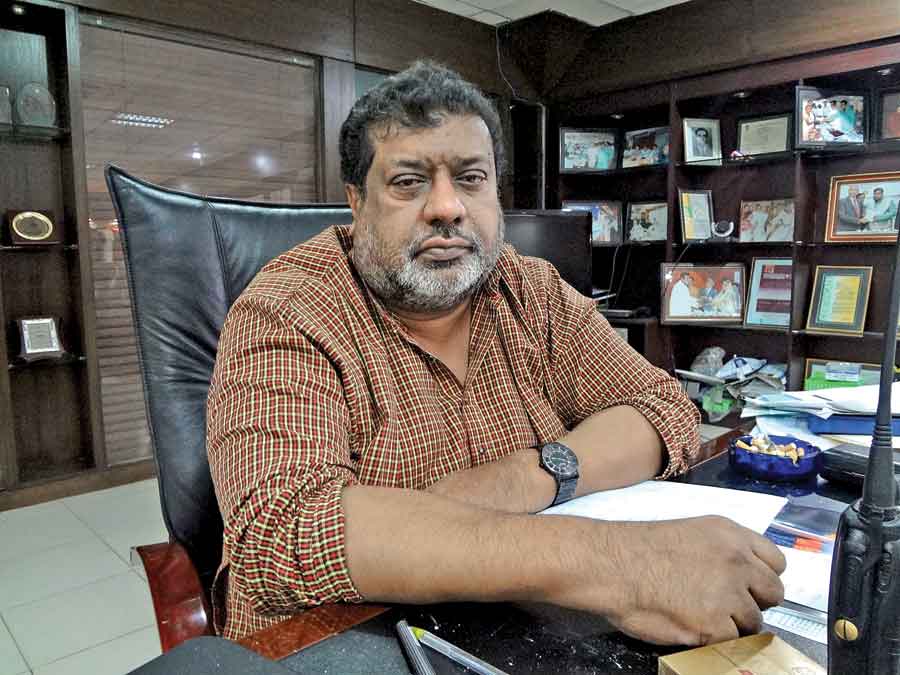
To some extent exporters understand that over the years the Government and associations have played a major role in supporting the growth of the industry from industry-friendly policies to active participation in developing a conducive environment that encourages garment exports. In fact, even the usual cribbing related to infrastructure, shortage of energy and other such issues is now being taken as challenges, not deterrent to business, but one factor that is today considered of utmost importance is improving the perception of the country and the industry to attract more business. “Where we are really facing a roadblock is in the way that international buyers look at us. Every day we get complaints from some country claiming that we are not doing our business ethically, but that is not true,” says Arshad Jamal, Chairman, Tusuka Fashions, and Director at BGMEA.
[bleft]In Bangladesh, there are many private banks and over the years these banks have played a very crucial role in supporting industrial growth. Yet, they are not differentiating between industries and are looking to play safe. The banks prefer to work with bigger companies and any garment exporter with less than US $ 5 million turnover is considered a risk to work with. [/bleft]
Arshad claims that the country has come a long way. And though cheaper wages may be one of the biggest advantages that the country offers, worker interest is also a priority. “The job of BGMEA is much tougher than what associations in our neighbouring countries are doing as we have always been the caretaker and today we are handling over 5,000 factories, with each of the directors taking care of important issues including labour welfare, fire security, environment hazards and favourable working atmosphere,” informs Arshad. He is worried that despite the increased business volumes in the country, buyers pull away from taking responsibility if some untoward incident occurs despite the best precautions. “For us it is a dilemma, should we take the orders and sub-contract some of their to meet the deadlines and price points as demanded by the buyer, who is all-truthfulness and knows the reality; or should we stick on to high moral grounds and let the business go, even when the buyer is encouraging us to go ahead,” argues Arshad.
[bleft]Worker benefits is a major focus area and only recently BKMEA has been successful in increasing the insurance amount to Taka 2 lakh from the existing Taka1 lakh for workers who lost their life in unfortunate incidents like fire. [/bleft]
It cannot be denied that changes do not happen overnight and the BGMEA has put its weight on the accelerator to improve human resource conditions, from training to transportation facilities to dormitories and better spaced out factories, but where the lacuna arises is in the communication of the efforts to the right sources. “Sri Lanka is the best example of creating a ‘clean reputation’ and we are trying to learn from them, but buyers too must stop being unreasonable. Why does Tesco offer shoppers jeans for 4 pounds, when they are picking up a cup of coffee for the same rate, does our effort count for nothing?” questions Arshad.