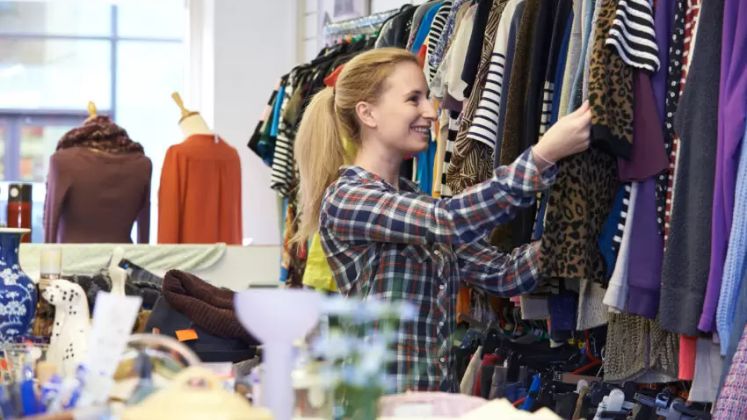
UK consumers reportedly spent £2.4 billion on pre-owned clothing and footwear last year, with approximately half of them opting for secondhand items. While these figures are not based on actual sales data but rather on a survey commissioned by Westfield, they offer intriguing insights.
The survey reveals that respondents, on average, claim that 23 per cent of their wardrobe consists of secondhand pieces, with the 18-34 age group leading at 34 per cent. On average, individuals purchased three secondhand items last year, with the over-55s averaging 1.7 items and young adults an impressive 5.3 items. London stands out as a hotspot for secondhand fashion, with an average purchase of 6.6 items.
Motivations for buying secondhand are varied and include low prices (36 per cent), sustainability and a rejection of fast fashion (16 per cent), style and quality (9 per cent), and the appeal of uniqueness (8 per cent). Nowadays, consumers have a broader array of options beyond traditional sources like jumble sales and charity shops, with platforms like eBay, Vinted, and Vestiaire Collective, as well as retailers’ own secondhand initiatives, driving market growth.
On average, consumers spent £ 91.60 on secondhand items, with the 18-34 age group and Londoners spending notably more at £ 120.40 and £ 133.20 respectively. Popular purchases include shirts/T-shirts (57 per cent), jackets (39 per cent), jeans/trousers (37 per cent), accessories (29 per cent), and shoes or trainers (26 per cent).
The trend extends to parents buying secondhand clothing for children, continuing a tradition of acquiring pre-owned items. A significant 59 per cent of parents purchased at least one secondhand item last year, with those of toddler/primary school age buying more than six.
Consumers also express openness to buying secondhand from high street retailers, with almost a third indicating they would be more likely to do so.
The secondhand market in the UK has been steadily growing, with a 149 per cent increase between 2016 and 2022, and a projected 67.5 per cent jump between 2022 and 2026, according to GlobalData.




 Bharat Tex Special Report 2026