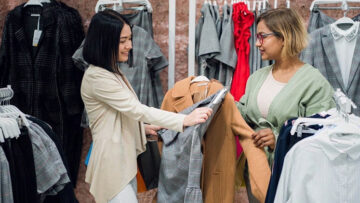
Enalytix, an AI-driven video analytics and field-force productivity company, has released new insights into footfall trends across India’s fashion and apparel retail sector for FY 2026, revealing evolving shopper behaviour, stronger regional demand and the growing importance of customer engagement in physical retail environments.
Mall-based fashion stores continue to significantly outperform high-street formats, recording nearly 50% higher footfall. Mall traffic also increased by around 15% year-on-year compared to FY2025, with weekends remaining a major contributor to overall store visits. Mall stores experienced approximately 40% higher weekend footfall, while high-street outlets saw comparatively moderate gains.
Despite lower overall traffic, high-street stores demonstrated stronger shopper engagement, with dwell time estimated to be around 10% higher than in malls. The findings suggest that shoppers visiting high-street stores are typically more intent-driven in their purchasing behaviour.
Tier-1 cities retained their dominance in retail traffic during FY2026, posting around 20% year-on-year growth and maintaining roughly 25% higher footfall levels than Tier-2 cities. However, Tier-3 and Tier-4 markets continued to emerge as increasingly important retail destinations, recording approximately 10% growth in footfall alongside stronger in-store engagement. Enalytix noted that a greater proportion of shoppers in these smaller markets spent extended periods in stores, indicating higher conversion potential.
Across city tiers and retail formats, the peak shopping period remained between 5 PM and 8 PM, contributing close to 46% of daily footfall. While apparel stores continued to attract strong browsing intent, categories such as sports and fitness also recorded relatively high bounce rates, reflecting a disconnect between store visits and sustained customer engagement.
Ethnic wear emerged as the strongest-performing fashion segment, generating nearly twice the footfall of other categories. Fast fashion followed closely, supported by high levels of repeat customer behaviour. Overall, the apparel category recorded around 10% year-on-year growth in footfall, underlining the continued relevance of offline fashion retail in India.
Regional growth patterns varied considerably across categories. Apparel retail expanded more rapidly in Tier-3 and Tier-4 cities, while sports and fitness retail formats recorded strong growth of around 30% in Tier-1 and Tier-2 markets.
Premium fashion stores recorded higher dwell times and stronger shopper engagement, whereas value-fashion retailers experienced nearly double the abandonment rate. The trend indicates that while value brands continue to attract substantial traffic, they face greater challenges in converting visits into purchases.
Enalytix further observed that in-store experience remains a decisive factor in driving customer conversion. Stores where staff interacted with shoppers within the first two minutes of entry recorded longer dwell times and lower bounce rates. Staff availability during the high-traffic 5 PM to 8 PM period was identified as a major operational factor influencing sales outcomes and basket sizes.
Fast fashion and apparel retailers are expanding more aggressively in Tier-3 and Tier-4 cities, while sports and fitness brands are focusing on Tier-1 and Tier-2 markets. Enalytix added that AI-led analytics and data-driven insights are playing a growing role in determining store locations, retail formats and in-store operational strategies.
Founder & CEO, Enalytix, Rajul Tandon stated that while malls and Tier-1 cities continue to provide scale, Tier-3 and Tier-4 markets are emerging as high-engagement ecosystems with strong conversion potential. He further added that the growing divide between value and premium retail segments underlines the importance of store experience, staff interaction and early-stage customer engagement in driving retail performance.