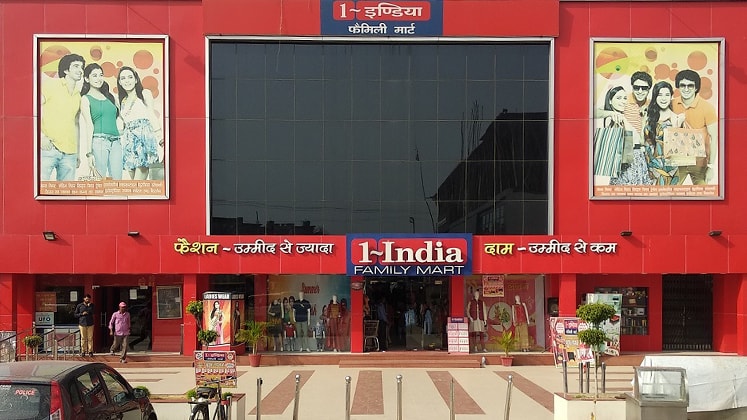
Indian retail industry has gone for a major transformation in the recent times and not just in metros but also in Tier-2 and Tier-3 regions. What was once all about the premium or international brands retailing in the metro cities, has entered the Tier-2 and beyond areas at affordable prices by what is now a new trend called ‘value retailing’. Even as there are discussions about a considerable rise in disposable income and thereby increased spending by consumers, they are now value-conscious and are aware about the what nots of the products they are spending on, more than ever. Today’s value seeking consumers are seeking for options to reduce their apparel purchase expenditures, but do not want to compromise on quality. To achieve this combination, retailers have come up with value retail stores, which is a big format store concept offering branded products and accessories under best deals and without taking a back seat on quality. Ravinder Singh, Director, 1-India Family Mart, explains, “A decade ago, if a product was sold in the market at a discounted rate, it would arouse suspicions in the mind of the consumers. However today, this behaviour has changed with the emergence of the value retailing concept. The buying behaviour for any segment can be divided into utility and luxury. Commercialisation, however, offers the consumer a plethora of different options wherein goods bought for utility can also be categorised based on quality and price. The concept of ‘value retail’ caters to this aspirational and pocket-friendly requirement of the buyers, bringing high street designs at affordable prices for the multitude. In this scenario, value retail stores meet their profits by virtue of large scale reach and unique target audience segmentation.
According to statista.com, the overall market value of apparel across India in the year 2017 was approximately Rs.5 trillion and this value is estimated to reach over Rs.9 trillion by 2023. Also, India is the world’s second largest textile and clothing exporter with a steady growth forecast. In a market that’s slated to grow enormously, retail stalwarts need a variation in the kind of retail that’s being offered to the consumers. India has had the two extremes when it came to retail – it was either premium for the urban areas or the unorganised local stores for the interiors of the country. “When we say value retail, we are referring to a more affordable retail format. In fashion apparel, we typically have an average selling price that is 25-30 per cent lower than that of the national level retailers, who are not value retailers but are delivering value in their own way. Value is taking over the whole of retail industry, as we talk, and even the national level retailers like Big Bazaar, Reliance and Aditya Birla Fashions Ltd., etc., have already launched and are expanding their value proposition in Tier-2, Tier-3 and Tier-4 towns as well. I feel that value retail industry will certainly witness growth in double digits year-over-year. Consumers moving to organised retail will roughly give a boost of around 1-15 per cent, and besides this, even as on the demand side, where consumers are shifting to value retailing formats in organised retail, on the supply side, retailers are either launching their value retail format or changing their business model itself to deliver higher value. Therefore, on both demand and supply side, despite the slowdown and recession, etc., the industry is poised for healthy double digit growth rate,” asserts Ranjan Kumar, Head – Strategy, Corp Comm & CSR, V-Mart.
Factors driving growth
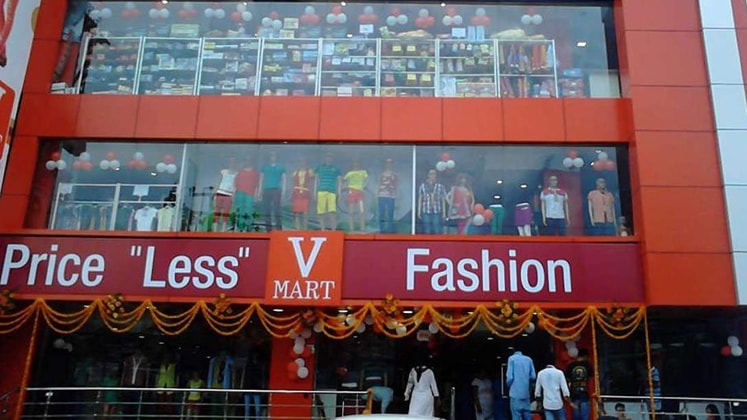
Value retail brands bring the latest trends and styles from across the globe and make it accessible to the consumers in Tier-2 and Tier-3 towns, who have become aspirational than ever today. So, what really led to the inception of value retailing? The genesis of it can be linked to the days of recession which caused a shift in consumer buying behaviour, who restricted their shopping budgets and opted to buy at discount sales or promotional offers, during then and this developed as a habit even after the world recovered from recession. This ultimately helped in the resurgence of retail and larger format value retail concept stores came into being. Unlike premium brands which use 3x multipliers to recover their cost, value retailers use only 1.5x multipliers, thereby offering consumers maximum cost benefit. So, what really is driving the growth of value retailing in India? Roopak Ganguly, Head- Retail Operations and Marketing, V-Bazaar Retail, says, “Tier-2 and beyond towns are the main focus areas for value retail chains. Retail in these areas were largely about local corner shops, owner-manned general stores, convenience stores, departmental stores, pavement vendors, etc. But the digital penetration and desire to look good slowly fuelled the growth of value retail chains which provide the consumers with low priced products that are of a lot of value to them. India’s retail market is expected to grow at a rate of 60 per cent facilitated by factors like rising income and lifestyle changes by middle-class and increased digital connectivity. We, at V-Bazaar, are growing at a rate of 15 per cent annually and the future looks quite promising.” The rapid growth in the segment is even posing a threat to traditional retailers who have been ruling the market for years now. Furthermore, the growing market value of value retailers is likely to create a deep impact on textile and apparel manufacturers as well who will have to follow different levels for each segment – for brands and value retail brands—differentiating on value curves.
Value retailers mainly target smaller towns and their target audience are from middle class to lower middle class or middle income family. These retail formats focus on aspiring class in small towns and cities in India. For V-Mart, the average age group falls between 15-35 years and household income in the range of Rs.5 lakh to Rs.8 lakh. In terms of average ticket size, it’s around Rs.320 for apparel segment for V-Mart, Rs.700- Rs.1,000 for V-Bazaar Retail and Rs.600- Rs.800 for 1-India Family Mart. The product basket at a value retail store ranges includes all things apparel such as casual, formal as well as ethnicwear for men, women and kids and the pricing of every product varies depending on the product category; however, most of them are priced below Rs.2,000 except for the festive collection which can go up to Rs.3,000 or so. Generally, these products are sourced from vendors across the country which is basically to keep the pricing of the merchandise very competitive and affordable for the target consumers. Ranjan Kumar maintains, “We do not manufacture in-house but source our product assortment from across 7-8 key hubs across India; more than 500 suppliers are connected to us and top 50 suppliers would have been with us for at least 10 years if not longer. However, we do have a dedicated design team which finalises the designs based on fashion trends from across the globe and customer trends which are actually the inputs we get from our stores, etc. The team translates that trend into designs which will appeal to our target audience, and as per these designs, our supplier manufacture for us. However, in other circumstances, the vendors have a set product line in which we can suggest some tweaks that can be done, the attempt remains to create some design differentiation in the market without compromising on the quality and affordability. While all our vendors are from India, we might source from China for accessories range.” While V-Bazaar too sources all of its products from India itself, it is now focusing on private labels wherein the brand will guide the vendors on the design front and would label it as its own brand.
Experience is the key
Like in every retail set-up, value retail chains too work a big deal on experience which is kind of an imperative for a successful retail establishment. Ravinder Singh avers, “The key to operational success of value retail stores is the consistent product outreach and demand and management of supply chain. Adhering to the niche requirement, value retailers serve every segment from different geographies with choicest goods that are the need of the hour. Whatever the product offering, value retail does not mean that consumers have to compromise in terms of the shopping experience, ambience and customer service.” With the rising competition and with the penetration of a number of players in the segment, customer service has become the only or most important differentiating factor in the segment, as the product, variety and pricing fall in the same gamut more or less. Ranjan Kumar backs this as he says, “Store experience expectation of customers in value retail is something which is at a very functional level, which means that small things like physical ambience(which will be important even for a luxury retail shoppers), comfortable shopping environment, working ACs, water coolers, clean restrooms, trial rooms, etc., are very important elements. Besides these, there are service experiences which I think can be differentiated even in value retail which means how well-trained or well-informed the customer sales associate is to understand customers and to recommend the best combination of fashion, quality and price which the person came looking for. V-Mart is incorporating a number of experience related services and is trying to make things seamless for our customers.”
For V-Mart as well as V-Bazaar and 1-India Family Mart, store experience is their biggest and most effective customer retention strategy. The fact that these large format value retail stores act as a mall or a one-stop family shop for the smaller towns necessitates them to offer the best of customer services and experience to the shoppers as well as the visitors. Besides, these retail chains also incentivise their consumers with loyalty programmes, after-sales product service, exchange & return policy, shopping vouchers, discounts, etc.
The discount dilemma
As established, value retailing is about getting best deals on merchandise which is mainly planned for Tier-2 and Tier-3 cities with the promotion of mega savings offer. In this case, giving out an additional discount will prove detrimental for the brand in the long run. These retail formats, however, give promotions in the guise of price-cuts, added freebies, etc. Roopak Ganguly avers, “The competition is very high and more the competition, more discount retailers will offer to customers. We do keep on running offers all year long, however, we keep changing the nature of it. For example, right now we are running a lucky draw on a daily and weekly basis. Along with that, we are offering shopping vouchers to everybody who is shopping for Rs.1,000, whereby they will get a discount of Rs.500 on their next bill.”
Meanwhile, Ranjan Kumar points out that offering discounts at an already minimal priced merchandise would harm the company in the long run. A company needs to defend its margins for operating and the ability to offer that value and quality to the customer will itself decline, threatening the very existence of business in the process. “We don’t see discounting in any way as a part of our long-term strategy. We do see higher value delivered to the customer as part of our long-term strategy which means instead of discounting, we would rather focus on how to deliver better quality, better looking, better fitting apparel at the same price or at a slightly higher price and something which my competition is unable to match not only in price but also in overall apparel range. These are the elements we are working on instead of discounting. However, there are of course short-term, practical steps we take, because there is customer expectation around the end of season sale, or post festive shopping season, we may be giving some shopping vouchers which can be availed in the next two months, etc. All of this is driven to not really create an expectation of being a discount retailer but rather to give a short-term boost to sales,” he adds.
Challenges and road ahead
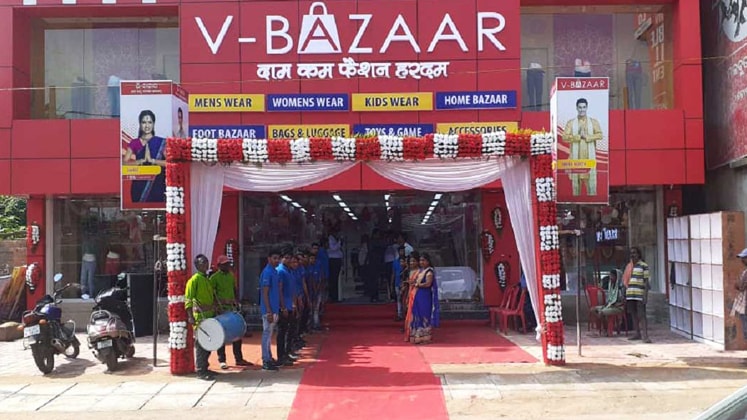
Since value retail chains cater to the Tier-2 and Tier-3 regions, their products cater to specific demands of these areas, which ultimately makes them a hit amongst the consumers of smaller towns. The rapid growth of value retailing in these areas have also started posing tremendous threat to traditional retailers and the trend of offering value pricing 365 days is penetrating deeper into the segment with every passing day. While growth is enormous and players in this segment are registering impressive turnovers and growth rates, there are few challenges that hinder the process, going forward. “Operationally speaking, the biggest challenge is always the availability of an ideal location to open a store with a reasonable rent and we can’t really go overboard in picking a location when we are looking for places to open our stores. Growing competition from other retailers in the format for those few prime locations in Tier-3 and Tier-4 towns, availability of trained staff in these areas, the attrition rate of these employees on whom the company invests for training (which is around 50-60 per cent), etc., make it difficult in setting foot in a market that is not trained and is relatively new for organised retail,” maintains Ranjan Kumar. However, despite the challenges, the segment is looking at a healthy double digit growth. Also, there is an opportunity from demand side to absorb hundreds of stores in the coming years, which has invited a number of new players entering the retail format.





 Bharat Tex Special Report 2026