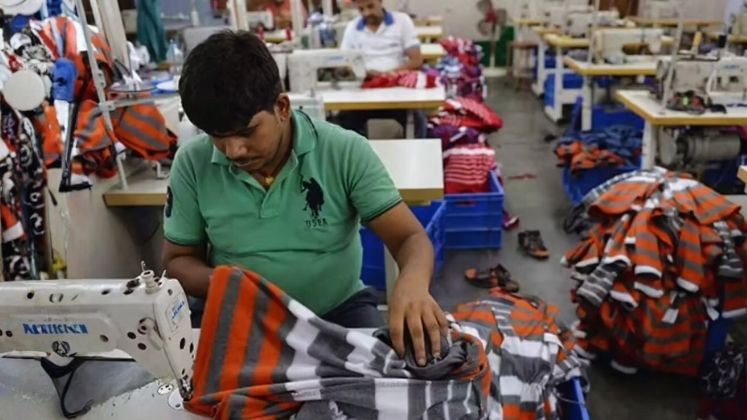
India’s apparel export sector has outlined a series of policy measures it hopes will be addressed in the forthcoming Union Budget, as exporters contend with higher tariffs in key markets and continued geopolitical uncertainty affecting global trade.
The Apparel Export Promotion Council (AEPC) has outlined a set of policy proposals, calling for targeted and time-bound measures to address pressures facing India’s apparel sector amid global trade disruptions.
The industry is contending with a difficult operating environment marked by higher tariffs in key markets, including the US, and prolonged geopolitical uncertainty affecting trade flows, logistics and demand. The council’s chairman, A. Sakthivel, said the sector was seeking focused interventions rather than broad-based support, with the objective of improving competitiveness, protecting employment and sustaining export growth during a period of external shocks. He added that budgetary measures could help reinforce exports as a growth driver while supporting the industry’s transition towards scale, technology adoption and sustainability.
Among the key demands proposed is the introduction of a Focus Market Scheme for apparel exports to the United States. The recent imposition of an additional 50% tariff on textile and apparel exports to the US has been cited as having significantly affected cost competitiveness in one of India’s largest export destinations. Under the proposed scheme, AEPC has recommended freely transferable incentive scrips equivalent to 20% of the free-on-board value of exports for the duration of the additional tariff, with the aim of offsetting costs and easing liquidity pressures for exporters.
There has also been a call for an enhancement of interest subvention under the Export Promotion Mission. It noted that the current 2.75% subvention, capped at ₹50 lakh annually, is insufficient in the context of rising borrowing costs. An increase in the rate to 5% has been sought, along with relaxation of the cap, particularly to support micro, small and medium-sized exporters. An extension for loan moratoriums falling due between 1st September and 31st December 2025 has also been proposed.
To support technology modernisation, a suggestion allowing 100% accelerated depreciation over two years for export-oriented units on eligible capital assets has been made. It has been said that this measure would improve short-term cash flows and facilitate investment in advanced machinery, energy efficiency and productivity, without resulting in long-term revenue loss to the exchequer.
A recommendation reintroducing the 15% concessional corporate tax rate for new manufacturing companies under Section 115BAB, which expired on 31st March 2024 has also been proposed. According to AEPC, restoring the provision would encourage new investment in apparel manufacturing, support job creation and enhance India’s competitiveness relative to other sourcing destinations.
In addition, the absence of a technology upgradation scheme for micro units following the expiry of the Amended Technology Upgradation Fund Scheme (ATUFS) in March 2022 has been highlighted. A new scheme focused on micro enterprises within the MSME segment has been proposed, noting that such units are not covered under the Production-Linked Incentive scheme.
On sustainability financing, AEPC has proposed the creation of a Green Transformation Fund to help apparel manufacturers meet increasingly stringent environmental, social and governance requirements imposed by global buyers. The council has suggested that the fund provide long-term soft loans at interest rates capped at 5% to support investments in green and sustainable manufacturing infrastructure.
Finally, AEPC has called for a reduction in the goods and services tax on textile and apparel machinery from 18% to 5%. It said lower GST would reduce the cost of capital investment, improve cash flows and encourage technology adoption, particularly among MSMEs.
The proposals form part of AEPC’s pre-Budget representation to the government as the apparel export sector navigates a period of heightened external pressure and shifting global trade dynamics.