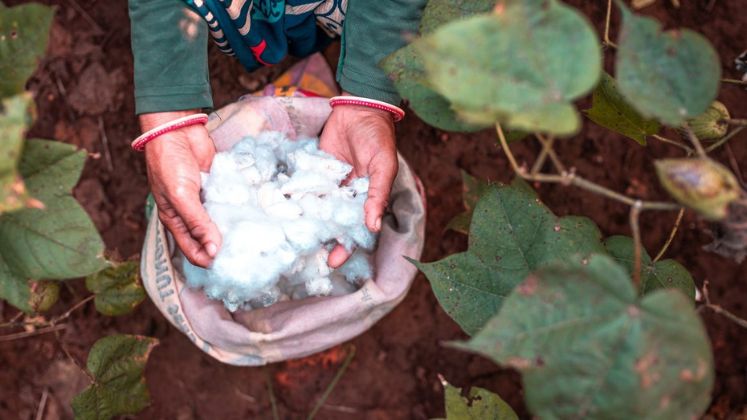
Better Cotton has published the 2023 India Impact Report which charts out significant levels of improvement in reducing field-level pesticide and water usage, better conditions of farmer livelihood and women empowerment. This comprehensive report offers a clear picture of progress made from the 2014-15 season to the 2021-22 season, as Indian farmers embrace the tangible benefits of sustainable cotton production for both people and the environment. Here are the key highlights from the report:
- Pesticide Use Reduction: The report highlights a remarkable 53 per cent decrease in overall pesticide usage among Better Cotton Farmers across India. This achievement stems from the implementation of capacity-strengthening training in Integrated Pest Management (IPM) and effective awareness campaigns. Particularly noteworthy is the sharp decline in the use of highly hazardous pesticides (HHPs), dropping from 64 per cent to a mere 10 per cent. Additionally, the use of Monocrotophos, a pesticide classified as highly toxic by the World Health Organization, plummeted from 41 per cent to just 2 per cent.
- Water Efficiency: The report underscores a 29 per cent reduction in water usage for irrigation between 2014-15 and 2021-22 season. Moreover, the application of Nitrogen, a contributor to greenhouse gas emissions in cotton production, decreased by 6 per cent per hectare.
- Improved Farmer Livelihoods: Farmers have been able to save more money than before, resulting in better livelihoods. In the 2021-22 season, total costs per hectare (excluding land rental) decreased by 15.6 per cent compared to the three-season average. These cost reductions can be attributed to decreased expenses in land preparation and fertilizer.
- Women’s Empowerment: There has been a noteworthy increase in the representation of women in Better Cotton field staff across India. In the 2019-20 cotton season, approximately 10 per cent of field facilitators were women, a figure that increased to over 25 per cent in the 2022-23 cotton season.
India has played vital role in the Better Cotton Programme since its inaugural Better Cotton harvest in 2011. This report introduces a fresh approach to reporting field-level data, providing valuable insights into the program’s long-term impact within the country.