The garment manufacturing environment in Bangalore is very professional, and this is not only reflected in the working of the factories which make structured products like bottoms and shirts, but also in those who have ventured into fashion garments. These companies are running their factories very differently, unlike the Delhi players known for fashion wear, with focus on efficiencies, in-house capabilities and workers’ training. Also interesting is the fact that many of these companies have roots in Mumbai, so they have been able to synchronize the fashion culture they bring from the city with the work ethos of Bangalore for a very potent and successful combination. Two such companies, Texport Garments and Go Go International, share strategies behind their growth and success with Team Apparel Online…
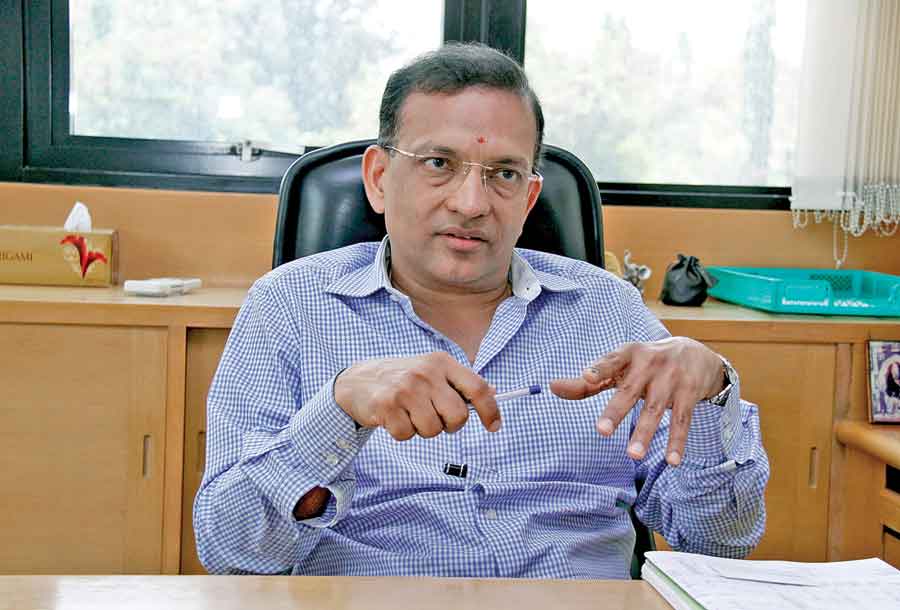
A pioneer in the export business, Texport Garments, which began operations way back in 1978 in Mumbai, is today one of India’s largest exporters with 14 factories, spread across 4 states, specializing in both womenswear and menswear, besides owning an international brand. The company’s strength lies in its product mix, consistent expansion and emphasis on quality and productivity. In conversation with Apparel Online, Naren Goenka, MD, Texport Garments, sitting at his corporate office in Bangalore shares his journey in the evolving Indian garment industry.
In a journey spanning nearly four decades, Naren has seen the garment industry undergoing remarkable changes in areas such as compliance, on-time delivery and quality, which were major roadblocks to growth, allowing many other manufacturing bases to race ahead. “Today India can take any kind of challenge in terms of quality, that’s why we are shipping for Walmart on one hand and Armani on the other. Best of brands are coming to India because of efficient factories and most of the big established factories have above 90 per cent track record on deliveries,” emphasizes Naren. He also feels that though India’s fabric production has consistently improved, the segment has not kept pace with garment production in terms of international development in textiles, which is a grey area today.
Naren recalls how Mumbai and Delhi were the two centres from where the garment export business was born, yet over a period of time a majority of exporters shifted their setups from Mumbai to the south, while Delhi continued to flourish, moving into the outskirts with expansions. “Rising manufacturing costs, increasing real estate prices and limited scope of expansion pushed many of the pioneers including Texports to venture into new cities,” says Naren. Among the first to make a move, Texport shifted to Bangalore in 1989, to discover soon after that the cost of production was in fact higher than Mumbai or for that matter even higher than Delhi. “Mumbai was a ‘jugaad’ kind of production centre as there was no organized setup nor any compliance or regulatory norms, whereas in Bangalore, all these regulatory setup costs were extra making it expensive than Mumbai, as for Delhi, it was and continues to be a mix of old and new systems. Bangalore has from the beginning been a 100 per cent regularized manufacturing base, which is why the most organized and automated factories are found in this region,” reasons Naren.
Today, Bangalore is faced with its own set of challenges, the biggest being shortage of skilled labour on one hand and continuous wage hike on the other. To tackle this problem, Texport provides 2-3 months training to minimum 12th pass fresher’s from catchment areas, preparing them to handle on duty tasks in the factories. “For the past 20 years we are operating our own training centres because we are moving into the interiors for which we definitely need to train people,” claims Naren. Through the companies training centres, on an average 100 person are trained in one go.
Though Naren does admit that the recent wage hike will erode margins, he also agrees that wage hikes are important in attracting more people towards the industry, which is today not a preferred employment option, even for unemployed youth. According to industry estimates on an average the garment industry pays Rs. 9,000 per month for unskilled labour, which is comparable to industry standards.

Texport Garments produces 1.4 million garments a month, 50% of which is womenswear and 50% is menswear. Although Bangalore has been technically equipped and is system-oriented, the cost of running the factories has increased, making it crucial for companies to be efficient. For this Texport is presently focusing on Lean Management and 5S through international consultants. “With wages increasing each year, our costs are also increasing by 10-12 per cent and in order to cope with this increase we have no option but to compensate the increase with higher efficiencies,” declares Naren.
Despite best efforts being competitive is still seen as a challenge in comparison to low cost producing Asian countries such as Bangladesh. Apart from being efficient, Naren stresses that the factories should focus on building bigger capacities by doing more basics while working on their niche area of product development. “To survive, a company should have a balanced approach with a few products that are specialized so that they get better margins through higher FOB’s, while the basics fill capacities. A lot of people ask me why are you expanding, they do not understand that we have a good mix of products which allows us to grow,” claims Naren. Texport Garments is adding 1,500 machines this year and is going vertical in 2016. Though India is known for its value addition and cannot compete in basics, but bigger companies are still looking for quantities in basics, as it requires less compliance restrictions and product development and is more production-friendly.
He explains that while commodity products may not allow him to grow, the niche segment where the bottom line is good activates growth. “Yet, if I reduce my business to just a niche area then also I cannot expand; in fact I will have to reduce capacities. And with the kind of capacities we have, if we start reducing then we cannot reduce in a year and by the time it will reduce in 3-4 years we would be suffering so many losses that we cannot survive. So you are inviting for more troubles by limiting your product mix,” argues Naren.
A clear strategy to strengthen product mix includes its US brand which the company started 14 years ago called Robert Graham, which according to Naren is amongst the number one brands in the men’s section and is being sold in 14 different countries through multi brand outlets and 15 own stores. The brand entails 90 per cent menswear while the rest is womenswear. Along with menswear and womenswear, the brand is also offering accessories, belts, shoes, which is possible through franchisees, providing it with strength, value and impetus for further growth.
India is not really known for experimenting with new products, with even the big players holding back due to the increasing costs for technical knowhow, verifications and quality checks. “One should expand their horizon and increase their product basket. Texport will continue to experiment with new products while maintaining a balance in the product mix,” states Naren. The philosophy is to be simple – focus on a product mix, which enables the company to earn good profits as well as propel further growth. “People should not slow down; they should have confidence in their business and should keep expanding. Once you expand, your overhead comes down and acceptability with the buyer increases. Then you become their premiere vendors and partners in growth,” concludes Naren.