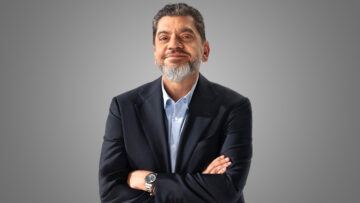
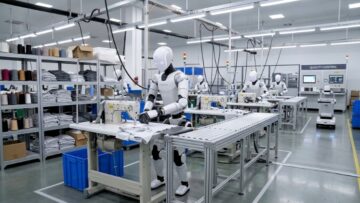
Automation is the mantra at EH Turel, with the company upbeat about the automated technology they offer, positioned to save on manpower and operation time, the two critical factors for competitive manufacturing. Under the guidance of Viraf Turel, Chairman of the company, the Turel Group has built a product base comprising of companies likes Tukatech, Duerkopp Adler, Kaiyu, Naomoto, Vibemac, Weishi, PFAFF, and Typical, in the process becoming a reliable one-stop shop for garment engineering solutions, with presence in all major garment manufacturing hubs of the country. The company brought to the table the new automated hand-stitching machines and the keyholing machines from Kaiyu; and the new Vinco puller attachment from Vibemac.
Typical on a mission to automate the complete sewing section of India’s garment making units

Manoj Kumar Gupta, representing Typical Sewing machines, confirmed the buoyancy in the market due to the new Government at the centre and claimed that the company has received good enquiries in the past two months and that the feedback from the market is extremely buyout. Machines offered by the group include the sewing machines with clutch motors; semi-automatic machines with electronic motors; and the top end fully loaded machines with features like under-bed trimmers.
Emphasising on the revolutionary X-feed system that addresses the issues of the inter-ply slippage, puckering and rope effect along the seam-line which are missed out by the drop feed, needle feed and unison feed, Manoj assured its visitors that the use of the term “puckering” would now be reduced in the quality reports of the manufacturer. Stirring a revolution in the stitching technologies, is its GC 6760, a direct drive, semi dry head, single needle lockstitch machine that can switch the unison feed from top to bottom. “Basic models are universal but the range of automats that we offer is beyond excellence,” says Manoj. From the pattern tacking, electronic button holing and bartacking machines, Typical is now offering its latest technology where a bartack machine can be transformed within 10 minutes into a button-stitching machine.
With such a comprehensive product portfolio, Typical is re-strategizing for penetrating deeper into the market to address smaller players through its dealers’ network. In an attempt to explore the smaller regions, the company has not yet marked its presence; it is looking to appoint new dealers in regions like Uttar Pradesh, Uttarakhand and Kerala. Following this, the company plans to setup an office in India to improve the after-sales services and be available to customers at all times and phases of their needs. “We will operate through our agents only, but to acknowledge the goodwill of the company, we have decided to setup an office in the country by this year end,” avers Manoj.
Having handled major projects with Raymonds’ tailor training centres in Lucknow, Barabanki and 17 more to come, the group now expects good business from Varanasi as the Government plans to setup small apparel clusters in the region. “Market response has been good, as majority of the existing players are expanding, and unlike last 2 years, Tirupur is also gaining momentum now,” shares Manoj. The company has taken upon itself the responsibility of educating its customers to go in for more automats as they can save power and also deal with the labour issues as well. Manoj adds that the company’s principle is to be a complete solution provider and not just a product or service seller.
Vinco offers “Developed in Italy” and “Made in India” puller-attachment for the industry

Setup in 2008 with a mission to offer reconditioned Vibemac’s second-hand units Vinco is an official partner of the company; present in India in a joint venture with EH Turel-Tech Division for the South Asian market. To facilitate smooth feeding of the fabric and to avoid the skip stitches in the crotch area of the trousers, Vinco has developed the versatile Vibemac’s 100-Puller-A attachment for the feed-off-the-arm machine, which is an extra back puller device to track the fabric faster and with better quality results compared to a standard sewing machine feed of the arm needle feed. The zero-max puller technology facilitates easy adjusting of pressure in the machine. Easy to install, this very pliable puller can be attached on any feed-off-the-arm unit. The basic need for developing this puller was to alleviate the three operations on a casual trouser or denim – the back yoke attachment, the left and right back rise and the inseam of the trouser. These operations involve a huge number of plies and are more complex to stitch.
If the clutch motor in the feed-off-the-arm machine is replaced by a servo motor and the machine is aided with this rubber feeding puller attachment, the efficiency of the operator or the productivity can be improved up to 20 per cent. Not only does this puller increase the production efficiency but it also adds on to the quality of the garment as it cuts down on any feed chews or damages on the fabric. With the assistance of its soft back belt, the automatic direct pressure on the presser foot endows the best possible quality on any kind of fabric from the lightest to the heaviest. The company claims the puller is extremely long-lasting and without the need of constant maintenance.
The pulling speed can be easily altered by an unskilled operator by just moving a lever up and down, without any imbalance and loss of traction of the machine in the material. The attachment goes on to aid the operator even after sewing, as the puller device is like a guide for the chain coming out. It controls and guides the chain into the cutter device if present. “With the advantage of being “developed-in-Italy” with superior quality and attention-to-the-details, this puller attachment is “made-in-India” and available at a great quality to price ratio, supported by effective service team in the local market,” says Viraf Turel.
Kaiyu presents operator-friendly automation

The CNC controlled electronic Eyelet Buttonhole machine from Kaiyu comes with an easy-to-operate panel and a large arm pocket of 120 mm, allowing smooth material handling. The machine assures enhanced productivity with a sewing speed of 2,500 stitches per minute. It enables fine stitches with high precision stitch points. Whereas, the automated hand-stitching machine operates with a direct-drive motor and is easily programmable. There are two versions of the machines available: KAI-W-781, the electronic motor driven machine and KAI-W-785D, the computerized version. While both the makes operate on a thread 90 cm long, locking of stitch is available only in the higher version. With automatic start and end back tack function, the direct-drive computerized hand-stitch machine can stitch up to 1,000 different patterns. The stitch length variable from 0.5-8 mm can be changed by the operator by lifting the needle bar with utmost ease in either of the models. The most unique feature of both the machines is that they can run on the finest of threads to a thread size of Ticket 10. This enables the machines to be apt for stitching finest silks as well as heavy denims and leather garments.