The number of innovations brought to the market is constantly increasing while the product lifecycles are reducing. In these circumstances the companies are looking for tools to make their supply chain more efficient and be able to quickly expedite various processes. One such tool is Radio Frequency Identification Device or RFID, whose key components are hardware, such as servers, readers and writers, tags, controllers and cables. The product tagging with RFID chips or labels help trace its lifecycle right from manufacturing to sales. Heading KDS Group’s accessories business, Debasis Daspal, CEO, KDS Accessories, discusses with Apparel Online the technological interventions in RFID, a two-part series, which make it a path-breaking technology. The first part discusses the key components of RFID and its benefits to the apparel & textile industry, while the second part, to appear in the next issue, will discuss the implementation level.
‘Nuts and Bolts’ of RFID
 RFID uses radio frequencies to transmit data between a portable device (attached to any product) through a reader (again a portable device) and a managing computer. Thus, the key components of an RFID system include a tag, a portable tracking device with an antenna and a controller (computer). The RFID tag contains a small chip and a coiled antenna to broadcast a signal. This tag is attached with the product. The signal, the tag emits, is captured by a ‘reader’ to track the product. The ‘reader’ is usually a remote mechanism, such as a handheld device or a satellite. It enables data capturing and tracking of items using radio frequencies and transmitting data between a managing computer and any of several portable devices.
Key components of an RFID solution consist of:
RFID software for integration to back-end and legacy applications.
Enhancement of legacy applications to sustain the value RFID can provide.
RFID chips, which are thin and small, vary in price depending on the amount of product information a retailer wants to receive from each chip. Chips can cost as little as 5 cents for a chip that tells the retailer only whether a product has been sold.
RFID has also kick-started development of newer electronic codes to manage product identification across the supply line. The Universal Product Code (UPC) system of barcodes has served its purpose for many years. Its ability to provide valuable information to retailers was helpful. Now, it is time to look at RFID technology that can offer quantum leaps in benefits to retailers. RFID tracking devices offer many advantages over barcode systems.
RFID adding value in textile supply chain
From the various applications of RFID across textile supply chain, one can sum up the following potential benefits:
Automated checkouts: RFID technology can calculate the total cost of merchandise in the cart automatically. Hence it reduces operating costs, speeds up the checkout process, reduces errors at the cash register, increases customer satisfaction and also reduces theft.
S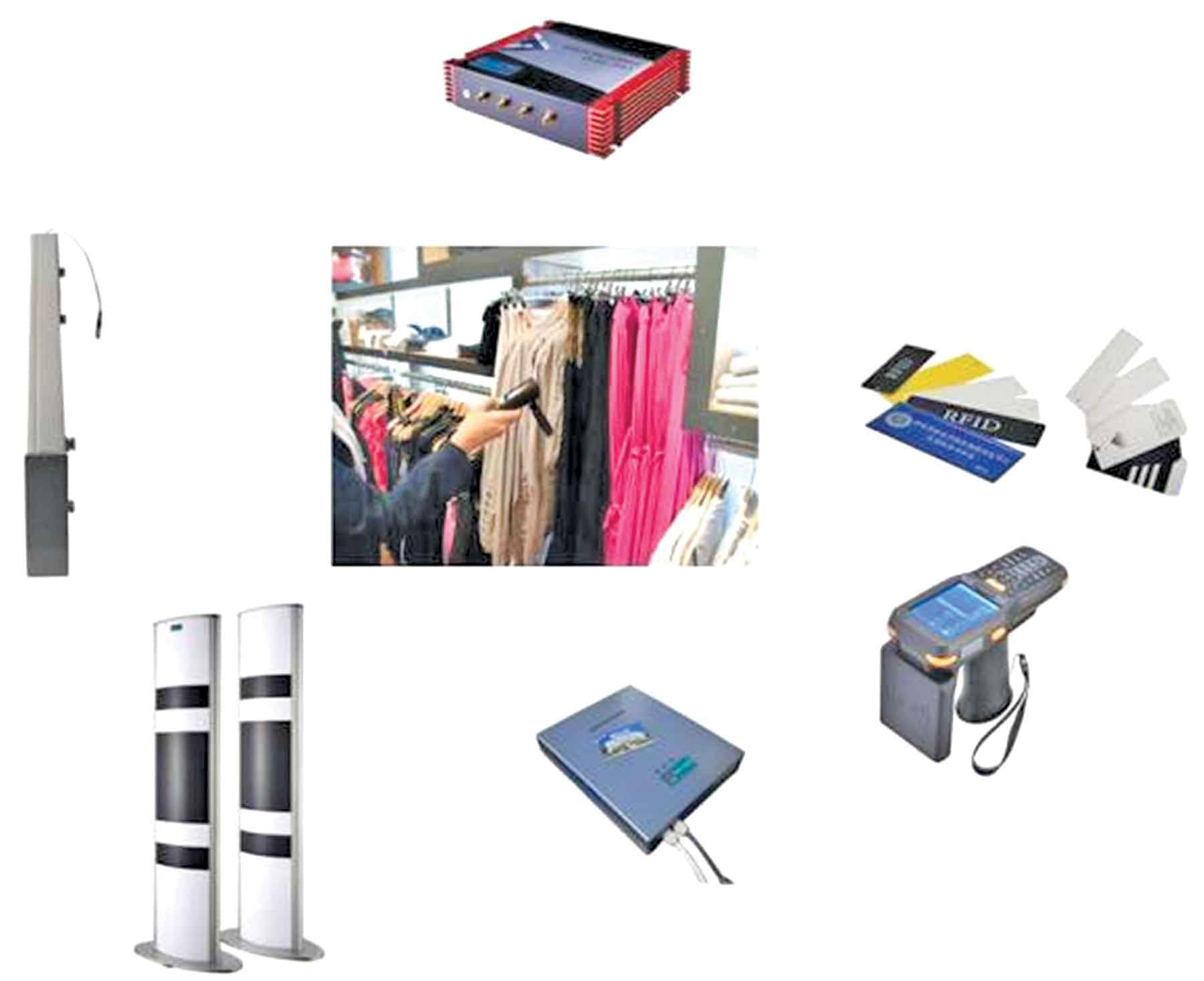 tore visibility: Retailers enjoy better visibility into store operations using RFID, including receiving backroom stock information, stock outs and the whereabouts of inventory in the store. This visibility enhances both customer service initiatives and merchandise security efforts.
Automated physical inventory counts: With RFID-ready detectors on all items, retailers can run physical verification of inventories multiple times daily or on demand. Inventory counts take just minutes to complete and require literally no human intervention once they are setup the first time. Retailers can save millions of dollars annually by reducing or eliminating physical counts.
Supply chain efficiency: RFID tags can provide extra security for cargo, improve visibility and lower the cost of moving goods. They ensure that the right merchandise is shipped to the right store at the correct time. Supply chain efficiency results in the reduction of labour force and an increase in sales, including asset tracking, reduction of out-of-stock scenarios, reduced inventory, quicker delivery, track and trace, produce to demand, faster recalls, and easy and accurate returns.
Merchandise quality: With RFID tags, items can be marked and tracked electronically. For example, asset tracking typically leads to better merchandise management in stores. RFID can also identify sources of diversion and counterfeiting and help with theft prediction.
Pricing accuracy and localized pricing: Smart shelves with liquid crystal displays can ensure pricing speed and accuracy. With the increase in the use of price optimization applications, RFID allows for immediate local pricing based on the results from the optimization output. This can reduce promotional re-pricing time significantly, providing retailers with enormous competitive advantage and labour savings.