With a history going back seven decades, L.C. Welting (LCW) with its headquarters in Germany and branch offices in the Czech Republic, Poland, Romania and Turkey, claims to be the only buying organization covering the emerging markets of Eastern Europe. The buying office has been primarily supplying home decor products to department and specialty stores in the US, Canada, Mexico, Chile, Peru, UK, Australia and Singapore. With a client base of top brand names to off-price retailers namely Tiffany’s, Bergdorf Goodman, Dillards, T.J. Maxx, Palacio de Hierro and Casa Palacio/Mexico, Ripley’s/Chile, David Jones/Australia to mention a few, the India office of L.C. Welting was opened in 2005 to support the global sourcing. Nitin Sood, Managing Director-Asia, LCW in a one-o-one with Team Apparel Online shares the nuances of the sourcing operations in India…
[bleft]We do very strict policing with the factories to make sure that they are not bypassing any compliance norms. Handicraft industry is very difficult, as half of the work is done in village homes so you need someone to collect the goods, put it in the factory, refurnish it and then ship it. [/bleft]
The India office is the nerve centre of Asia sourcing with the subsequently established offices in Philippines, Vietnam, China, and satellite offices in Thailand, Bangladesh and Indonesia managed by Philippines, all reporting to the India office. Today, the office sources around US $ 50 million from the region, with India accounting for about US $ 15 million. “The importance of the region can be gauged from the fact that I report directly to the Chairman of the company,” says Nitin, who prior to joining L.C. Welting served AMC, Li & Fung and Janco H.K. 60% of LCW’s business from the region comprises of hard goods, while 40% is textiles based products like quilts, duvet covers, cushions; the buying office is also doing a lot of upholstered furniture. “We do not do traditional products, it’s all contemporary, and upon specific request from the customers our market specialists inform the buyers of new products, trends and developments. The business environment is tough so you always pitch in yourself to add value on the table for the client for which one has to constantly work on creating products with new ideas to excite the clients,” avers Nitin who doesn’t believe in doing off the shelf business and is proud of the fact that he has a very capable vendor matrix, pan India.
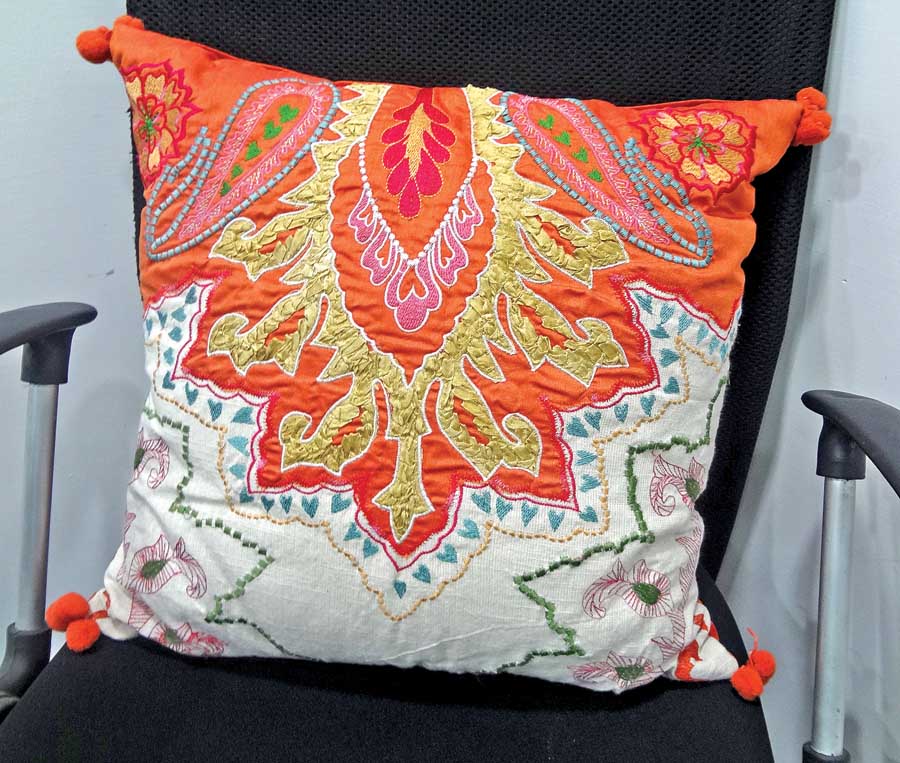
Procuring products from medium to high range, Nitin strongly believes that it is very important to work constantly towards giving value for money to his customers. “We do not look at a product as ‘material’, but as a complete presentation… sometimes even a silk cushion doesn’t have the perceived value and one would not like to spend 200 bucks on it, but if a cotton cushion is beautifully presented and finished it has a perceived value and one is willing to spend even Rs. 1000 on it,” avers Nitin.
From India, the major sourcing is of handcrafted products with contemporary look including hand embellished cushions, quilts, handcrafted furniture and accents. “Handcrafted products are flexible with the units, meaning there is no MOQ (minimum order quantity) from where we drive our business from; rest is too expensive,” says Nitin, according to whom the products which they procure are more collectable. He adds, “We take inspiration from fashion garments as well; recently we have shipped cushions for Pottery Barn, wherein we used ladies neck line embroidery on it and created around 50 types of designs in that collection. We have used Indian stitches like kantha, crochet, chain-stitch, chicken-kari, etc. We also have used kids’ raffles in cushions inspired by Monsoon garment collection and put it in such a way that it gives a 3D effect to give value. Then there was a cushion which has been inspired by ruche work. These products are very monochromatic. These Indian embroideries have been put together in such a way that it looks western and modern.”
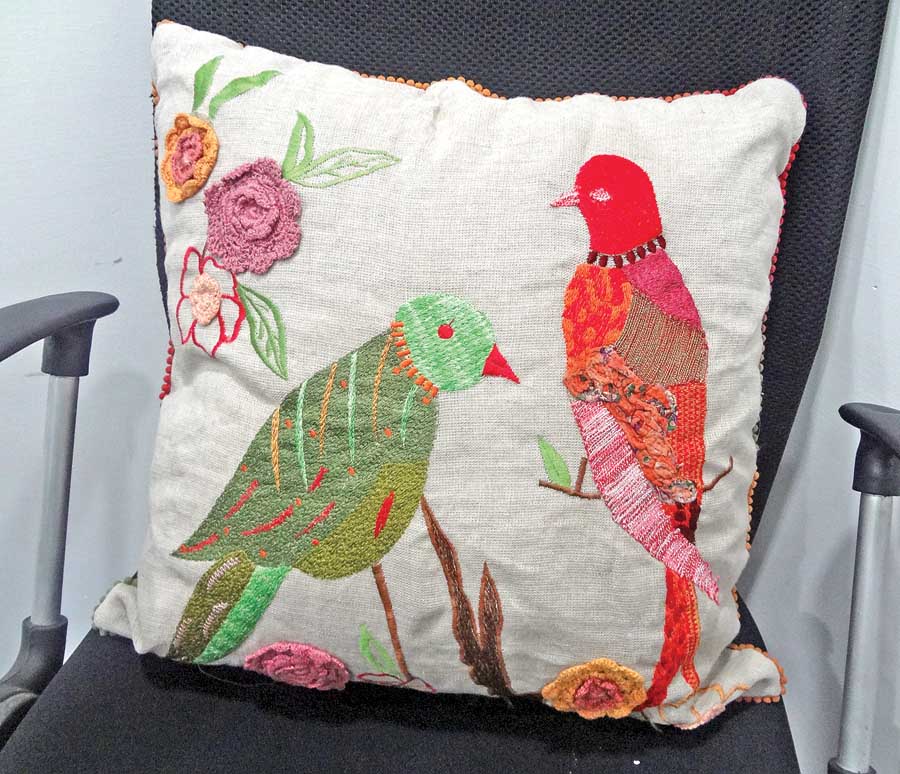
To maintain its niche for its clients, LCW makes extra effort to offer custom made products for which it picks the basic products from its vendor base and then peps it up to give a new look. “We do a lot of “Comp Shopping” (competition shopping), any company which is not my client is my competitor. We travel internationally, buy products from different stores, see what the retail point is; our agenda is that if a cushion cover is selling at Pottery Barn for US $ 50, can I get it at US $ 25 in retail with 50% or 100% margin to my client, so we do a lot of back walk. We know the resources from where we can pick the basic material from, we bring the new ideas on the table, go back and forth and finally out of 100 ideas 70% hit success and majority are re-ordered,” professes Nitin.
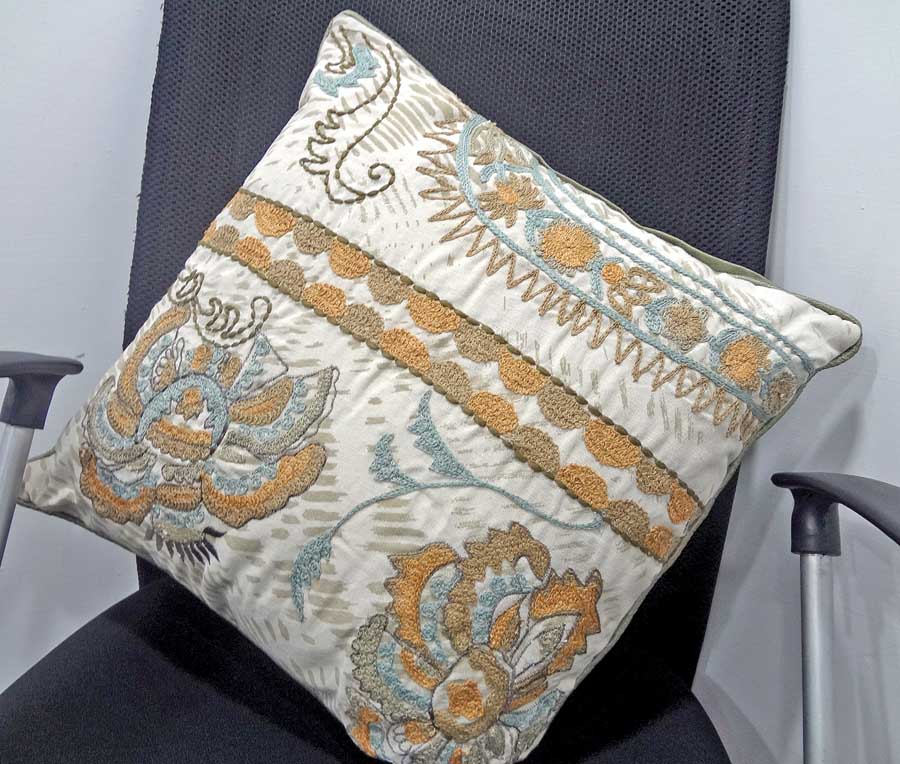
LCW is also aggressively doing off price business and some major players in this category are retailers like TJ Maxx, Primark, Hobby Lobby and Tuesday Morning. “These retailers do not carry the new product lines of the brands but they carry their discontinued lines, the lines which are getting obsolete and common; this trend actually picked up fast during the recessionary phase and is growing, so we are actively following this route too in our buying. We know some vendors who keep discontinued line on which we can really have great bargain so sometimes we get 60% to 70% off in the FOB. So we have definitely added value to our partners,” shares Nitin.