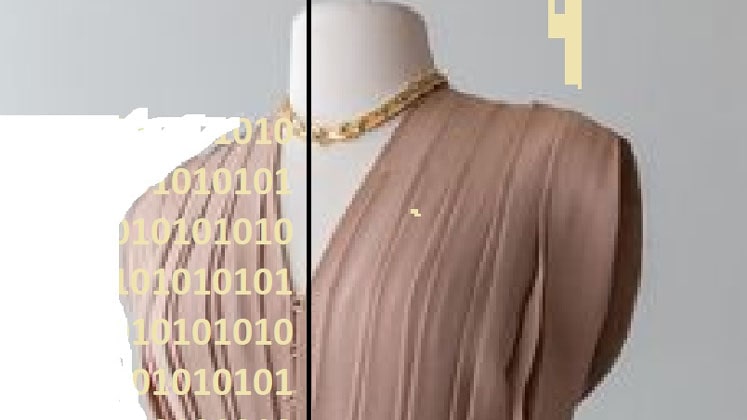
The urgency to go digital has never been so strong, and we all are preaching (or aiming to achieve) digitalisation in fashion industry, be it in manufacturing or in retail. The oxford defines ‘digitalisation’ as the conversion of text, pictures, or sound into a digital form that can be processed by a computer. I prefer to define digitalisation as Digital Twin, which is a virtual representation that serves as the real-time digital counterpart of a physical object or process.
Before I delve into how the fashion industry is taking to digitalisation and the challenges thereof, I would like to demystify the thin line between digitisation and digitalisation. According to some web sources, digitisation is simple conversion of data and processes, while digitalisation is overall transformation. More than just making existing data digital, digitalisation embraces the ability of digital technology to collect data, establish trends and make better business decisions.
My take on this is simple: there are two steps – digitisation followed by computerisation (better say ITeS). The iconic article Application of IT in Apparel Manufacturing Process way back in 2006 (StitchWorld Feb 2006) had illustrated the application of Information Technology and listed the solution providers. In the case of digitalisation, you simply create a virtual representation of a physical object, whereas in computerisation or ITeS, you are digitalising a process. For example, first you digitise your paper pattern (through digitiser/scanner) to convert into digital form and then you use PDS (pattern design system) to change, use grading software to grade digitally and use marker making software to make digital markers. Another example would be digitising the fabric roll info (fabric type/width/length/shade, etc.) to optimise fabric utilisation using cut-plan software.
Also Read: Application of IT in the Apparel Manufacturing Process
A deeper insight into digitalisation clearly shows that it offers several advantages that are useful for the fashion industry and relevant to the future.
Information is easy to update
Imagine you are doing line planning in a garment manufacturing set-up using a Gantt chart. Every day the chart needs to be updated with the latest conditions. We can’t think of making such a Gantt chart using pencil and paper as we have to erase and redraw every now and then. Keeping the plan in digital form preferable to effectively implement and execute the planning function.
Easy to analyse data
Data analysis is another function in our wish-list bucket, often without knowing what to do after analysing the data. Suppose we get a daily sewing report on our desk; the information we get is daily production for each line, style-wise, may be hourly, sometimes even operator wise. If we would like to check the first hour production vs rest of the day hourly average or pre-lunch production vs. post-lunch production, traditionally we need to input the data into a spreadsheet first. Digital data is the beginning step to analyse data collected over time.
Easy transfer of information
To WhatsApp an image of a sample or short video of a fit session may be a daily routine affair now. But, sending the ‘look’ or ‘fit’ of a garment was not so easy three decades ago when fax was the only mode to transfer the image of garment. Digitalising the product (garment in this case) enables us to transfer across geographies easily and faster.
Storage of data occupies negligible space and is easy to search and retrieve
Patterns or sloapers are prized possessions of any pattern master. The sampling room is generally filled with physical pattern pieces neatly (sometimes very tackily) hanged in racks (as a backdrop to the pattern master). Although old patterns are stored for easy retrieval in future when required, quite often we struggle to find it when it is required. If we store the CAD files in digital form it would take virtually no physical space and searching and retrieval is easy.
Error proof data
Digitalisation leaves no scope for manual error, if cleverly implemented. The production quantity validation in daily reporting, date validation in time N action calendar updating are some of the many validations that can eliminate any scope for deliberate or inadvertent mistakes during data entry.
Leaves less carbon footprint (thus more sustainable)
Last but not the least, if we graduate to CAD marker from paper marker, we may save some trees; if we graduate physical iterative sampling to virtual iterative sampling, we may save important resources like fabric, dye and man-hour; if we send image/video through internet rather than couriering physical sample, we save flight-fuel. Thus, digital is also sustainable, keeping the sustainable evangelists happy.
Going forward…
The question is in spite of numerous advantages of digitalisation, why are there resistances? What are the challenges? I will try to demystify these in the new feature series Digital Fashion: Information Asymmetry. Please stay tuned!