If Fall 2026’s runways prove anything about denim, it’s that the fabric has stopped trying to have one story. For a category that spent the better part of a decade oscillating between skinny and wide, indigo and everything-but-indigo, this season’s collections suggest the pendulum has simply stopped swinging; instead, every silhouette, wash and finish seems to be having its moment at once.
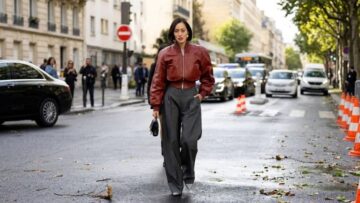
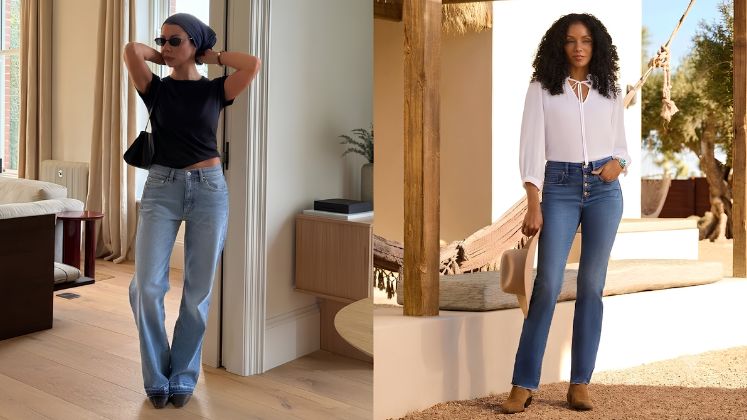
Start with volume, because that’s where the season’s loudest statement was made. At Dior, Jonathan Anderson sent out slouchy, wide-leg denim so generous it needed structure elsewhere to hold its shape, paired with sharp shirting, it read less like rebellion and more like tailoring in disguise. Ann Demeulemeester played the same contrast, letting the jean go baggy while everything above it stayed architectural. It’s a trick Indian mass-market labels have already absorbed: Spykar and Flying Machine have spent the last two seasons building out relaxed and wide-leg denim as a deliberate counterweight to years of skinny-fit dominance, betting that Indian consumers are ready to trade fit for volume.
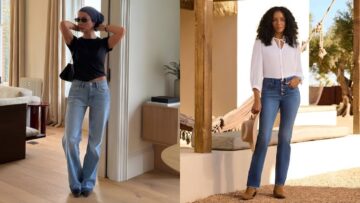
But baggy denim’s opposite number hasn’t disappeared, it’s been quietly rehabilitated. The mom jean, once a punchline, returned at Balenciaga, Gucci and Stella McCartney with a cinched, super-high waist and a long, tapered leg that reads more considered than nostalgic. Mufti and Numero Uno carry versions of this fit domestically, while Only and Vero Moda’s India lines have pushed the tapered high-rise into mass-premium price points prove that a trend born on European runways rarely takes more than a season or two to reach Indian shop floors in some diluted form.
Skinny jeans, somehow, are having their own quiet resurgence alongside both. 7 For All Mankind led the charge in New York with multiple skinny variations, and Valentino and Gucci weren’t far behind on European runways. It’s worth noting that skinny denim never really left India the way it left the West, Killer Jeans and Lawman Pg3 have kept the fit alive through years when global fashion had all but declared it over, which puts Indian denim in the unusual position of already being ahead of a trend rather than chasing one.
Wash told its own story this season, and it was a darker one. Miu Miu, Khaite and Altuzarra all showed denim soaked in extra-dark indigo, a wash so saturated it borders on black. Wrangler India and Lee India, have long anchored their core ranges in exactly this kind of deep rinse, which means the trend requires less translation for Indian buyers than it might elsewhere; the wash is already familiar, just newly fashionable again.
Distress, meanwhile, kept its place in the rotation. JW Anderson, Coach and Dolce & Gabbana all sent out denim in various states of rip and repair, part of a broader mood toward staples that look lived-in rather than pristine. Being Human Clothing and 883 Police have both leaned into whiskering and distressing in recent collections, a finish that has proven durable in India’s casualwear segment precisely because it photographs well and wears in rather than out.
Where the season got more adventurous was embellishment. Dior’s bedazzled denim and Conner Ives’ ongoing project of decorating vintage Levi’s pushed the fabric toward occasion-wear territory, jeans as something closer to eveningwear than workwear. Indian contemporary labels have edged toward this too, if more cautiously: Genes by Lecoanet Hemant and denim capsules from Global Desi have experimented with embroidery and embellishment, though largely as festive or occasion-adjacent pieces rather than everyday denim.
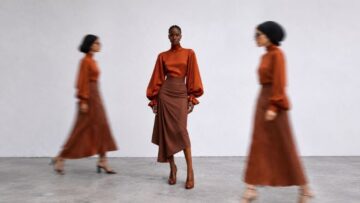
Colour made a similar argument for itself. Chloé and Isabel Marant showed straight-leg denim in saturated, non-blue hues, while Altuzarra and Ossou pushed into earthy browns, a reminder that denim’s identity has never actually been contractually tied to blue. Route 66, Reliance Trends’ in-house denim label, and Kraus Jeans have both tested coloured and earth-tone denim domestically, early signs that the category’s monochrome habit is loosening here too.
And yet, for all that experimentation, the season’s quietest trend may be its most telling: Calvin Klein, Kallmeyer and Toteme all returned to crisp, unfussy straight-leg denim in true blue, no distressing, no colour play, no embellishment. It read almost like a correction. Levi’s India and its value tier, Denizen, continue to build their businesses on exactly this kind of denim, and its persistence on international runways is a reminder that classic straight-leg blue isn’t a trend at all — it’s the category’s floor, the thing every other silhouette eventually gets measured against.
Underpinning all of it is fabric, and a fair amount of that fabric runs through Indian mills before it becomes a finished garment anywhere. Arvind Limited and Nandan Denim remain among the country’s largest denim suppliers, feeding both domestic labels and export orders that trace back to many of these same wash and silhouette trends.
What’s notable about Fall 2026 isn’t any single winning silhouette, it’s that the runway’s fragmentation maps unusually well onto India’s own denim market, which has long supported multiple fits and washes simultaneously rather than committing to one. Mass-market players like Spykar, Killer and Flying Machine can keep investing in volume and fit variety without contradicting the trend cycle, while contemporary labels test colour and embellishment at the margins. The one constant, in Milan, Paris and Mumbai alike, is that straight-leg blue denim still isn’t going anywhere.