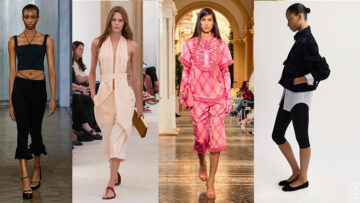
Romantic detailing such as lace and ruffles are no longer used as peripheral embellishments for 2026. Instead, they emerge as a defining design language, reshaping the narrative around femininity with a renewed sense of intention. What was once considered decorative is now structural, with designers and high fashion brands alike repositioning romantic detailing at the core of silhouette, construction, and surface.
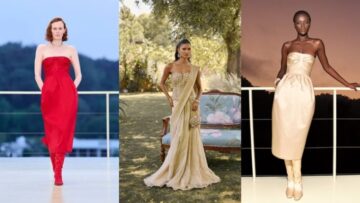
On the runway, this shift is articulated through contrasting interpretations; visible at Chloé, under Chemena Kamali’s helm, romance is experienced as softened and fluid via Chantilly lace rendered in weightless layers, cascading ruffles introducing movement without excess, and silhouettes that skim rather than sculpt the body. In contrast, Alexander McQueen approached the trend with precision, slicing through softness with asymmetric placements, engineered ruffles, and lace inserts reworked into geometric, almost architectural forms. Together, these approaches signal the evolution of the trend: romance is no longer singularly delicate but rather directional, adaptable, and at times, subversive.
After seasons dominated by minimalism and quiet luxury, there is a discernible shift toward pieces that carry emotional value with garments that feel personal, tactile, and layered with detail.
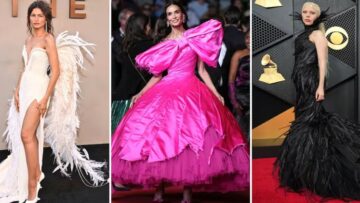
What distinguishes this iteration from previous cycles is its versatility and scale. Rather than being confined to overtly feminine or occasion-driven categories, romantic detailing is now embedded across product segments with designers pairing lace with utilitarian fabrics, introducing ruffles into structured outerwear, and scaling up proportions to create volume that feels intentional rather than ornamental.
For brands, the opportunity lies in recalibrating how these elements are applied. To ace the trend, the focus must shift from surface decoration to thoughtful integration.
Lace can be used as an insert, a layering device, or a textural contrast rather than a dominant fabric, while ruffles can be engineered into seams, hemlines, or panels to create movement without overwhelming the garment.
From a merchandising perspective, this translates into modular styling and cross-category appeal: a lace-trimmed camisole layered under tailoring, a ruffled blouse paired with denim, or a tiered skirt grounded with heavier knits allows consumers to engage with the trend at varying levels of intensity. Accessories play a key role as well, with crochet and lace elements in bags or footwear providing entry points for more cautious adopters.
Lace and ruffles, with their inherent intricacy, respond to this demand by offering depth without requiring overt embellishment. More importantly, their growing presence in everyday wardrobes emerging as lace trims edging denim, ruffled collars offsetting tailoring, tiered skirts transitioning across seasons, demonstrates their commercial viability beyond occasionwear.