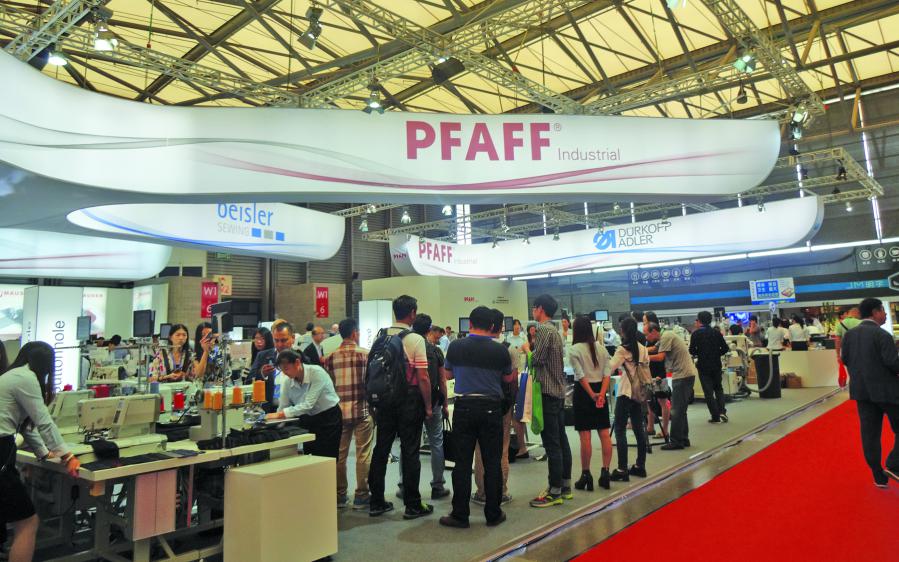
China today is fighting a crucial battle; the increasing wages and infrastructure cost notwithstanding, CISMA 2015 was packed with optimism. Though the participating sewing machine manufacturers were less in number, all the majors expect an average of 15-20% growth in the year to come, which shows that the industry is geared up for a good year ahead.
China is no longer synonymous with poor quality machines. Instead, Chinese companies are now beginning to focus on R&D, which would further strengthen China’s reputation and market share. The paradigm shift is surfacing as the Chinese machine manufacturers have realized the importance of quality for survival. The takeover of many European machine companies by Chinese companies is another growth driver. Case in point are companies like JACK, which is assertively moving towards releasing annual updates of its machines, based on the requirements of its customers. Alongside this, the company has also acquired a German cutter company – bullmer. TYPICAL is another such company, though it showcased a few years old sewing machines, the same are quite similar to some of the latest Japanese launches. It is of course noteworthy that the company has an R&D centre in Germany for high-quality machines meant just for the European market under the label Vetron. Despite the significant movement towards quality, many users are still sceptical of Chinese machines. “There is always a question on reliability when buying a Chinese machine and when the investment is so high, reliability becomes a key factor in decision making,” says Stephen Verghese of Nuvocraft Apparels, Bangalore.
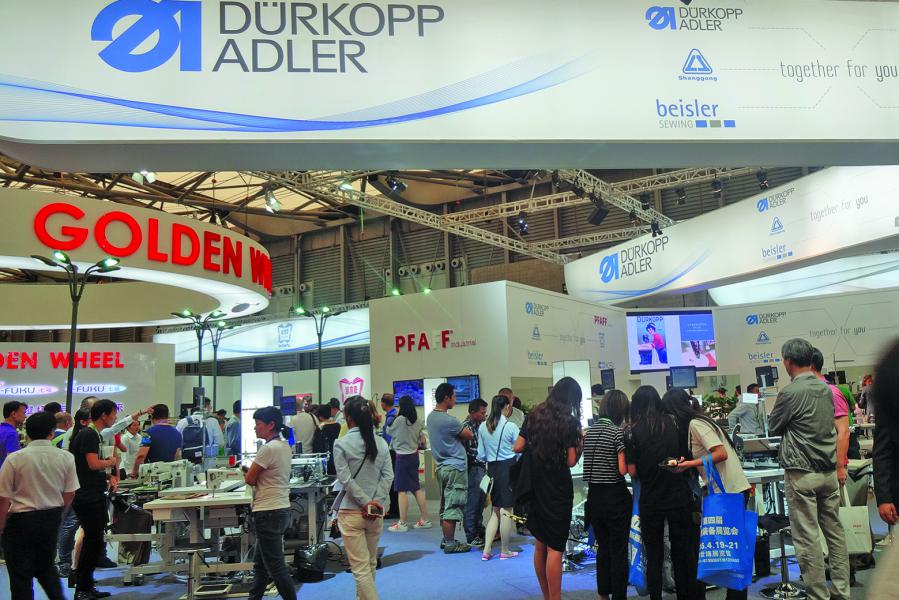 Despite some reservations, several local companies can now boast of significant world share in sewing technologies. Many leading brands from Europe and Japan like Euromac are using the country as a sourcing destination to reduce production cost and also be nearer to the garment manufacturing hubs in Asia. Developments like Shanghai based Shang Gong Group’s (which already has in its repertoire German sewing giants like Duerkopp Adler, PFAFF, KSL, Biesler and Mauser) recent acquisition of stakes in Gemsy, and TYPICAL accomplishing a similar deal with Highlead, indicate a positive and defining moment in the timeline of south-east Asian apparel manufacturing. These acquisitions are in line with the steps taken by the Chinese Government to consolidate smaller players, some financially unwell with established companies, to elevate the financial health of the market. This also translates into a possibility that machinery manufacturers from China will now have even more diverse catalogues on offer.
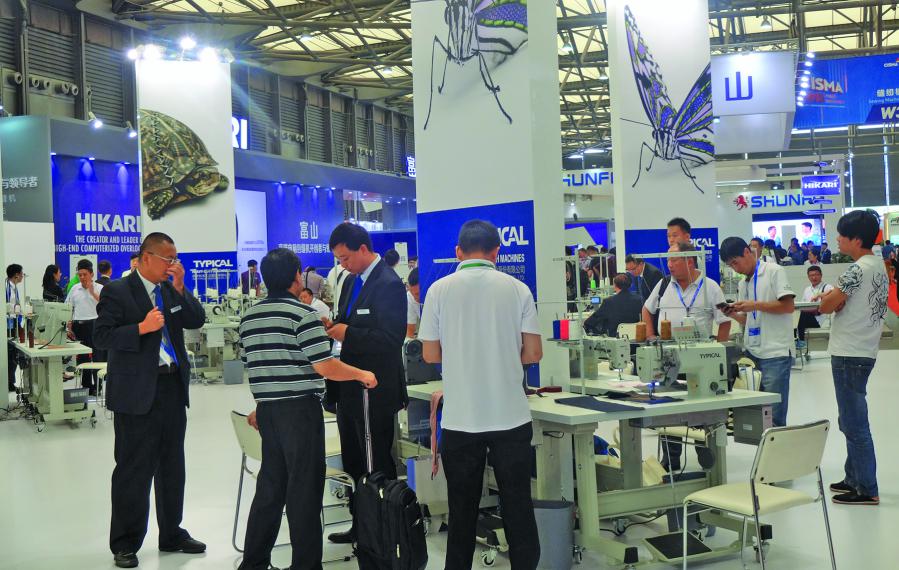
As the market turns and churns to offer new directions and paths, technology flourishes independently. Ideas of Industry 4.0 and Robotics are taking more tangible shapes. The machines are being made smarter. For instance, TYPICAL’s new range of GC-6930A machines come with electronic stitch length adjustment, electronic thread tension and material thickness measurement device for high-quality seams. The machines from the series are also connected to a cloud server and can be monitored over cell phones. A distinguished CAD/CAM solutions provider is also conducting R&D stage experiments regarding incorporating robotic arms in the cutting room. KSL’s KL 500 Robot Unit demonstrated the 3D sewing of complex components – multiple layers, preforms and dashboards. The robot is equipped with the RS 564 Dashboard chainstitch head and the RC 590 Ultrasonic cutting head. Demonstrations were made for stitching and cutting applications on a dashboard combined with swapping from one stitching head to another. Meanwhile, the idea of automation (especially in the cutting room) seems to have taken off very well.
Gayan Ruhunage, President – Manufacturing at Exodus Futura Knit Pvt. Ltd., Kolkata, happy to meet his friends from the industry at the fair, was satisfied in finding an interesting auto cutting machine from KURIS. “As per my knowledge, this is the best knife shaping system.
Loss Time for shaping is Zero because of the new shaping technology. We can increase knife running time 5-10% higher than all other cutters available in market,” says Gayan. His enthusiasm comes from the fact that all other cutters have direction-shaping system through grinding wheels or belts on each side, and KURIS has introduced fixed shaping system with two grinding wheels. “Advantage in this system is that you get even shaping in blades and no extra time is required for the process,” argues Gayan.
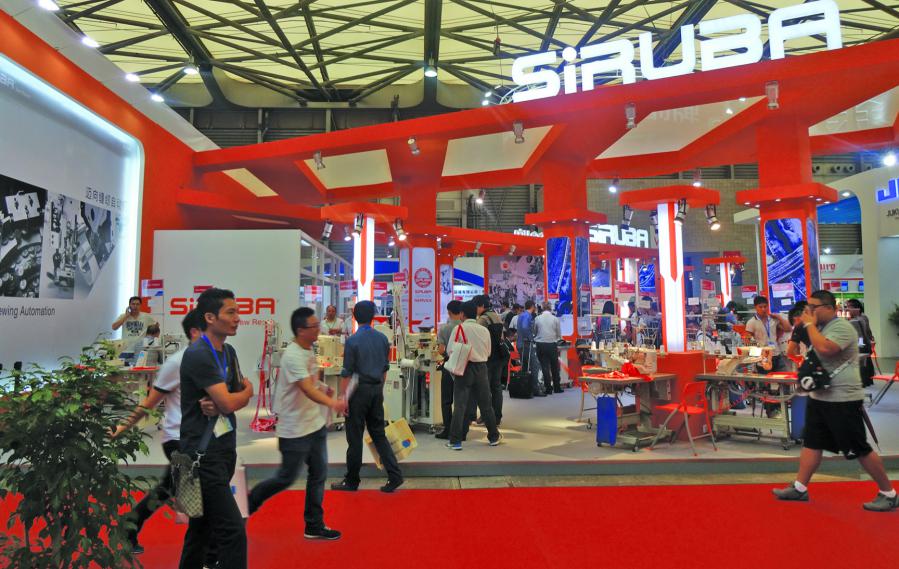
Most visitors came to the fair looking for high-end machines and many were satisfied on finding technology as per their needs. “Our main focus was on automation as opposed to the basic machinery. We saw many shirt automats such as sleeve placket setter from Maica, and collar and cuff makers from Duerkopp Adler, Maica and Juki. The button hole and button sew indexers as well as pocket setters, where changeover time for different pockets is minimized, were notable. Though the economics do not justify the investment immediately, as there are number of other soft issues that need to be taken into account, but once sorted, such machines will definitely be viable in the long run,” avers Stephen. Other interesting finds for the company were laser cutters for single ply, semi-automated folding machines for shirts at Veit, and form finishers.
A team consisting of Technical Director, Maintenance Head & IE Head from Aquarelle visited CISMA in search for right flexible automats, spare parts at low price and pressing solutions to enable the factory to reduce cost, manpower optimization while enhancing quality. “We were able to locate our needed automation with Weishi, PFAFF, Duerkopp Adler, Juki and Brother. Nagaishing developed bottom hemming folders and pressing solutions for small parts, which were of interest to us. Overall the visit was fruitful and we hope that with the new technology we can move further on the technology and cost reduction front,” says R Ashok Kumar, Global Head-IE, Aquarelle India Pvt. Ltd., Bangalore.
Though the main attraction of CISMA has always been the national sewing machine industry, this time around, a lot of companies were exhibiting planning software packages and other productivity improvement tools. For some reason, embroidery was one section which was missing. Except for few proper international companies, the hoard of embroidery manufacturers seen during the last season of CISMA was missing. Instead, laser machines were present across the halls in large numbers. Some of the major technologies that generated a flurry of interest are reviewed in the following pages…
1) VIBEMAC’s upgraded machines unlock better performance
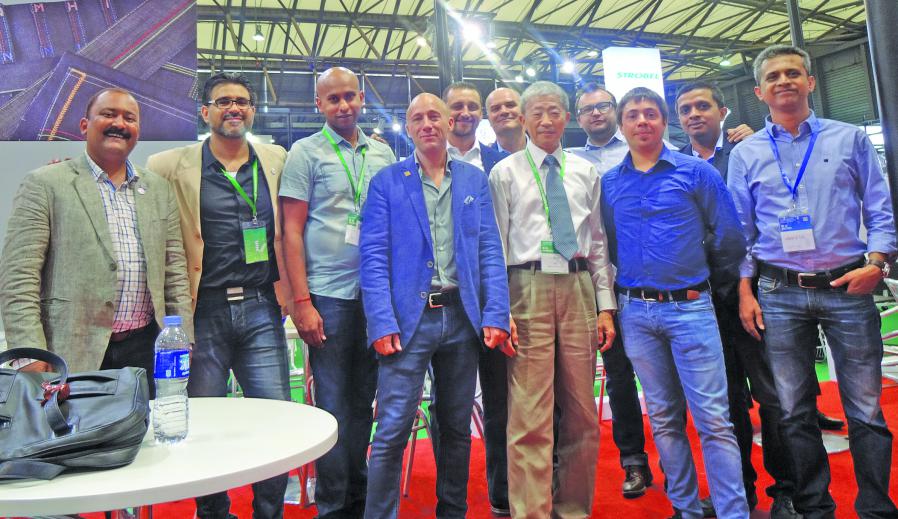
Having spent remarkable 35 years in trade, VIBEMAC, the Italian jeans sewing specialist, is today synonymous with jeans sewing automation. “India’s growing domestic market is a force to reckon with in the presence of denim jeans brands like Killer, Mufti, Pantaloons and Winstone. Unlike export market, domestic market is stable in the long run,” avers Enrico Guerreschi, Global Sales Director, VIBEMAC.
VIBEMAC brought to the fair enhanced versions of its bestselling sewing solutions such as the 1010V4F1, which is an automatic programmable unit that carries out customized ‘J’ seam on the front fly panel of jeans, casual trousers and workwear, with no cost in terms of extra jigs.
The machine also doubles as an automat for operations like back pocket embroidery, sewing darts and pleats, run flap stitch, simply by purchasing the optional components. Also showcased was the V300-1CS, an automatic chainstitch waistband unit with a new motor, new electronic components, new UI and a new plier for a perfect cut and improved efficiency. The sewing head of the machine can perform 2- to 4-needle chainstitch, and is also available with 2-needle lockstitch variant. The two types of stitches can be mixed as desired in the machine model FLX.
Better than its predecessor under each and every aspect, the 4650EV9@ UP1, an upgrade of model 4650EV9R, equipped with a new user-friendly 7″ coloured touchscreen panel, a double compensatory presser foot, new loop aligner system, new loop cutting device, new electronic components and an auto-diagnostic system to avoid errors. The wiper has been replaced with a new thread blowing device for improved efficiency.
The exhibits also included, 3022 BHE-C, a bottom hemming unit, whose sewing head can be modified with a few attachments to be used as chainstitch or lockstitch machine.
The puller system – VIBEMAC’s invention – is composed of a lower roller feeder with an extremely powerful patented upper puller that easily handles the more delicate operations like crossovers or lap felling, especially with heavy fabrics. The gamut of updates was completed with 2516V4 DCT, an automatic back pocket setter – equipped with Mitsubishi PLK-G direct-drive double-needle lockstitch sewing head, with shuttle hook and thread trimmer – allows stitching with two threads in two different colours in one single sewing cycle. It is possible to sew any shape of pockets and apply labels, sew darts, pleats, flaps and patch cargo pockets.
2) Gerber focusing on seamlessly integrated solutions for success
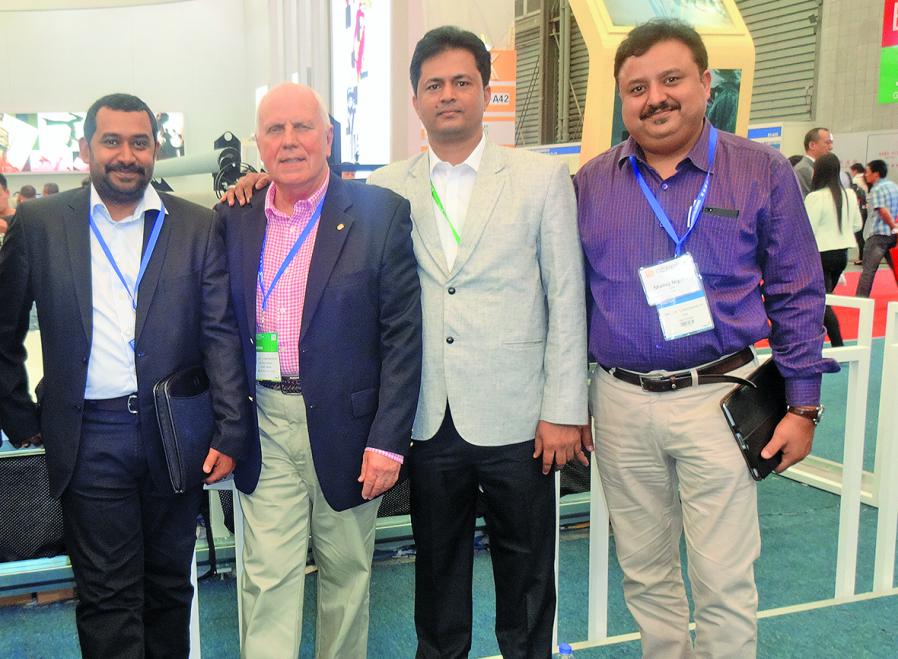
The trendsetter in developing an integrated range of solutions for cutting room and product development, the American multinational Gerber, participating at CISMA show, was doing what it’s best at – presenting apparel companies with endless possibilities of saving cost and time in the entire cycle of product development and manufacturing. “When you look at the whole apparel value chain, everything is connected, so why should technologies and machine work in isolation? Through our new version of AccuMark CAD you can make the patterns, render them in 3D and ensure the fit also, while involving all the stakeholders such as production manager, merchandiser and designer. We want to create visibility in the entire process to everyone who is part of the manufacturing cycle,” shares Leonard Marano, DirectorProduct Marketing, Gerber Technology. This concept of servicing the global sewn product industry has always impacted the product offering of the company. Elaborates Leonard,
“Regardless of the location of your business, time to market is equally important as product cycles are increasing every day and through our solutions you can reduce the sampling time. For instance, through the integration of AccuMark with 3D module and YuniquePLM, all the activities of merchandising and sampling have been seamlessly integrated.”
The company believes that with the advent of time and development of technology, the predictions regarding fall and fit of the garment will become more precise and a wide range of avatars would be available for a much more diverse range of applications such as firefighting, riding a bicycle, etc.
Among the products showcased by the company at the CISMA fair, it was impossible to miss out on the diverse range of cutters presented for handling any nature of cutting order. Gerber’s range of cutters includes the Z1 & DCS series for sampling applications, Taurus cutter for leather and the new Paragon series cutters are suitable for low ply cutting of 2.5 cm to 7.2 cm height. The new Paragon cutting system features several enhancements for improved user experience and increased throughput, including cutting head modifications for reduced noise and a new dual-drill system for improved speed and accuracy. The Paragon cutters will also be available in configurations designed specifically for automotive industry, lingerie and other delicate applications. Also included are productivity improvements to the system’s Cut-Ticketing Process, which connects data from the AccuMark system through the spreader to the cutter.
Educating the future decision makers of the industry is also an important part of Gerber’s growth strategy and consistent progress has been made by the company in this direction for the last 30 years. “We have been sponsoring fashion events organized by students for the past 30 years. In the US, all the fashion designers are using AccuMark at their schools and colleges,” shares Leonard. Working on the similar lines in India, Gerber offers licences to various universities, training institutes and colleges, which enable them to use Gerber’s wide range of solutions and these licences can be renewed later for updating the versions of the software being used. Moving further, the company has identified the segment of Indian designers, for educating them about the possibilities presented by integrated solutions of Gerber, to streamline operations right from designing to sample making. The company’s partner in India, IIGM, has been instrumental in making the education-based initiatives of the company a success and even gives training to various institutes and colleges at their training centres across the country.
3) H&H finds innovators in Indian market

“Bonding and welding is not a novel or new concept. The novelty of the early days has given way to improving reliability of the process,” avers Anshuman Dash from H&H – the Hong Kong-based company pioneers in bonding & welding machines. The concept has been known to the industry for long enough to identify the basic and mainstream applications like activewear, intimatewear and even formalwear. “The avenue of applications for alternate fabric joining methods is incomprehensibly diverse. The applications are not necessarily supposed to be a completely stitch-less garment. For instance, the inner lining layer in jackets carries seams as thick as 8 mm. Using taping technologies, the seam can be compressed significantly making it better for the wearer,” he informs. The company had brought to the fair an impressive line-up of applications of the technology like buttonholes furnished through bonding, patch pockets and zippers on cargoes through seam sealing, backing for laser cut panels with bonding, welt pockets, activewear, etc. “Moreover, seam sealing and bonding known to the industry mainly for performance or function, are now being used for adding value and aesthetic or decorative purpose also. One needs to understand which operation needs to be relied on for bonding. It is not just about garment making. It is about designing also,” explains Anshuman.
The company claims to have identified and partnered with three trendsetting factories in the apparel manufacturing sector for exploring the uses of stitch-less garment manufacturing. “Dedicated research can set this technology soaring. Sri Lanka has advanced riding on the back of intensive R&D. We need to break free of the ‘if it is not cheap then it can’t happen’ mindset. And we have set forth on that journey with these three factories. Soon there will be followers,” Anshuman assures.
With over two decades of experience in manufacturing welding and bonding machines, H&H has developed a range of solutions for bonding, ultrasonic welding and pressing.
4) INA receives enquiries from domestic apparel manufacturers
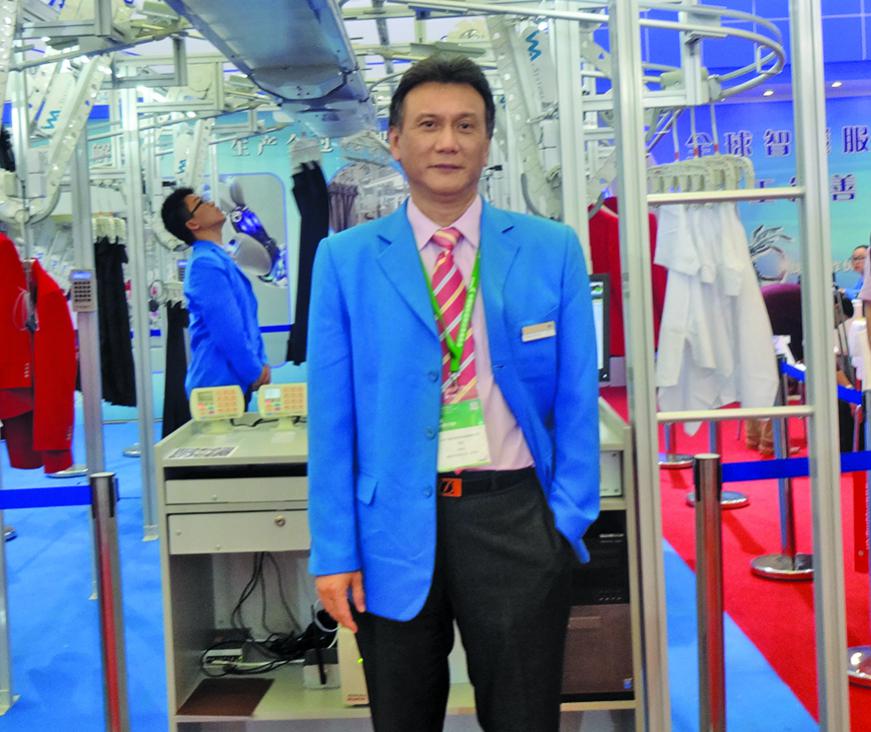
Singapore-based INL International Technology, globally reckoned for their INA Hanger Systems is focusing on tapping the potential of domestic Indian market and going beyond the archetypal market of exporters. As the company received queries from Indian apparel majors like Raymond, and Blackberrys at the fair, its strategy reciprocates the rising interest in sophisticated technology from manufacturers for domestic market. “Reducing the transportation time is a component of the productivity and an important saving on the shopfloor,” avers Ronny Timuari, Sales Director, INL International Technology.
The latest model in its range, EC8R has been designed keeping in mind the automated factories. It can be linked to the factory’s Enterprise Resource Planning (ERP) system as well as to the General Sewing Data (GSD) system. The information of the style or the PO number can be sent to the EC8R system, which will then generate a report as per the needs of the management and send it back to the system from which the information was sent. Any new transaction related to PO will be automatically exported or imported to the system.
The company views India as an important upcoming market and is hence eyeing on expansion in the country with more number of agents and offices. Different area managers for West and South India have been appointed by the company and a team has been stationed at Ludhiana as well.
5) Morgan Tecnica ‘automating’ its way to success
The market of cutting room automation has been constantly saturated with veteran companies developing path breaking solutions and newer companies joining the segment. While most of the companies are focusing on 3D technologies and PLM solutions for growth, the Italian pioneer remaining true to mechanisation has been finding growth in completely unchartered territories. “We are working with Shenzhou Company in Ningbo, which is the biggest producer for Adidas, towards developing a robotic arm system that can remove cut panels from the cutting machines after they have been cut,” shared Andrea Muratori, Country Manager, Morgan Tecnica. The company plans to debut innovative technology at the upcoming ITMA fair in Italy. Talking about China becoming the testing ground for its new innovations, D. Anandakumar, Managing Director of the company explains, “The focus of these automation projects is more on China as the labour cost there is around US $ 600-800, which is 2 to 3 times more than the other apparel manufacturing countries such as India and Bangladesh.”
The company showcased the Fusion Line at the CISMA fair, which included automated system of loaders, spreaders, tables, labellers, cutters, plotters and software packages. At the forefront of its cutting room technologies, the Twist 100 spreader has a double PVC belt that allows more even wrinkle-free laying, irrespective of the nature of the fabrics. An electronic device checks and eliminates the fabric tension in real time for real tension-free spreading. The spreader data can be viewed in real time over the web, using the on-board computer touch panel, enabling constant control over the cutting production process, detect the eventual critical areas and take immediate actions to improve it. Also showcased was the 315 loader – an automated system to feed fabric rolls to the spreader designed to complement the Fox Line 100 spreader. The spreaders are designed with the latest generation of technology and electronic components to provide the highest efficiency in spreading all types of materials, claims the company. The on-board PC-touch gives the users an opportunity to control and manage the machine’s productivity on-site or remotely.
Continuing its focus on innovation in the Indian market, Morgan Tecnica recently inaugurated a training centre in Bangalore, spread across 8,500 square feet area, where vocational training courses for fresh graduates of the apparel & textile industry are provided. The 25-day programme focuses on the entire operations of cutting room and training people in areas such as machine maintenance, operations and industrial engineering. The company now plans to open a service centre in Mumbai. “The growth we are witnessing in the Indian market is driven by domestic apparel manufacturers who are not only looking at automating their cutting room operations but also adopting e-commerce businesses for MTM (Made to Measure) applications,” avers Anandkumar.
The company’s software division has developed an ERP solution to support e-commerce companies looking at MTM clothing and has got its first breakthrough with the MTM e-commerce venture of Arvind, known as Creyate.
“MTM business is very distinct from retailing readymade apparels as a product is made as per the fabric types, colours and designs selected by a customer. We are basically guiding companies regarding how to manage their online business. We capture the orders and demands generated online, and link it with the fabric lots, patterns and markers. It is an ERP system made for MTM business, where the customers do not order a readymade product. Rather they make a product from an offering of fabric types, colours and designs,” explains Anandkumar.
6) Eastman ushers in next generation of cutters with improved longevity
Eastman, the American manufacturer of cutting machines, automated cutting systems, material handling equipment and industry-specific design software, has been serving the apparel industry for over 120 years. Explaining the reasons behind the imminent and already burgeoning surge in demand for automation in cutting rooms, Wade Stevenson II, President of the company avers, “Given the ever taut lead times, apparel industry is on its toes in the pursuit of just-in-time inventory model. The manual cutting methods do not lend themselves very well to this requirement of the industry.”
While the demand exists, so do the market challenges for the company as upgrading to an auto cutter begets hefty investments.
“The hesitation stems mainly from myths and doubts regarding the machine’s performance,” Wade observed. In order to tap the market’s potential, the company is mainly looking at approaching prospective customers and educate them one-o-one about the performance of the machine. “This will bring the customer to comprehend the quality, cutting precision and service that Eastman machines provide,” he adds.
Present at the technology gala CISMA, the century-old cutting room veteran exhibited its latest MultiPly Cutting System – Raptor 75x. “In order to improve the longevity of our machines, we have minimized the moving parts in our machines,” Wade explains. The model is an automated reciprocating straight knife cutter, with conveyor, capable of cutting up to 7.5 cm (3″) of compressed material. The Raptor is an industrial-strength solution for low- to high-ply cutting of flexible material goods. Eastman’s exclusive Intellicut™ knife control software increases the accuracy and integrity of the cut from top to bottom ply.
“The blade will last much longer and has more accurate cutting from top to bottom ply with the use of one of the most powerful vacuum blowers in the industry,” informs Syed Hafeez, Country Manager, Eastman.
Systems that are networked can be accessed by Eastman technicians off-site in realtime for immediate troubleshooting and support. Real-time diagnostics monitor all wires, signals, and motors.
“The bottom-line is that we have a machine which has more cutting precision from top to bottom and in addition can cut more plies than our competitors,” asserts Hafeez. On account of these features, Eastman’s cutting technology enjoys distinguished support in the Indian market. Tirupur-based Anthony Garments is one such customer using Eastman’s automatic cutters to cut fine knits. The company is looking at further leveraging the excellence of its products as new sourcing dynamics have brought sourcing hubs like India, Bangladesh and Vietnam to the forefront.
7) Duerkopp Adler presents Industry 4.0-enabled machines
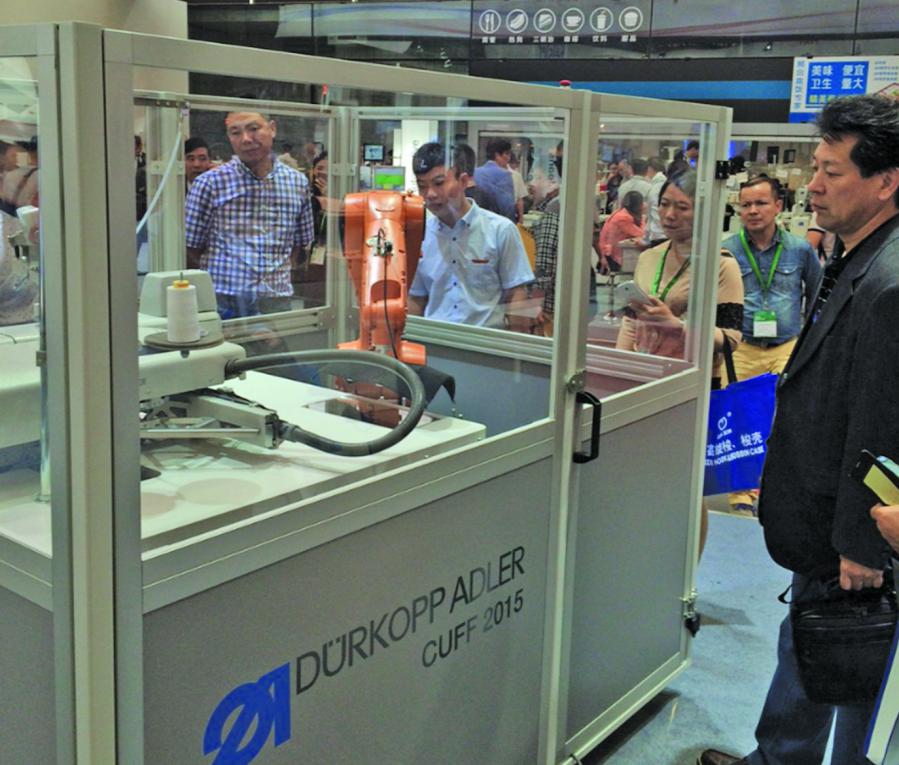
Under the slogan ‘Together for You’ Duerkopp Adler with Beisler, PFAFF Industriesysteme und Maschinen GmbH with KSL, and Shanggong with Butterfly presented state-of-the-art solutions for ‘Joining’ of textile fabrics and leather on an impressive joint booth of more than 1,400 sq. m. With exhibit ranging from silk to extremely heavyweight leather materials, and standard highspeed sewing machine to 3D sewing robotic arm-CUFF 2015, the company has set new standards at the fair with its wide range of exhibits for garments, leather and technical textiles sectors.
The requirements of the Asian region for further automation in the clothing industry as well as for process safety in the emerging automotive segment were the focus of the impressive presentation by Duerkopp. Furthermore, cloud technologies for the networking of machines via internet were shown for the first time.
In line with the Industry 4.0 concept, the special highlight was 867-M Premium – an SNLS powered with Industry 4.0 principles. Duerkopp Adler also showcased an innovative interpretation of the successful M-TYPE flagship for the first time in Asia. It also presented a completely new dimension of the long-arm machine – 967-100382-100. The clearance of 1,000 mm allows easy handling of voluminous materials with a so far unprecedented ease of use for the operator. Other exhibits included 911-211 – a CNC-controlled pattern stitcher for heavyduty applications with the M-TYPE sewing head, H867 – a single-needle long-arm machine for thick threads and heavy-duty applications, the recently released 581 series of buttonhole automats, latest developments of class 610-10 and 630-10 as well as class 670 and 680 for the production of men’s jacket sleeves, 906-01 jeans pocket sewing automat and Beisler’s 1260, 1270 and 1221 for the trousers production.
8) Lectra presents its vision for Chinese fashion industry
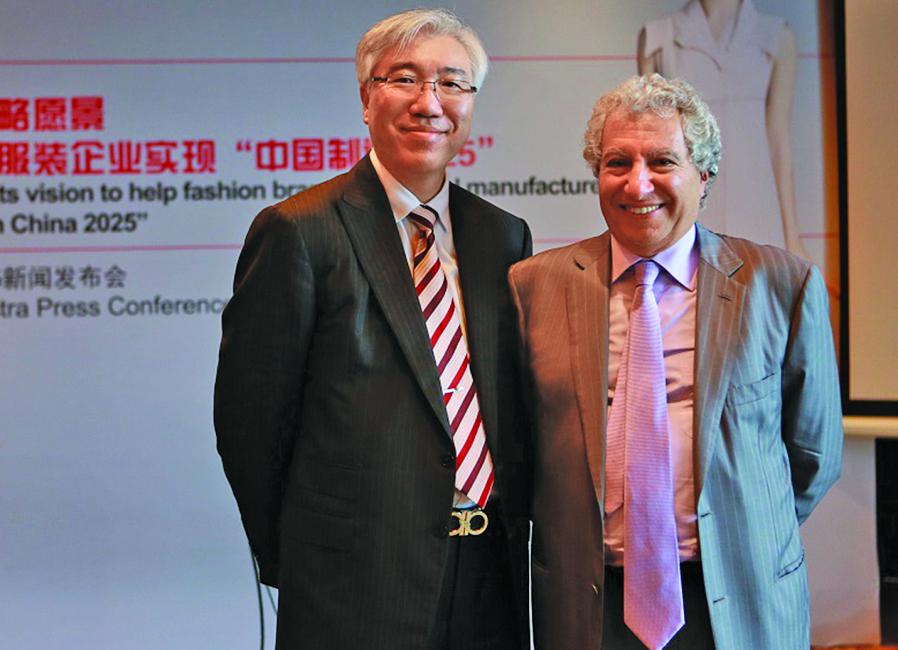
Lectra – the French CAD/CAM solution provider enjoys a premier position in the fashion & apparel manufacturing trade, especially in the Chinese market. Although China stays perched at the top in global apparel manufacturing listing, the country continues to gear up for at least another decade in the market under the guidance of its Ministry of Industry and Information Technology’s 10-year strategic plan ‘Made in China 2025’. Daniel Harari, CEO of Lectra, and Adreas Kim, Managing Director, Lectra, Greater China shared their perspectives on what ‘Made in China 2025’ means for this rapidly evolving market and how technology-driven smart production can help Chinese companies speed up product development and add value to their design and manufacturing activities, so they can differentiate themselves from competitors in emerging markets by providing their customers with better service, more innovative style options and a superior-quality product. “Contenders in Cambodia, Vietnam and Bangladesh can compete on cost, while advanced economies such as the US, Germany and Japan are pulling ahead in terms of technology. If Chinese brands want to stay competitive, they need to distinguish themselves by focusing on products and services with enhanced value, brand quality and creativity,” said Daniel Harari.
At the Lectra booth, the complete gamut of solutions that has built Lectra’s formidable share in the Chinese market were on display.
Demonstrations were held on VectorFashion with 3 different fabrics (denim, knit+lycra, woven). Also on display was Kaledo V4R1, the latest release of Lectra’s design solution that features a host of new tools including draper, and a texture mapping module that simulates fabric on images and sketches, producing realistic results for early decision making in the collection and sales selection process.
Fabric demonstrations were held on VectorFashion with 3 different fabrics (denim, knit+lycra, woven). Kaledo V4R1, the latest release of Lectra’s design solution that features a host of new tools including draper, and a texture mapping module that simulates fabric on images and sketches, producing realistic results for early decision making in the collection and sales selection process, was also on display. This latest release also introduces major improvements to colour management, such as better lighting options for increased colour accuracy. Other features include new repeat, colour mask and transparency tools for more design flexibility. The show also featured Optiplan V3R4 – the latest release of Lectra’s cutting room optimization solution. Designed while keeping in mind the specific challenges of fashion and apparel manufacturing, Lectra’s Optiplan applies lean manufacturing principles to cut-planning operations and transforms the cutting room into a competitive advantage – saving time, reducing costs and boosting efficiency. Amongst other exhibits were Modaris V7R2 and DiaminoFashion. With Modaris V7R2, Lectra combines pattern-making, draping, and virtual sampling all in one seamless digital process and provides a common visual language for everyone involved in the process – from design to patternmaking to marketing to suppliers. DiaminoFashion – part of Lectra’s fashion and apparel catalogue helps streamline the development process and keeps production cost down without sacrificing product quality, forming an integral part of a lean process from product development to cutting room by ensuring maximum fabric utilization.
9) Krishna Lamicoat aims to become the best manufacturer of consumables for cutting room
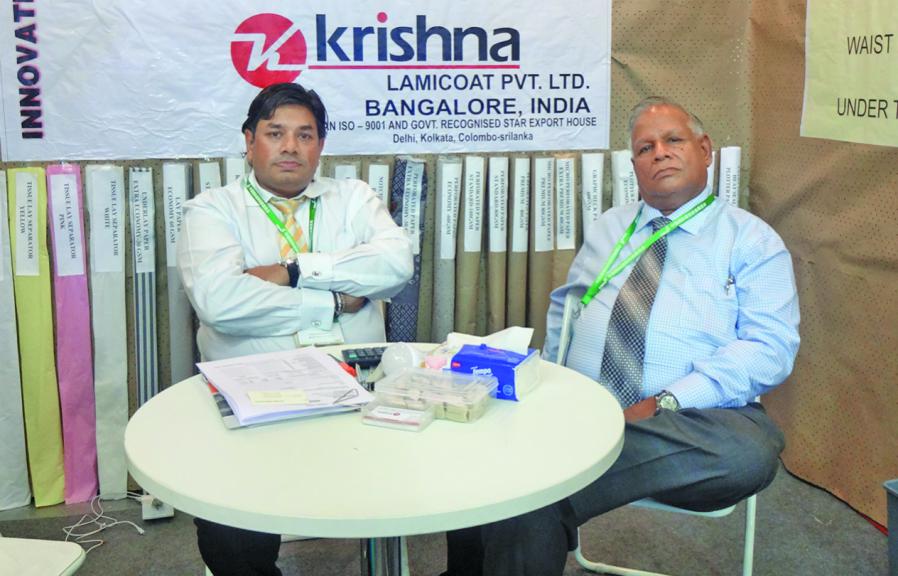
Krishna Lamicoat, the rapidly growing Indian manufacturer of specialty papers and films, showcased at the fair its latest innovation – micro perforated underlay paper. The micro perforated paper enables apparel companies to efficiently cut fabric as it helps holding the fabric tightly because of densely located holes on the paper (25 holes per square inch). “The densely located holes come handy when cutting small pattern pieces as in the case of lingerie,” avers Ashok Chhajer, Director of the company. Considering innovation, in product offerings and manufacturing processes, as the key factor, the company confidently claims to give a tough time to its Chinese counterparts when it comes to pricing. “We are 20 to 30 per cent cheaper than the prevailing market price,” adds Ashok. Other than micro perforated paper, the company also showcased recycled paper. Under its ‘Shred It’ initiative, Krishna Lamicoat has been closing the loop by collecting old and used paper from the factories it supplies to, and manufacturing recycled paper with formidable strength. Alongside this, the company also showcased an upgraded heat-sealed paper. The new version of heat-sealed paper comes with more variants of adhesion for use with different kinds of fabrics.
With great focus on its top selling points – price, quality, service, and relation with customers, Krishna Lamicoat aims to spread its brand worldwide, supersede the Chinese and other international manufacturers of consumables for cutting room, and double its production capacity. The company aims to serve at least 25 customers in each major apparel manufacturing hubs and has been targeting all the top-notch apparel manufacturing groups in these hubs, especially the ones who have presence in different countries.
10) Siruba showcases advancements in knit sewing machines along with new machines for denims
Continuous improvement seems to be the motto of Taiwanese sewing machines pioneer Siruba for succeeding in the highly competitive market. Already known for its expertise in developing sewing machines for knits, the company launched improved models of its popular series of overlock and flatlock sewing machines.
“We have introduced the new 700L semi-dry head overlock machine and the same will be launched next year in India. Being a mechatronic machine, the servo motor which is part of the machine head has not increased the size of the machine rather saved on space and energy while reducing the vibrations. One can feed in the machine when to cut the thread and it will do the same with 100% accuracy,” explained Peter Pan, Regional Manager, Siruba.
The company also launched 20 new overlock and interlock sewing machines for blind hemming, elastic band attaching and circular collar attaching equipped with features such as automatic back latching device, metering control, tape cutting, side suction and cutter. Also launched were interlock machines for short-sleeve hemming, elastic tape attaching, seamless tape binding and elastic waistband attaching; multi-needle sewing machines for waistband sewing; and flat seamers.
Amongst its bestsellers are 747K-514M5-23/BKF – a four-thread overlock machine, the 747QD/ECB mechatronic overlock machine with solenoid-type thread cutter and the ASP-EBJ100 elastic band joining machine. The 747K-514M5-23/BKF overlock machine is equipped with an automatic back latch device, which pulls back the stitch chain when sewing for perfect finish and stable tension. The machine comes with a direct-drive servo motor, edge sensor, touch panel, vacuum device, thread chain cutter suction device, and auto foot lifter. The other overlock machine 747QD/ECB has a unique design which completely integrates the sewing head, control box and servo motor, ensuring efficient power transmission. It comes with dual sensor, various trimming functions, vacuum device and a pneumatic presser foot lifter.
Looking at 20% growth in the Indian market in the coming year, Peter admits, “Since India is a very big and diverse market, a single machine cannot satisfy needs of all the manufacturers. This makes the market very challenging and requires us to work in close collaboration with our agent Mehala machines, to get to know the needs of the market.” Being one of India’s leading technology providers with 17 inland, 2 overseas branch offices and over 400 dedicated dealers, Mehala Machines has been instrumental in the success of the company in India and specifically in Tirupur. To further cater to the diverse demands of the Indian market, Siruba launched its range of lockstitch machines sometime back, which got a good response. The launch of 9 new machines, for operations such as waistband attaching, beltloop bartacking, front fly serging, pocket top stitch, side seaming and bottom hemming of denim jeans, is the most recent step in this direction.
11) Yin confident of growth in Indian market
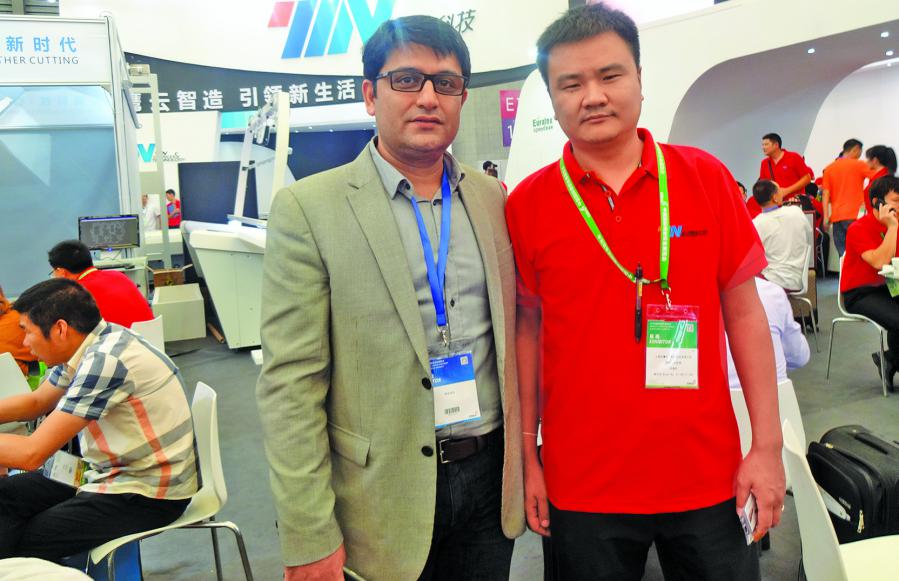
Claiming to have already established its firm hold in the Chinese market with 80% market share in cutting room solutions, Shanghai-based Yin Science & Technology has made its presence felt in the Indian market with installations in companies such as RP Auto Styles, SRN, Sarita Handa. The company’s biggest installation is coming up in Chennai-based Ordinance Clothing Factory which involves installation of three spreaders and one cutter. Yin’s association with its Indian agent Studio Next, has made success certain for the company as Yin was able to identify the strong base of domestic manufacturers as prospective clients, who have been more or less neglected by other brands. “We have around 800 companies using our CAD solutions and they are now approaching us for cutting and spreading automation because it would be compatible with their CAD solutions. Napoleon and Tiny Girl are two of many such companies,” shares Vishal Sher of Studio Next.
The company has a team of 40 people in India and out of those, 30 are technicians.
Talking specifically about cutters, Vishal states, “People are now investing in cutters just to reduce the dependence on manpower. Then there are companies that want to increase their cutting capacities but cannot invest in infrastructure due to restrictively high prices. Therefore, it makes sense for them to invest in an automatic cutter. I see the Indian market opening really fast for cutters and in the coming five years, a company which is now selling 10 cutters a year will sell three cutters every month.” Growing at the rate of 20% every year, the company is positive of growing by 25% before the end of this financial year.
Yin’s exhibits at the fair included HY-H/HC series CAM cutter developed to cater to large-volume manufacturers. The cutter can cut fabric lays of height 70 mm (postsuction) and comes with automatic cloth correction, automatic trouble shooting and automatic cutter change tip. The cutter is equipped with a suction conveyor system for quick and accurate material transportation, absorption stabilization system to deal with delicate materials, and a knife cooling equipment.
12) JACK to focus on small manufacturers to tap the next band of Indian market
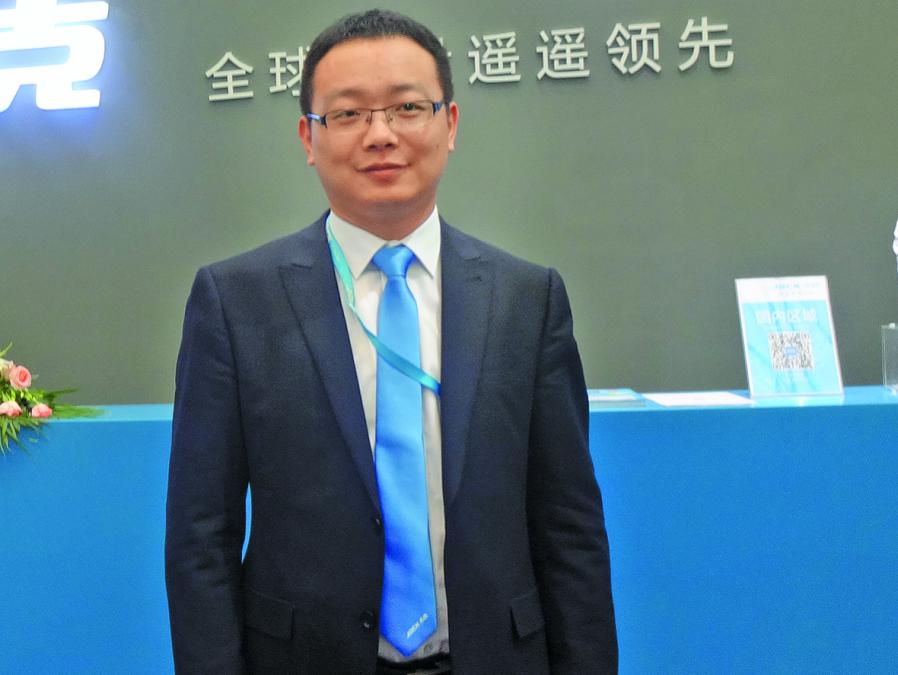
JACK has its eyes set on the bigger chunk of the Indian sewing machine market and the focus is on lockstitch and overlock machines. “We have been launching yearly updates of our lockstitch and overlock machines in order to stay relevant to the needs of our customers. This year’s updates include A4 – a ‘speaking’ single-needle lockstitch machine and JK-900E – the fastest overlock machine series,” shares Jimmy, Director of International Trade Center, JACK. A4 boasts of a sensor for auto lifting of presser foot, a USB port for software upgrades, and finds application in heavy as well as light fabrics. The machine is dubbed as a ‘speaking machine’ as all of its buttons come with a voice guide i.e. every time a button is pressed, its function is described by a voiceover, making it easy to learn and use. The JK-900E series is an update of the JK798E series which was launched last year. The 900E boasts of a sensor to avoid fabric cutting, in addition to an LED light, automatic thread trimmer, and safety switches for presser foot, sewing plate, and needle bar. Each unit of the machine can register power savings up to US $ 40.8 a year, the company claims.
The company is set to unleash its next phase of market penetration strategy after having catered to the mid- and high-level apparel manufacturers. In this phase, the company is looking at reaching out to the small-level exporters and companies using traditional black sewing machines and second-hand mechatronic machines. Although, black or umbrella machine manufacturers and second-hand machine suppliers enjoy dominion in the country, JACK is confident of phasing out of the black and second-hand machines. “The Indian customers are now more conscious about power saving and better efficiencies and hence they are gradually shifting to Chinese machines which offer better power saving and performance,” avers Jimmy. Although JACK already has two branches in India, located in New Delhi and Bangalore, the company has hired more local people to offer technical training for its integrated workstations and strengthen its spare parts network.
In India, the company currently has two main dealers: India Agencies and Ketan Modi. Apart from these two dealers, JACK also has a few regional distributors in Ludhiana, Chennai, New Delhi, and Kolkata. The company aims to reach a sales target of US $ 40 million in the next three years and to help achieve that, it hopes that Prime Minister Narendra Modi will introduce better policies which would help ease the disbursement of bank loans, and encourage the growth of smaller companies. For improved impetus, JACK’s head office is now scheduling marketing, planning and promotional activities together with local distributors.
13) FK Group to focus on large volume manufacturers
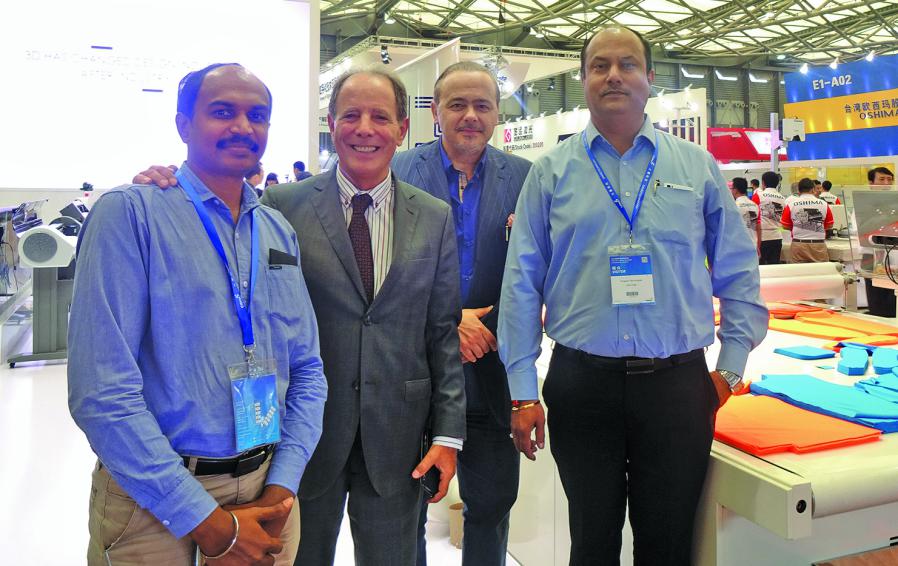
FK Group, the Italian cutting room solutions provider, has to its credit German technology and Italian precision. On account of its Eco-Power technology (due to which FK Group’s cutters consume just 5.9 kW power and have a very low running cost), German-make Siemens’ electronic and electric components for superior reliability, attractive pricing and robust after-sales service, the FK Group has registered a good year in the Indian market. “We have made four auto-cutter installations this year and a few more are in the pipeline,” shares Alok Singh, Managing Director, Prospice Technologies – the Indian channel partner of FK Group. Truly partnering with the factories for maximum results, FK Group’s team also provides project consultancy and assesses the factory’s cutting room and its requirements to recommend the best solution.
Comprehending the structure of Indian apparel manufacturing sector, Prospice has identified the segment it will be targeting in the coming year. “We understand that for a factory whose daily production is below 1,000 garments, investment in a conveyor auto-cutter could be difficult. Although there are viable static auto-cutter solutions available with us, we are concentrating on larger companies with much more urgent production needs,” shares Alok. Aligned with its strategy, the company has already registered impressive market share in Coimbatore, Tirupur and Bangalore, at factories like KPR Mills, Victus Dyeing, Shakthi Knitting Mills and First Steps. In its next phase, Prospice will be focussing on Bangalore and Mumbai by hosting education & awareness seminars. The year ahead looks promising for the company as many repeat orders from the existing customers are on the cards and extensive R&D will continue to enrich the company’s catalogue. “Till now we were positioned as a cutting room specialist. Now during ITMA, FK will come out with a newly designed CAD software as well,” informs Alok.
On display at the fair was the recently launched Super Jeans cutter.
The Super Jeans cutter consumes just 5.9 kW of electricity using Eco-Power technology, which is almost five times lesser than what is consumed by other cutters. With a cutting speed of 110 metres per minute, made possible through a blade vibration of 6000 RPM, the cutter can be maintained via remote assistance and has been approved by WHO as medically safe for operators due to its medicated health care filter.
Alongside the Super Jeans cutter, TopCut, an automatic conveyor cutting system provided with 6/8/9 cm cutting head for all types of production, generated interest amongst the visitors. The cutter comes with a patented high speed sharpening system and Evo Cut – a simple and intuitive software that optimizes all cutting parameters. The CAM cutter also has a mechatronics blade sensor for automatic knife deflection correction, refrigerated air blade cooling device and online technical assistance, for just intime total and constant support to the operator.




 Bharat Tex Special Report 2026