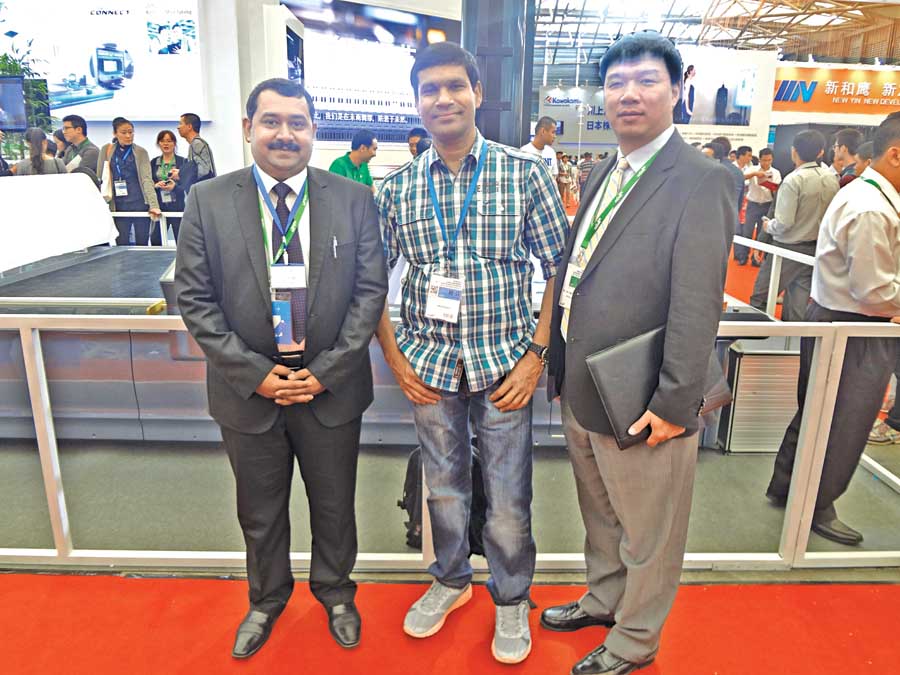
The 2013 edition of CISMA was undoubtedly bigger and better than the preceding ones. This was not only because of the increased exhibitors and ground area, but also due to the enhanced visitation from countries like India, Bangladesh, Pakistan, Cambodia, Vietnam, Thailand, Sri Lanka and Indonesia. While the apparel exporters were dominant from most of the countries, in case of India, the dominance of the growing domestic sector was evident more than ever, with companieslike Zodiac, Roop Sarees, and a complete 13-member delegation from western India, visiting the fair. Within this segment of domestic visitors from India, the presence of car upholstery manufacturers was in good numbers, with Autoform and Autokame being among the few. Their presence complemented the growing thrust of sewing machine manufacturers on automation in the automotive upholstery sector, which was also felt at the Texprocess Fair, held earlier in the year.
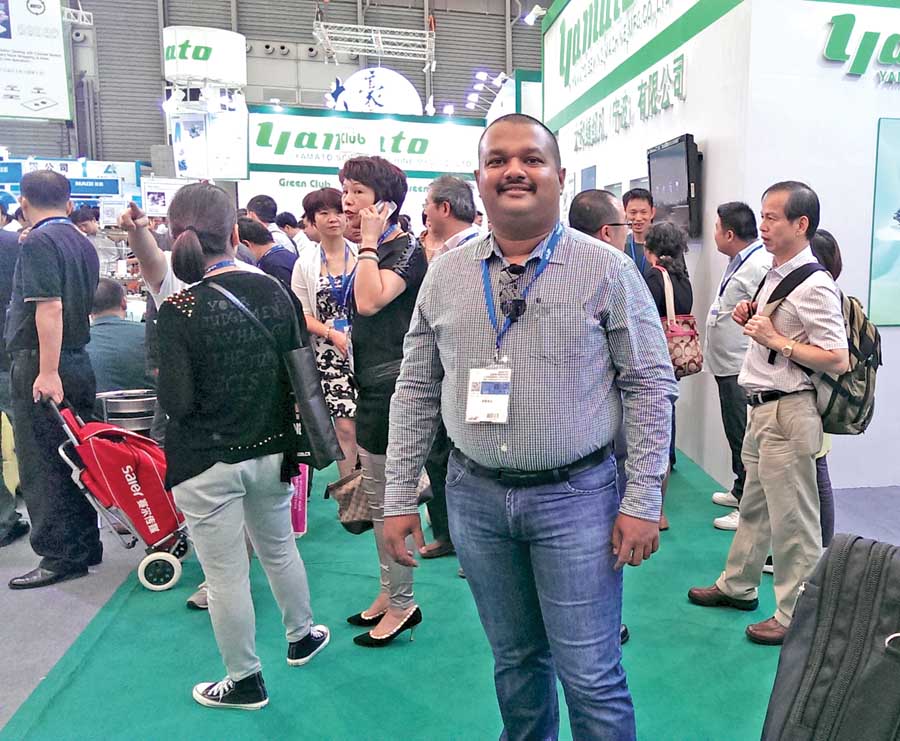 China has always been thought of as a basic sewing machine manufacturer, but this edition of the CISMA show completely changed the perception of the country. Almost every Chinese sewing machine brand was present with a range of highly automated sewing machines for wide range of pattern sewing applications, sleeve setting, pocket welting, button and buttonhole indexers, pocket attaching, yoke attaching, J-stitch in jeans, etc. The other visible trend was the presence of many smaller but promising hanger and conveyor material handling systems for sewing lines. The number of booths showcasing computerized overlock machines was also noticeable.
The CISMA show is always looked upon by technologists of the apparel industry as directional. In this second part review of the CISMA show, StitchWorld highlights some of the most applauded solutions at the show, along with the strategies of respective companies who visited the event.
Arun Sahu, GM Projects & Engineering, Gokaldas Exports My agenda of visiting CISMA-2013 was mainly for Quilting, Bonding, Seam Sealing & Feather Filling machines. We at Gokaldas Exports make a lot of sleeping bags for Decathlon for which single needle quilting machine is of utmost importance. At present we have many machines of this type, but I was looking for a high speed machine with a speed above 3000 RPM, a double layer frame changing device with the sewing machine head up and down movement. This will help us in optimising the productivity. From all the machines I saw, the mule-head pattern sewing machines from Richpeace was the most interesting.
A lot of manufacturers displayed bonding and ultrasonic (sew-free) machines from MACPI, Nawon, H&H, PFAFF & Brother. PFAFF 8312 is interesting as it cuts, seals and then welds the seam for reinforcement. I think, in future we will see or may be produce garments requiring bonding/welding technologies, which are stitch free and comfortable to the wearer. As of now the applications of these machines are limited to innerwear and lingerie items. At present majority of our seam sealed jacket business is from Decathlon and it is growing every year. NAWON and H&H hot air seam sealing machines are interesting along with their cross over press & water pressure testers for such garments.
We also do a lot of polyester fibre filled jackets for Adidas, so I was looking for a machine which will help us in filling the ball fibres in different parts of the jacket. Manually filling by hand takes more time as this has to be of exact weight in different parts of the garment like front, back, sleeve, etc. I found many machines which are meant for filling the real duck feather but my sample of polyester fibres in ball form was not suitable for these machines. I’ve given the sample of polyester fibres what we use instead of feather to few machine manufacturers for their R&D to develop a machine.
Apart from this, Gerber’s latest cutter PARAGON, the new 7000 DD single needle direct drive with needle breakage prevention from Brother, the LZ 2284 A-7 direct drive zigzag machine from JUKI, V 800 AS serging machine from Vibemac, VPR 100 spot tacking blind stitch machine from Strobel, 700K direct drive high speed flat lock machine and cylinder bed top feeding overlock machines from Siruba, HC-8200J direct drive feed of the arm machine from SunStar, MARTIN fusing machines with loader & stacker and Fast React software for planning, attracted my attention.
Krishantha Ekanayake, GM Technical, Richa Global
I took demonstrations of some of the very interesting machines such as Automatic pintucking machine, Multi-functional fabric shrinking and forming machine, Multi-function crimping machine, Computerized embroidery machine from ZSK, Automatic workstations for attaching hook and eye from ZOJE, Automatic workstation for inserting adjusters for bra straps and securing from ZOJE, Groz-Beckert’s new training program on handling of needles, etc.
Pavan Godiawala, Director, NIFT Gandhinagar
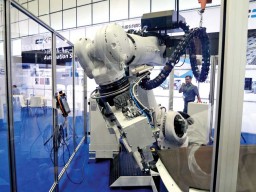

This year at CISMA more emphasis was given on development of work aids which can support the CNC machine feeding system and development of work station, enabling unskilled operators to handle more than one machine and produce consistent quality in a cost-effective manner.
Technology development has key features like low power consumption for energy efficiency, CNC control for flexibility and lower skilled requirement, metal coatings to achieve longer component life span and accuracy without accelerating the cost, and lastly the use of Information Technology for ease of monitoring and machine control. The classical examples are X-Y direction feeding system machines working with plastic template and multiple machines which can be handled by only one person.
The future of the garment industry is not only moving towards automation but also towards low-cost automation where not only the concept like single minute die exchange time is coming slowly in practice but also low die cost and quick manufacturing of this dies are also getting developed side by side. Richpeace gave demonstrations of its large template jacket quilting by using CNC machine control as a classic example. One can achieve similar output by simply using roller presser foot on basic lockstitch machine and extending the machine bed, but the change from operation to operation would be manual only. This is the only future of high-end but basic sewing machines with self-developed jigs and fixtures to get better, faster and consistent output.

My description for future basic high-end machine means machine equipped with all features like direct drive servo motor, UBT, ply sensors, needle positioner, slow start, minimum 4 step of programming panel, bobbin thread position indicator, needle thread tension control through separate plus motor, IT to indicate wear and tear of any part, reminding maintenance schedule, enabling the sewing machine to read the basic information via the garment’s RFID TAG interacting with the machine and can inform the operator about garment specific requirement and if possible make changes accordingly, enable the supervisor to set the machine parameter from distance or programmed, enabling automatic data transfer – A future basic machine to my understanding of technology advancement taking place in world manufacturing technology.
Gayan Ruhunage, President – Apparel Manufacturing, Exodus Futura Knit
This edition of the CISMA fair had no new innovations for knitwear and neither any of the big sewing machine suppliers displayed any new or upgraded sewing machines. Yamato had introduced a new and interesting hemming device which helps in deskilling of sewing machine operator. But this device is yet to be introduced in the market and it will take next 6 months. Pegasus displayed an automated blind hemming machine which I found interesting, but the machine price was too high and I doubt its reasonable return-on-investment. Apart from the machines, CISMA has always been heaven for innovative attachments, presser foots and various types of accessories.