The State Government of Maharashtra (India) has announced to set up nine textile parks in the northern part of the state.
The announcement was made by Subhash Rajaram Desai, Industries Minister Maharashtra at the Progressive Maharashtra Summit. The Summit was organised by industry body Federation of Indian Chambers of Commerce and Industry (FICCI).
The northern region produces the maximum of cotton in the state but without any value addition. The initiation of adding the ‘value’ at every stage from ‘produce’ to ‘fibre’ to ‘fabric’ to ‘fashion’ will bring a good price of cotton to the farmers.
At the Summit, the Industries Minister also highlighted the benefits of Amravati Textile Park that features 30 operational units and stressed on replicating the same at the upcoming nine parks.
Desai said, “The textile parks provides a platform to many small and medium industries to flourish their businesses. However, in such way, we can support farming and industry.”
The idea is to enhance the farmers’ income through ‘value-added’ products. Furthermore, it will also help the Government and the farmers in proper utilisation of the cotton produced in the northern part of the state.
Over the years, the Maharashtra Government has taken several initiatives that benefited the farmers.
The loan worth Rs. 34,000 crores given to the farmers had also been waived off.
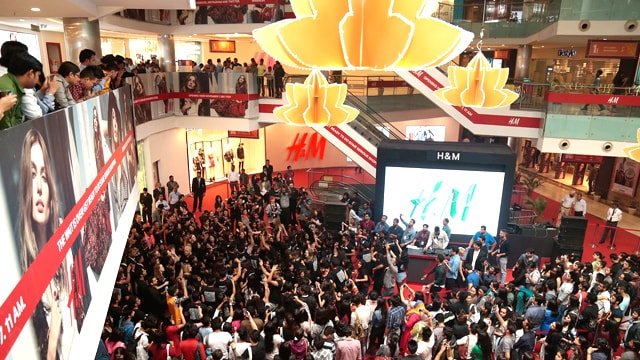
H&M, the Swedish multinational fashion retail company, has inaugurated its first store in Indore, Madhya Pradesh, India. The store opened is a part of the company’s proposed investment of Euro 100 million for the H&M brand in the Indian market.
Treasure Island Next Mall in the city has become the latest location in India to house an H&M store.
The Indore store was inaugurated by Gorav Puri, Country Controller at H&M India along with Area Manager Louis Coucke and Store Manager Vijay Kumar. The new store is spread over 18,000 square feet of area.
H&M’s fresh women’s, men’s, and children’s apparel collections, accessories, and footwear will be up for grabs at the store.
The Swedish fashion retailer currently operates around 17 stores across the country and aims to have over 25 by the end of the current year. The retailer is also strategizing to start selling online in India from next year onwards.
In view of tremendous opportunity in the Tier-II cities, the retailer has decided to foray in some more Indian cities this month.
The company is also considering setting up a new warehouse to meet its future needs and improve efficiency in its supply chain. Currently, H&M has only one warehouse in Delhi-NCR which caters to its pan-India needs.
‘Home is where the heart is’…, this old saying in itself reflects the importance of home furnishing in creating an ambience that people can call a home. Like fashion, home décor is also an extension of a person’s personality. And though it is very individualistic…, there are many forecasters who help in finding the right touch when designing a home. For exporters working for the international home market, the ability to interpret what could sell in the coming season is the critical difference between getting orders and losing out to other companies/countries. Shifting through the many international directions floating in the market, Apparel Online has put together some of the key trends that home furnishing exporters should definitely incorporate in their collections for 2018.
Fashion is being transferred to home faster than ever. As styles and trends hit the runway, it’s only a matter of time before they translate into home decor. Pillows, accessories, fabrics – it all shows up in as little as 3-6 months. Some of the hot trends that runways have been seeing that are finding way into the segment include floral prints, tassels and fringes, textures, eyelets, deconstructed look, patches and stars. As is the case of ethical fashion, forecasters predict that consumers will increasingly demand textiles and tableware products which reflect the nature and connections with communities. Yet, on the other side, a more colourful approach that references elements of technology and urbanization will continue to attract a section of the consumers.
According to WGSN, four key themes are likely to influence a consumer’s path to purchase home furnishing in 2018. The first of the four leading trends is “Slow Futures” – a calm, clean-looking, minimalist approach to life. The trend would be driven by a need to declutter complicated modern lives and to retreat in order to make sense of the information that flows around us. Consumers have been increasingly looking to the past to determine the future, which has created a “less-is-more” approach to their purchases.
The second trend is “Kinship” – soft indigo colours, rope, sea grass, nautical themes and sandy tones were being used as inspirations and, in combination with design influences from the Middle East and South America created texture, context and originality in fabrics. The third trend is called “Psychotropical” and is a “story about exploration” – about bright and exotic looks. The fourth and final concept is for “Younger Consumers”; it is about giving them the open space where they can actually be a part of the design process themselves, and then they can modulate the product based on their particular needs.
In the DIY fashion trend, Emojis are fast becoming a hot trend, popping up in decals, wallpaper and pillows. Patches are another big trend in DIY fashion, showing up in towels, linens, blankets and custom upholstery. Guitar straps – the top DIY fashion trend this season, is expected to quickly move into tie backs, pillow straps, trims and more.
Indian exports following trends…
The good news is that most of the Indian exporters are clued in and many of them have focused attention on textured and natural fabrics and printed value additions. “If we talk about the trends in home furnishings products, then lot of printing with more and more demand for textures, in short, ‘nothing fancy is in fashion’ or basics have taken over the market. But on the same note, there is a lot of innovation going on with yarn blends like cotton modal, cotton bamboo and linen,” says Alok Aggarwal, ED, Shree Lakshmi Cotsyn. Corroborating his understanding of the trends, Tarandeep Singh – GM of Alps Industries, adds, “Textures that are natural but unique are in demand and we are working in that direction.”
A few companies specializing in eco-friendly products are also cashing in on the trend of being close to nature. “Our specialization is eco-friendly textiles, in India we have very less number of suppliers for the green and sustainable textiles, so it was an area that had huge potential to grow. Our product range starts with grass mats, bamboo mats, banana mats, and moves on to core products for kitchen linen and curtains,” shares K R Karuppanchetty, Executive Director, Skanthaguru Exports, Karur.
Colour trends follow overall demand for diversity…
Earlier this year, Pantone Colour Institute Executive Director Leatrice Eiseman shared colour and design trends for 2018 at the International Home + Housewares Show. Based on fashion runways, the art scene, television, movies, architecture, retail, theatre, food and consumer goods all over the world, Eiseman highlighted the fascination with letters and words as a design element, the use of triangles in both contemporary and retro themes, dimensional diamonds and intricacy, which is most likely to be spurred by the explosion of 3-D printing. Wood treatments and a throwback to the 1970s, fringe is “very hot and very strong.”
The eight colour groupings that the company believes will be strong in 2018 are:
Verdure – This palette features vegetal kinds of colours like celery and foliage being combined with berry-infused purples and an eggshell blue.
Resourceful – Complementary colours – oranges and blues – are combined in this palette that is clever and “resourceful” in re-using and re-furbishing what consumers may already own.
Playful –This palette is out-of-the ordinary and quirky. The colours are “bright-hearted more than light-hearted” with names to match, like minion yellow, lime popsicle, green flash and adventurous blue skydiver.
Discretion – Low-key and subtle, Discretion is the opposite of Playful. Nostalgic hues such as Elderberry, burnished lilac and hawthorne rose combine with strengthening tones to offer newness to a subtle palette.
Far-fetched – It refreshingly combines three popular rosy tones with iced coffee and ruby wine, as well as a few earthy tones such as cornsilk yellow.
Intricacy – This palette reflects the popularity of intricate designs. It features the “new neutrals,” aka metallic, but a florid Holly Berry Red and Yellow Sulphur adds a layer of drama.
Intensity – Coolly composed shades of plum, blue and blue-green quell the fires of orange ember glow, molten lava and bossa nova. Golds and black complete the palette.
TECH-nique – In a nod to the proliferation of technology, this palette features hues “that seem to shine from within.” Colours include a vibrant blue, green, fushia and purple, along with iridescent peacock tones in both turquoise and hot pink, which are offset by brilliant white and frosted almond.
The Government of Odisha (India) has asked the World Bank to provide financial support on a project initiated for the development of the state’s textile industry including handlooms and handicrafts.
A meeting between the World Bank officials and the representatives of the State Government was held recently at State Secretariat.
During the meeting, A P Padhi, Chief Secretary asked the Government officials to keep an eye on the developments in order to utilise the best of assistance provided by the World Bank.
However, there is no official announcement or any information on the financial aid granted by the World Bank.
The State Government will reportedly invest Rs. 460 crores, in the beginning, followed by the Central Government’s funding and loan from the World Bank.
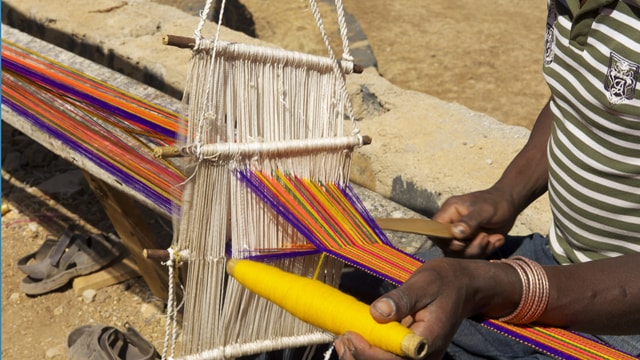
Odisha offers 52 different types of handicrafts and weaving art forms. The state is known for producing designs like Sambalpuri, Bomkei, Berhampuri and Ikat, making it a perfect destination for the handlooms buyers.
Over four lakh people are working in the sector for their livelihood.
The key objective of the Odisha Government behind collaborating with the World Bank is to make the project a successful one and increase the income of the artisans and weavers in the state.
The GST Council of India has announced to reduce GST rates on 18 handicrafts items at its 21st meeting held recently in New Delhi.
The items included are idols of clay, wood, stone, metals, table and kitchenware, paper machine articles, stone inlay work, statues, worked ivory, bone, shell horn items, cotton quilts, brooms and brushes and some natural fibre products.
Rakesh Kumar, Executive Director, Export Promotion Council for Handicrafts (EPCH), an apex organisation of trade and industry for promotion of Indian handicrafts, thanked the Textile Ministry for easing the GST norms for the handicraft sector.
In the press release issued, the trade association informed that it had been representing various measures to the GST Council that will facilitate a smooth transition of the handicraft sector into the GST system.
The EPCH has further urged the Council to slash GST rates to 5 per cent on handicraft job work and reduce rates on various other items exported from handicraft clusters of Jodhpur, Jaipur, Saharanpur and Moradabad.
The Federation of Pakistan Chambers of Commerce and Industry (FPCCI) has called the US to extend the GSP (Generalized System of Preferences) facility until 2020. The current term will end in December 2017.
Additionally, the trade association has strongly recommended to include key textile products under the GSP scheme.
The suggestion was made by Irfan Ahmed Sarwana, FPCCI’s acting President, during his meeting with John Robinson, who headed the six-member contingent of the US consulate in Pakistan recently.
Sarwana was also vocal on having more interaction between the businessmen across Pakistan and the ‘US trade mission’ so as to promote economic relations and bilateral trade between both the nations.
Though Pakistan already has a duty-free access for various commodities in the US market, textile products are still not a part of the facility.
Sarwana added that currently, Pakistan pays somewhere between 7 per cent and 32 per cent duty on some of the textile and leather products in the US.
He opined that having a better access to US market would help Pakistan in reducing poverty and thereby bringing growth, development and economic stability in the country.
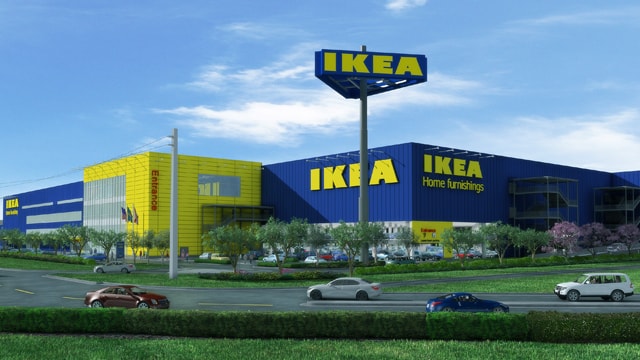
South Indian city of Chennai is likely to become the fourth location in the country after Hyderabad, Mumbai and Bengaluru to house IKEA stores.
According to media reports, the Sweden-based global home furnishing giant has reportedly initiated talks with the Tamil Nadu Government to finalise the plan of opening stores in Chennai by 2019-20.
The retailer is looking for 8-12 acres of land somewhere near the strategic locations (that will be near to the Metro stations) to set up two stores in the city. These planned stores will reportedly be set up at a cost of Rs. 2,000 crores.
The new stores also have a 1,000-seater restaurant, warehouse and play area. Jobs for around 4,000 people will also be created.
“It will take 12 months for construction and six months for getting various approvals for the establishment of the stores,” reportedly said Juvencio Maeztu, Chief Executive Officer, IKEA India Pvt. Ltd.
The retailer is set to open two stores, one each in Hyderabad and Mumbai, this year. Currently, there are more than 380 IKEA stores in 48 countries, including 43 in the US.
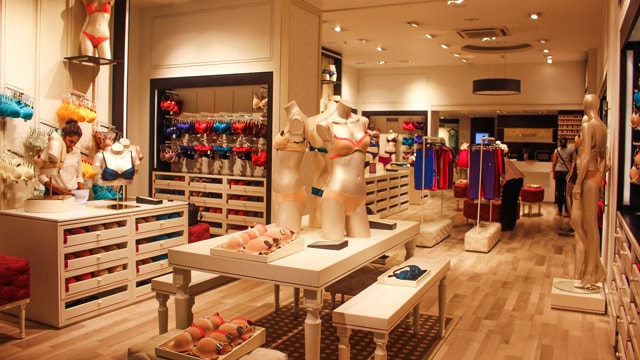
MAS Brands, a subsidiary of Sri Lankan apparel manufacturer MAS Holdings, is planning to add more of Amante stores to its India list.
The company forayed into the Indian market in the year 2007. It is eyeing to open 100 standalone stores in 15-20 cities in the next three to five years.
Amante is currently available in 1,200 multi-brand stores, 200 large format stores, 7 exclusive brand stores and leading e-commerce sites in more than 20 Indian states.
Acquisitions are also on cards for the company which targets to be the leader in the lingerie segment in the country. The retailer wants 3-4 brands in its portfolio that can contribute significantly to its growth in the Indian market.
Additionally, MAS Brands is planning to introduce Ultimo to India next month. The company owns the majority of stakes in the UK-based intimate wear label.
MAS Brands is aiming high with these strategic moves to lock Rs. 150 crores in revenue in the current fiscal year through its intimate wear business in the country.
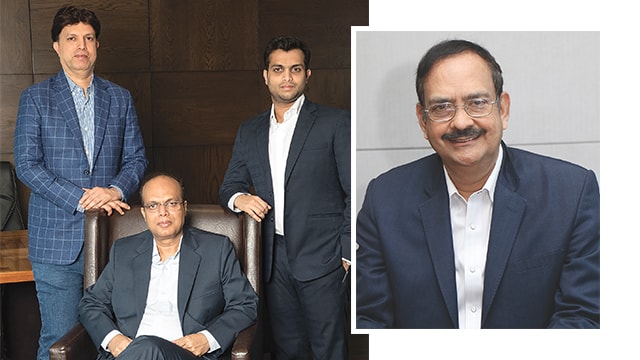
Press conference for the annoucement of acquisition of GBTL
As part of a strategic business initiative, the Donear Group, Mumbai has announced acquisition of Grasim Bhiwani Textile Limited (GBTL). Donear Industries Limited has production capacity of around 45 lakh metres fabric per month with latest technologies and machinery at Surat. With a strong presence in more than 20 countries globally, the Group has a network of more than 185 stores in India, marketing textiles under the D’Cot & Donear NXG brands with positive cash flow.
The acquisition of GBTL gives Donear Group an added edge in global textiles business in terms of world-class production capabilities to market products and wider access to the customers globally. This will also significantly enhance Donear’s profile in the global textiles space. The terms of the transaction are not announced yet as Donear Group said, “It will be disclosed at the appropriate forums through wider communication to all stakeholders”. The acquisition has been funded by the promoters of Donear, and there is no plan to bring in any strategic investor – Indian or foreign – on board as of now. However, the strategic stakeholders may be included in due course of time.
Rajendra Agarwal, MD, (sitting) with Ajay Agarwal, ED (L) and Rahul Agarwal, Director, Donear Industries Ltd. | S. Krishnamoorthy, MD, Grasim Bhiwani Textile Ltd. (GBTL)
Rahul Rajendra Agarwal, Director, Donear Group said, “The GBTL acquisition is driven by our desire to expand our business both in PAN India as well as in global markets, and progress towards our strategic goal to become the recognized leader in products and services that we offer and increase our market share. This acquisition will utilize strengths of both partners in terms of infrastructure, manpower and product portfolio. Apart from the world-class production capabilities, the acquisition also gives Donear an access to strong nationwide retail network, wholesalers and multi-brand outlets through which we will expand our reach.”
Talking about the management of the two units post acquisition, he further added, “The GBTL plant will be run by existing unit management with additional benefits of expert advice from Donear promoters. We assure to our internal and external customers that there will be no change in the work culture and they will continue to experience the same services at all stages. Over the time, we will leverage synergies to create a stronger entity with formidable presence in Indian fashion textiles industry.”
Confirming on their independent operations, S. Krishnamoorthy, MD, GBTL (appointed by the Donear Group) stated that opportunities for fabric in Over-the-Counter (OTP), apparels and exports segment are huge in India. Therefore, even with the common vision of “Make in India”, both Donear and GBTL will maintain their individual entities and fulfil their commitment of offering the best of products and services to their customers as one integrated team. Thus, Donear will continue its focus on the OTC segment while strengthening its network PAN Inda and will expand its product portfolio in domestic and international market.
It is to be noted here that GBTL is a subsidiary of Grasim Industries and India’s largest manufacturer of Poly-Viscose (PV) and Poly Wool (PW) suiting fabrics. It sells its products under the “Grasim” and “Graviera” brands in India. GBTL also caters to international fashion houses in the US and the UK, supplying fabric to them for making garments which are available in some of the largest retail chain stores. The Donear Group aims to build further on GBTL’s existing strengths.
The fashion climate at NYFW is changing and it’s not just in terms of which season is on ‘preview’.
From a metaphorical game of musical chairs between fashion editors and industry experts switching from one house to another within the industry, to a spike in the population of street style photographers, the shifting of tectonic plates in fashion was quite evident.
Evident enough to façade the vacuum left by designers who decided to migrate to London, Milan and Paris calendars this year.
The absence of fundamental names from the NYFW landscape, such as Rodarte, Proenza Schouler, Altuzarra and Thom Browne, left a significant void on the fashion week schedule and also brought to fore the blaring heat surrounding the notion of NYFW going through a cataclysm of sorts.
Gig Hadid at Tom Ford RTW SS’18 New York
To put these queries to rest, it has to be noticed that, firstly, not everyone is changing their sigil and flying across the Atlantic, with players like Michael Kors, Tory Burch, Calvin Klein, Marc Jacobs and Alexander Wang continuing to stay (for now) on American soil.
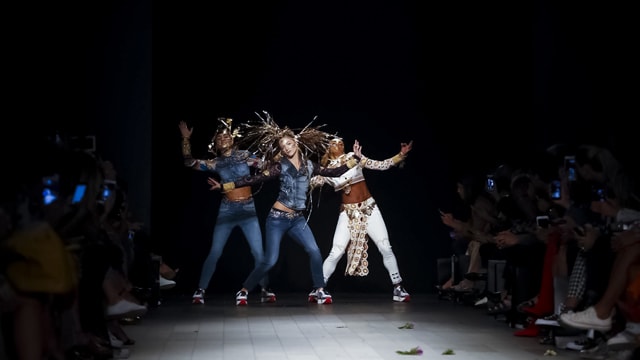
Desigual RTW SS’18
The exodus has also positively resulted in a flurry of new talent and younger brands filling up the gap and injecting it with fresher perspectives and a new lease of creativity.
Also, to counter these claims, we have the perfect example of Tom Ford, who returned to New York for Spring Summer 2018, after stunts all over the international fashion circuit.
Like the showman Mr. Ford is, his return was marked by the opening show for NYFW at the Park Avenue Armory, which was transformed into an elegant lounge, complete with mood lighting. Models lavishly bedecked in seductive, crystal-embellished bodycon dresses and power-suiting, reminded us of why New York, amidst all the apparent turmoil, still emerges as a leading fashion capital.
Diversity went full throttle with a subversive mix of design talent, cultural identities, body proportions and age groups appearing on the runways proving once again that America stands truly united, irrespective of the political dilemma surrounding it currently.
Designers and brands alike successfully managed to conjure a sense of purpose by offering collections rich in identity and character that remind us of the pivotal part that fashion plays in today’s tortuous political and cultural landscape.
Tom Ford and Rihanna (with her Fenty x Puma) went out to break the rules of ‘conventional fashion’ by offering glamorous sportswear, while Coach and Oscar De La Renta blurred lines between daywear and nightwear.
Bold colour directions popped out at Sies Marjan, who also flaunted impeccable tailoring and an intelligent use of fabrics like fur and foiling techniques over power-suiting.
The colour palette emerged as a strong play of lilac tones, marina blues, primrose yellow, cherry and tomato red for the season.
Additionally, the hand-drawn and hand-written motifs signalled a shift towards ‘the human touch’ for the season ahead.
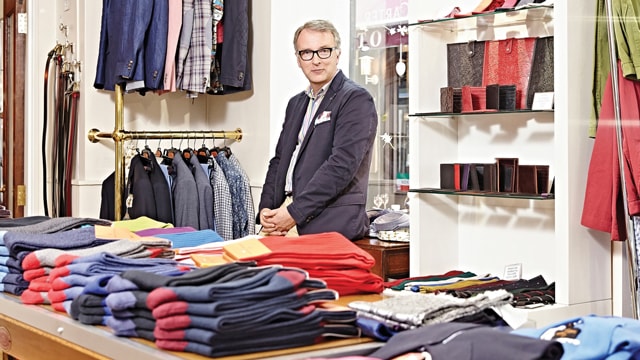
British fashion retail brand Simon Carter has launched its store in India. Phoenix Market City in Mumbai has become first to house a ‘Simon Carter’ menswear-exclusive store. The store is spread over an area of 1,200 square feet.
The store was inaugurated on September 15 by Simon Carter himself.
The retailer had inked a deal with Aditya Birla Fashion and Retail Limited (ABFRL) in May last year to foray into the Indian market.
“We have added Simon Carter to our list of partners to grow our international portfolio, significantly contributing in consolidating our position in the affordable luxury space, giving our discerning customers a true taste of high-end fashion,” reportedly said Vishak Kumar, CEO, Madura F&L, ABFRL.
The iconic designer wants to increase the store count to 10 by the end of the current financial year. The upcoming stores are likely to be opened in Bengaluru, Chennai, Delhi, Pune and Chandigarh.
Suits, jackets, shirts, blazers, jewellery and accessories for men will be up for grabs at these stores. The products will range from Rs. 3,000 to Rs. 14,000.
Simon Carter brand is also available online on Myntra and www.simoncarter.in. The company retails in 40 countries around the world.
Chinese e-commerce company JD.com Inc. has inked a deal with the Thailand-based retailer Central Group for a US $ 500 million (US $ 250 million each) joint venture.
“JD’s proven track record of successfully building out national online retail businesses made it the obvious choice to be our e-commerce partner,” reportedly said Tos Chirathivat, Chief Executive Officer of Central Group.
As per the agreement, the e-commerce giant will provide technology and logistics support to the JV, while Central Group will contribute through its merchant relationships, brand recognition, and customer insights.
JD.com aims to expand its reach in the Southeast Asia region through this e-commerce and financial technology (finetech) venture.
The retailer’s arch-rival Alibaba Group has already reached the Southeast Asian market and is quickly increasing its services in countries like Singapore. It is expected the JV will back JD.com in taking its business beyond Indonesia.
“Working with Thailand’s strongest retail conglomerate, with a massive shopping mall and department store network, gives us a huge competitive advantage as we expand further into Southeast Asia,” JD.com CEO Richard Liu said in a statement.
The partnership between the two is expected to reshape the online retailing and finance landscape in Thailand.








 Bharat Tex Special Report 2026