Street Legal Clothing (a division of 3532534 Canada Ltd.), a two decades old import house, will start sourcing fabric from India and also restart its garment sourcing from Tirupur. The company, very strong in sourcing of uniforms, workwear, sportswear and hunting jackets, is sourcing from Bangladesh, India, China and Cambodia for Canada market. With a business of US $ 8 billion, the company also has its office in Delhi at present and works with three vendors from India.
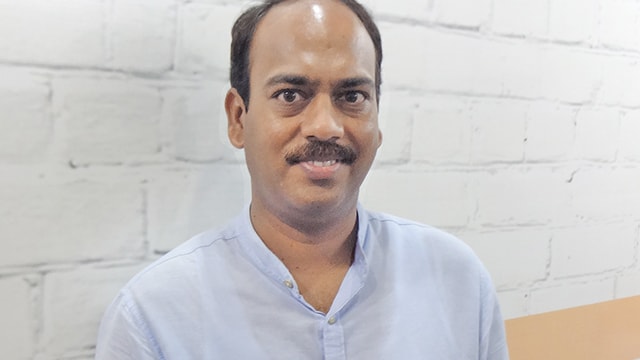
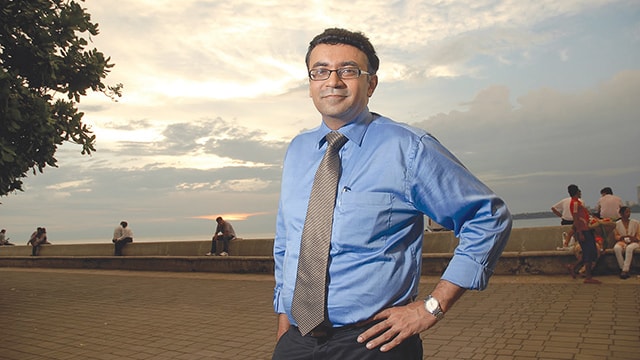
Ravi Verma, VP, Street Legal Clothing
Ravi Verma, VP of the company, shared with Apparel Online, “We import fabric from China but now we are into the process to identify some Indian suppliers, so that we will be able to import cotton and Polyester Cotton (PC) blend fabric from India, and will get cut and stitch done in Bangladesh. Initially, it will be for a Canadian retail chain store that is looking for uniforms from us. And his order sizes are also good enough.”
Talking about Tirupur, Ravi stated that it is a really important sourcing destination for him but from last few years, they are not sourcing primarily from there because Tirupur has to pay duty while exporting to Canada. However, he has plans to start sourcing again from Tirupur if the manufacturers based there are able to match with the prices offered by the Bangladesh factories. Ravi puts it simple, “They have to manage the costing if they have to survive.”
With reference to the growth of his imports business, Ravi briefed that it is taking place but at a slower pace. “Pricing is very tight especially in our part of the world. North America is struggling on price issue which makes pricing the key point. We are trying to work with vertical units so that profit does not split and we get advantage of complete in-house production while getting benefit on the price issue. If prices are okay, we can source millions of pieces, otherwise we are forced to source only 2,000 to 3,000 pieces per style,” said a thoughtful Ravi, and further added that in terms of basic products like men’s shirts and Tees, they do 1,00,000 pieces. Hence, according to him, quantities are there but manufacturers have to be sharp enough.
Indian Textile Accessories and Machinery Manufacturers’ Association (ITAMMA) organised a Textile Technology Workshop on September 12 in Ludhiana, India.
Northern India Textile Mills Association (NITMA) and Federation of Industrial and Commercial Organisation (FICO) were the co-organisers of the event.
The workshop was inaugurated by Hardyal Singh Cheema, Former President, NITMA & MD of Cheema Spintex Ltd. in the presence of various industry experts and representatives of different Government bodies.
The theme of the event was ‘Creating an Ecosystem for Innovation and Technology Development in Textile Industry’
During the workshop, the industry experts, academicians, industrialists and machinery manufacturers shared innovative methods of increasing the production level for the manufacturers.
The 19th ‘product-cum-catalogue’ show was also held concurrently. The show provided a platform to discuss technical and marketing issues the manufacturers face.
More than 49 exhibitors, including manufacturers of machines, spare parts, and components participated in the event. Over 300 visitors from spinning, weaving and wet processing sectors also attended the show.
N D Mahtre, Director General (Technical), ITAMMA told Apparel Resources, “The core objective behind this event was to promote innovation for ‘higher productivity’, ‘effective planning’ and ‘better quality products’ in various sectors of the textile value chain.”
At the event, it was also stressed that India should focus on increasing its machinery production. The country presently manufactures only 40 per cent of its machinery requirements and the rest is imported which affects the end price of the product, Mahtre informed.
IMG Reliance is collaborating with the British Fashion Council (BFC) to enhance the presence of Indian talent in the international fashion fraternity.
The collaboration will promote three emerging Indian designers (Karishma Shahani Khan, Ragini Ahuja and Ujjawal Dubey) to be a part of the ‘Designers Showrooms’ initiative at the London Fashion Week Spring/Summer 2018 showcase.
The designers were selected from a pool of designers from 25 other countries at the International Fashion Showcase (IFS) 2017 in the UK. The team also bagged the ‘Best Country Award’ at this sustainable fashion event.
Jaspreet Chandok, Head of Fashion, IMG Reliance said, “IMG Reliance through its lead platform Lakmé Fashion Week has always focused on supporting young and emerging designers and this is an extension of the same. We were honoured to win at the International Fashion Showcase last season at London Fashion Week and we hope that this is the start of a long and fruitful relationship between the fashion industries of UK and India.”
The Designers Showrooms will further provide a platform to the designers to enhance their business globally.
Collections of the budding designers will be introduced to the international buyers and media at the main venue for the London Fashion Week, The Store Studios, from 15-19th September 2017.
“We are delighted to welcome to the London Fashion Week Designer Showrooms the Indian collective, winners of IFS 2017. This LFW is more international than ever before with designers from the US, Asia and Europe choosing London to present their collections and proving that our capital is an international cultural and creative hub. Having the Indian collective in the town further establishes that,” said Caroline Rush, Chief Executive, BFC.
The Indian city of Gurugram has become third after New York and London to have a Fashion Imaging Studio called ‘BLINK’ by Amazon.
Amazon has launched the fashion studio in the country in view of the company’s rising fashion retail business in the country.
The first-of-its-kind studio in India is equipped with the ‘digital imaging facility’ which facilitates the shooting of over 2,50,000 fashion products annually. Additionally, it has 16 individual high-tech photography bays, a large editorial suite, video editing facilities and creative spaces.
The newly launched studio is spread over an area of 44,000 square feet. It will enable Amazon’s fashion partner brands to produce millions of high-quality images for fashion merchandise every year.
According to reports, the e-commerce fashion market in India will be worth Rs. 2 lakh crores by the year 2020. And the establishment of the Fashion Imaging Studio reflects Amazon’s interest in the country.
The retailer has been extensively investing to attract more consumers in India.
The opening of the studio has come just days before the beginning of Amazon’s Great Indian Festival Sale, scheduled to be held from September 21-24.
“The launch of this studio will help strengthen our relationship across the entire industry, with brands, designers and creative talents,” reportedly said Arun Sirdeshmukh, Business Head of Amazon India.
India-based Future Lifestyle, a fashion company operating over four million square feet of retail space, has announced financial results for the first quarter of the current fiscal ended in June.
During the quarter under review, the fashion retailer noted a whopping 33 per cent increase in its net profit to Rs. 24 crores against Rs. 18 crores during the same quarter of the previous fiscal.
Strong same stores sales (up 30 per cent) at its units including Central malls, Brand Factory and other Future Lifestyle Fashion brands collectively helped the company record a 29 per cent increase in revenue to settle at Rs. 1,031 crores. Revenue in the first quarter of 2016 stood at Rs. 800 crores.
Net sales too soared 17.5 per cent to Rs. 3,877 crores for the fiscal year ended March 2017.
In the 2016-17 financial year, Future Lifestyle surpassed its rival and the country’s largest departmental store chain Shoppers Stop in terms of fashion retail sales last fiscal. It appears the retailer is continuing to capitalize on the momentum gained last year.
At present, the company runs around 360 retail stores across the country.
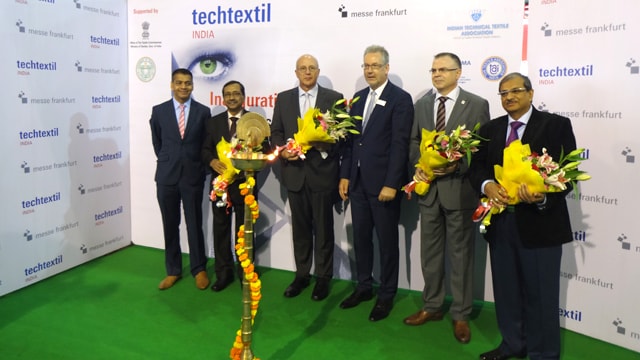
2017 edition of Techtextil India raised its curtains today at Bombay Exhibition Centre in Mumbai.
The textile fair was inaugurated by Michael Janecke, Director, Brand Management, Technical Textiles & Textile Processing, Messe Frankfurt Exhibition; Dr Jurgen Morhard, Consul General, Consulate General of Federal Republic of Germany in Mumbai; and Elgar Straub, MD, Textile Care, Fabric and Leather Technologies, VDMA (The Mechanical Engineering Industry Association), Germany.
Pramod Khosla, Chairman, Indian Technical Textile Association (ITTA) & CMD, Khosla Profil Pvt. Ltd. and Dr Anoop Rakshit, ED, ITTA also attended the inauguration ceremony.
The participants expressed optimism over the textile industry’s growth in the technical textile domain and the show’s success.
Day 1 of Techtextil India recorded a good visitation. Booths of several top technology companies like Tukatech, Lectra, Optitex, and GA Morgan (Morgan Technica) that offer cutting room solutions for the apparel industry were flooded with visitors.
Indian textile giants like Reliance and RSWM also displayed a variety of products on Day 1.
Furthermore, various Chinese textile and apparel companies too marked their presence at the fair. The Chinese players are offering a wide range of yarns, fibres and technical fibres at the three-day show.
On Day 1, Apparel Resources interacted with various visitors. Most of the visitors appeared eager to venture into the technical textiles as they see immense growth in this segment both in the domestic as well as overseas markets.
The highlight of Day 1 was the seminar addressed by Ram Sareen, CEO & Founder, Tukatech. He spoke on ‘Most Important Technology to Save an Apparel Business’.
Key topics such as Industry 4.0 and Project Management Techniques for Apparels Units were also discussed on the first day of the exhibition.
Over 150 companies from various countries, covering the entire supply chain of the technical textile industry, are showcasing their latest developments at the Techtextil India show.
The Southern India Mills’ Association (SIMA), a textile trade body, has elected its new office bearers for the year 2017-18. The association announced this during its 58th Annual General Meeting held on September 9, 2017, at Hotel Le Meridien, Coimbatore.
P Nataraj, Managing Director, K P R Mill Limited, Coimbatore has been unanimously elected as the Chairman of SIMA for the year 2017-18.
He is also a member Confederation of Indian Textile Industry (CITI) Committee, Vice President of Indian Cotton Federation, science graduate and member of Institute of Chartered Accountants of India.
Furthermore, K. Vinayakam, Managing Director of SCM Textile Spinners, Avinashi and Managing Director of Chennai Silks has been appointed as the new Deputy Chairman of the organisation for the next one year.
The outgoing Chairman M. Senthil Kumar thanked the Government for its continuous support to the textile industry and the association. He also praised the work done by the Textile Minister Smriti Zubin Irani, who has initiated several policies for the benefit of the sector.
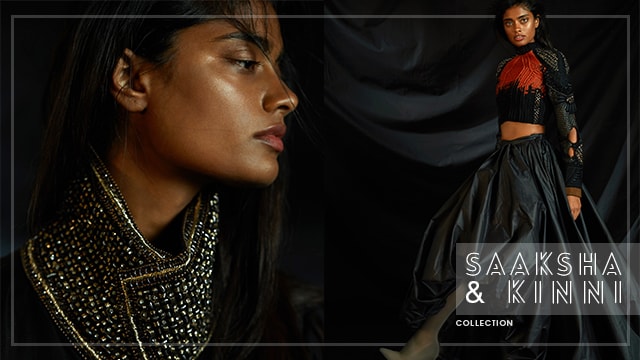
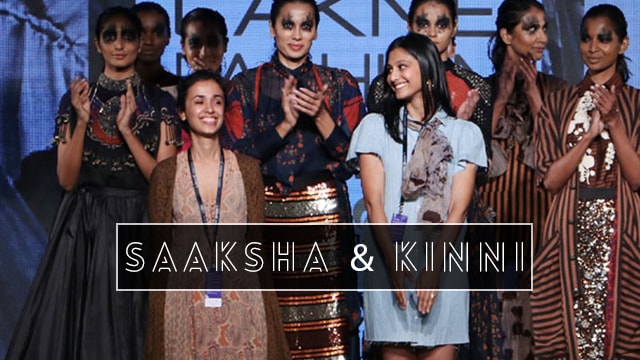
Fashion is no stranger to the power of creative collaboration and perhaps this is the reason why a lot of decorated industry names come in powerful packs of two. Following the same suit is Lakme Fashion Week’s GenNext 2017 finalist Saaksha and Kinni (S&K), the eponymous label from Indian design duo – Kinnari Kamat, a craft connoisseur who has been working on embroideries for the likes of Elie Saab, Balmain, Gucci since 10 years and Saaksha Parekh, a lawyer by profession, born and brought up in a family of actors and film makers.
Stepping into the world of fashion from these diverse backgrounds has helped them marry heritage techniques with modern no-fuss silhouettes and colours. Kamat’s elevation of traditional handwork comes from an astute understanding that only develops with experience, whereas sister-in-law Parekh’s non-fashion base is what keeps their line practical and accessible to the modern working woman.
“We have a set-up of over 50 seasoned karigars who have trained and worked in Kinni’s factory for 5-10 years now, so there is no dearth of artisanal work in our studio. We work on embellishments, antique stones, and of course on an abundance of micro-pleating that you can see this season. But really our forte lies in threadwork that is as ornate as it is wearable,” corroborates Saaksha.
Winter/Festive 2017 collection by Saaksha and Kinni
The label’s moniker metal karigari is an artful revamp of traditional badla embroidery that uses fine metal threads, typically called zari but interweaves the same with bigger sheets of dulled metal to create a sort of modern armour type look. Saaksha briefs, “Our inspiration for this comes from 12th-13th century breastplates but obviously if you give metal to anybody today, it will be too heavy. So we have been hands-on in preparing our craftsmen to make it lighter and more commercially viable to recreate because we do not want to outsource anything.”
To contrast this stronger masculine guise, Saaksha and Kinni use gentler materials like chiffons, mulmul, chanderi or even regal raw silks and unsurprisingly, the source of most of these materials is available within their home city Mumbai, and they claim that the quality found in the city is much better than anywhere else in the country.
The brand’s clear understanding of its consumer is the reason why they sell very easy to wear styles like trench coats, crop tops, co-ordinates or boyfriend jackets and stick to traditional flora and fauna prints.
However, what makes their work different is the treatment of colour. The duo’s palette of choice is characterized by very dull, vegetable, earthy undertones and all their colours are really antique.
Everything is washed with acid or oxidized and the designers even hand paint black over gold karigari at times because that is the look they want to create.
Only a year and a half old, the brand has already found home in some 18 stores such as Collage Shop, Elan and Anahita across the country and on sites like Aza and Pernia’s Pop-up Shop online. Even though the bigger chunk of their clientele is from the Indian subcontinent, they also stock products at stores overseas like Shagun in Bangkok, The Silk Knot in California and Affiniti in Bahrain.
Back at home, Saaksha and Kinni are becoming the go-to-outfitters for celebrities like Karisma Kapoor (who recently wore their Winter/Festive 2017 pieces), Kalki Koechlin and Aditi Rao Hydari who have been wearing their garments since the brand’s inception.
The duo also received great reception at the fashion week from stylists, publishers and buyers alike. Saaksha added, “Being a part of such a huge event really increases your brand visibility by tenfold and even if we were already working with a lot of buyers we met, it still puts a face to the name. Plus, the people who might have been a little dubious about our work in the past, now appear more positive about working with us in the future.”
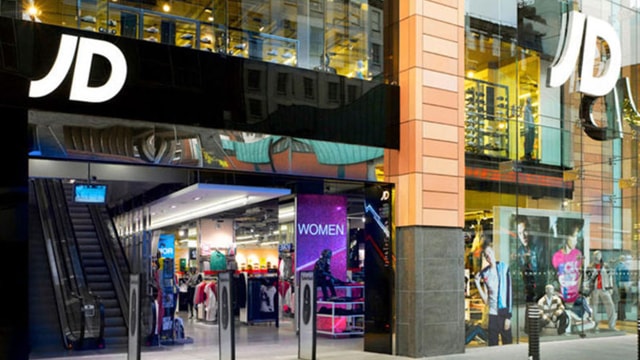
UK-based JD Sports Fashion, the leading retailer of sports, fashion and outdoor brands, has announced its interim financial results for the 26 weeks ended 29 July 2017.
The first six months of the current year remained exceptional for JD Sports Fashion. The sports retailer’s operating profit jumped 29 per cent to settle at £ 103.2 million for the period.
Additionally, JD Sports’ like-for-like store sales increased by approximately 3 per cent during the 26-week period. The retailer also noted a significant growth in online sales. The overall sales figure of the company stood to £ 1.37 billion, up 41 per cent from the same period of 2016.
Profit before tax for the first half also increased by a further 33 per cent to a new record level of £ 102.7 million.
“This is another pleasing result demonstrating the strength of our highly differentiated multi-channel proposition and our ability to prosper in an increasingly competitive market for athletic inspired footwear and apparel,” said Peter Cowgill, Executive Chairman of the company.
The sportswear retailer now expects its full year pre-tax profit to be between £ 268 million and £ 290 million.
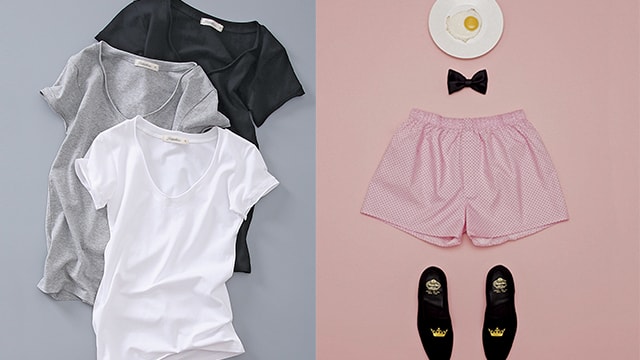
For over a decade now, we have been hearing that innerwear is coming out of the closet…, but finally it is truly out in the open and prominently visible in stores and online shopping sites with more and more people comfortable in buying not only basic innerwear but high-end fashion inners. This fast-moving category is being driven globally by increasing awareness regarding personal hygiene, rising disposable income, on-the-go lifestyle, improved living standards and changing preferences of consumers. It is further fuelled by the spread of modern retail formats both off and online and increasing product visibility.
Under the larger umbrella of innerwear, the market is segmented between the men’s market and the more fancy-driven women’s wear market. And both the markets are significantly growing. While the global men’s innerwear segment is estimated to be growing at a CAGR of 5.8% to reach US $ 13.6 billion by the end of 2024, the global market for womenswear is projected to be growing at a CAGR of 6.4% to reach US $ 55.83 billion by the end of 2024. Organized retail penetration and growth of monobrand and multibrand outlets worldwide are driving sales further.
Yet, sadly, Indian manufacturers of innerwear, both in menswear and womenswear segment are concentrating more on the domestic market, choosing to ignore the huge potential that exists abroad. Even those who are working in the export market are mostly focusing on men’s segment, where margins are relatively less. India has but a few top-end lingerie manufacturers attempting global market. But then can we really blame them considering that the Indian market is ripe for the best brands with a market size that is growing at an estimated CAGR of 12.2%.
Innerwears
Currently, the domestic underwear market is estimated at nearly Rs. 24,000 crore (US $ 4000 million) according to a 2016 report by Intimate Apparel Association of India and Wazir Advisors. It is expected to become a Rs. 47,000 crore (US $ 7833 million) market, which is nearly 8% of the total estimated apparel market, by 2020. The men’s underwear market is currently valued at around Rs. 8,500 crore (US $ 1417 million). With increasing disposable income and changing consumer attitudes towards the category, the segment is expected to maintain growth to reach Rs.16,500 crore (US $ 2750 million) by 2020, added the report.
Sanjay K Jain, MD, TT Ltd., Delhi; Chairman of NITRA and Vice Chairman CITI
No wonder, domestic players are expanding. We have several prominent names who have carved a distinct niche for themselves in the Indian innerwear domain such as Rupa and Co. Ltd. (MacroMan, Frontline and Euro), Lux Industries Ltd. (Lux Cozi), Dollar Industries Ltd. (Bigboss, Club) and Maxwell Industries (VIP, Frenchie). Recently, Advent International, a leading US-based private equity investor, has acquired Dixcy Textiles, Tirupur, a prominent player in domestic undergarment industry. Dixcy with a strength of nearly 3,500 people, plans to raise money from private equity funds at a valuation of Rs. 3,000-3,400 crore (US $ 500 to 567 million). Talking to any company of this segment, one can find out that despite all variety of challenges, they are confident about the growth of the entire innerwear industry be it men’s undergarments, lingerie, shapewear etc. Sanjay K Jain, MD, TT Ltd, Delhi; Chairman of NITRA and Vice Chairman CITI, feels that undergarments export is increasing but at a very small pace. He even states that “Our exports have grown multifold because we were working on a very small base earlier.” He further added that innerwear market will grow consistently, and the biggest opportunity is going to come from the unorganized market shifting to the branded players like him. “Hence, I see growth coming from market expansion and market shift. TT limited, one of the most famous brand in India, is offering the complete range of innerwear for gents, ladies and kids. It currently produces 3 million pieces per month. In the last fiscal, the company had a turnover of Rs. 678 crore (US $ 113 million)” shared a proud Sanjay.
“Our existing business of ceramic is passing through recession, so we are planning to enter into textile industry. Initially, we will be investing Rs. 3 crore into knitting and stitching machines, and will start with undergarment manufacturing. Due to less dyeing, value addition and PD issues, undergarment seems to be the best product category to start with. Hopefully production will start in one year. Export is also on our radar but at a later stage.” – IA Badi, Neon Industries, Rajkot
Yusuf Dohadwala, CEO, Intimate Apparel Association of India (IAAI), claims that overall Indian intimatewear industry is witnessing the fastest Y-o-Y growth which is estimated at 18-20 per cent and this growth is the highest in the world. IAAI is one of the prominent bodies of Indian intimate apparel industry. One of the strong reasons for this growing innerwear industry is its large basic necessity. This makes it almost recession proof with minimal effect from negative market trends. Although according to Sanjay, due to psychological impact and pipeline inventory, the Indian innerwear industry faces short-term recession impact as seen in demonetization and GST period.
In the words of Yusuf, “Things are fast changing in India with consumers getting more evolved. Fashionable intimatewear is rapidly growing and taking large space in the wardrobes especially for women’s category.”
Why not export…
Brandix, Quantum Clothing, Seeds Intimate Apparel, Pratibha Syntex, Eastman Exports Global Clothing, Best Corporation, SGM Garments, Clifton Export, KPR Mills… these are few of the selected companies in India that are into export of these product segments; while in domestic market, there is a long list of strong and public limited companies who are achieving tremendous growth in almost all product categories of innerwear segment. So what is stopping them from exploring the overseas market? “Overall competitiveness in India is an issue due to unfavourable FTAs and bilateral agreements vis-à-vis our competitors like Bangladesh, Vietnam, Cambodia etc. Hence, exports are mainly limited to Middle East and African nations – further domestic brands need to get more organized and integrated to cater to USA and Europe in a bigger way,” said Sanjay thoughtfully. He also feels that both domestic and exports have enough scope but export growth would somehow depend on Government policy and support.
Yusuf informed, “We already have over 1,000 labels in innerwear segment who cater to the Indian market. Exports from India for innerwear are apparently very less but growing. However, our industry has to work on poor skills in manufacturing of value-added products or fashionable products. Therefore, at present, we can export only basics. For value-added products, India is unable to meet the efficiencies found in China, Bangladesh, Sri Lanka, Vietnam, Cambodia, Indonesia. To be competitive in exports, it is very important to have raw material base in India, especially for lingerie segment which is very low. Hence, to do export, we would have to depend on China for raw materials, hence increasing the lead time and which is why buyers don’t aim at coming to India.”
Cotton will continue to take lead
Cotton is and will continue to dominate as consumers are pretty comfortable and used to cotton. Having said that, polyamide and other synthetic fabrics have also started taking space in India’s intimatewear industry, but the growth is slow as many manufacturers are unable to handle synthetic fabrics well, and hence it still has limited use. But going forward, synthetic fabrics will grow as consumers start experiencing the comfort that these fabrics have to offer. In innerwear, cotton is set to rule in India, as it is cheaper than its alternate modal fibre. In innerwear blends, cotton/spandex or modal/cotton will be more in demand.
According to Yusuf, few lingerie companies who are really doing well do not have capacities for exports. Their market in India itself is large and growing which doesn’t allow them to look at exports. Being a highly-skilled driven industry, somehow it hasn’t been able to implement skill development programmes effectively to support intimatewear manufacturing. He adds, “Unfortunately very few, including our Government, fail to understand how potential employment-generator this industry can be. Smaller countries like Vietnam, Bangladesh, Cambodia have understood this and excelled.”
Experts do feel that India’s innerwear industry is at a nascent stage and has lot of potholes like lack of skills for producing technical and quality products, poor availability of technicians and lingerie designers, dearth of quality raw materials for which India has to depend on China. This makes the import duties on raw materials high and the products expensive. To overcome such challenges, Yusuf briefed that IAAI organizes events like Galleria Intima which address the raw material challenges in India and gradually increase exports from India. IAAI is also creating awareness through seminars to help the Indian manufacturers and brands to upgrade their knowledge and be competitive.
With regard to lingerie manufacturing, it was being said that there are suppliers who can’t offer all accessories together (in proper shade) for bra and more or less things have not improved much even currently. Small components like rings, sliders, hooks and eye tapes are not available in India which can pass the quality standards for top brands. Additionally, India lacks enough technical training institutes, arrangements for lingerie/undergarment industry, especially at the shopfloor level. This is an important area to be addressed. IAAI had many rounds of discussions with institutions such as NIFT to overcome such challenges but nobody seems to take this up.
Major players in men’s global innerwear market…
Key market players in the men’s segment are Hanesbrands Inc., Philips-Van Heusen Corporation, Ralph Lauren Corporation, Jockey International Inc., American Eagle Outfitter Inc., Iconix Brand Group Inc., JC Penney Corporation Inc., and Berkshire Hathaway Inc. The key players operating in the global lingerie market are Jockey International Inc., Wisconsin, Hanes, Groupe Chantelle, LVMH, L Brands Inc., MAS Holdings Limited, Ann Summers, Marks and Spencer, PVH Corporation among others.
Despite all such major limitations, Yusuf is confident that leading brands of the world will have to come to India for their sourcing requirements. “It is just a matter of time and if the current Government continues its reform mission, we aren’t too far from ‘the Make in India’ vision. Brands like Victoria Secret and M&S, Calvin Klein and many more are already sourcing from India. One should visit Brandix India Apparel City (BIAC) in Visakhapatnam to see the millions of bras and panties being produced every month for leading brands. BIAC also claims about having a world-class Integrated Textile Park with facilities which are not available anywhere else in the world,” says Yusuf on an optimistic note.
Exporter’s take…
BSCI certified Clifton Export, Tirupur, is producing 50 million undergarments per year and exporting to retailers in Europe. B. Naveen, Managing Director of the company informed, “The only benefit of undergarment manufacturing is that you have business throughout the year but this product segment has very less margins compared to any other garment product and more price-competitive. Besides, one needs specialization machines and in-house elastic manufacturing without which producing undergarments would become very difficult. We do have our own set-up for elastic manufacturing.” He further added that in the last 4 years, Bangladesh has increased its focus on the undergarment business which is again a big challenge for players like him. “We have noticed only 5 to 10 per cent growth in undergarment exports owing to this,” said Naveen although his company has its own fabric dyeing plant.
Some of the low-profile companies are also doing good business in this segment and enjoying decent growth. Anuj Shah who was earlier associated with Pigeon Impex, Surat, offering seamless garments (including undergarments) six months ago, has now started Flavors Impex and is exporting seamless undergarments to Turkey and Europe. “Yes, we have major share in domestic market but we keep focus on export and are continuously improving on the same,” averred Anuj. There are some more such companies in Ahmedabad offering lingerie and nightwear also.
Ahmedabad-based Santosh Shree Santoshi Agencies offers variety of products in innerwear segment and also exports to Middle East and African countries. Sunil Nasra, Director of the company shared with AOI, “It is true that lingerie manufacturing is growing in Ahmedabad but there are very few companies doing quality products, while rest are doing low-cost products.”
Raw materials
As far as the issue of raw material availability is concerned, there are some companies who claim one-point solution for the entire range of accessories needed for a specfic product such as bra. Kotak Overseas, Mumbai is one of them. Nikhil Kotak, CEO of the company reasons, “Very minor difference like shade variation will be there always, no matter from wherever lingerie manufacturers are sourcing. But we have an edge as we are serving lingerie manufacturers with the complete range right from cup to all other components and that too with the best quality. Sometimes manufacturers are having very less lead time, even in that case, we try to support them with the best possibilities.” He even stated that there are some manufacturers who themselves don’t want to source the entire range from one supplier. They try to save cost but at the end, it costs them almost the same.
Challenges in domestic market too
Overall, in domestic innerwear market, extreme competition and low margins by competitors especially from the unorganized segment is a challenge. GST and restructuring of industry will help to reduce the latter hurdles but the first ones need to be fought by disruptive and out-of-box solutions. With regard to lingerie, earlier it was being emphasized that the demand for bra in domestic market is so high that Indian brands/manufacturers are using their full capacities, and expanding and they feel no need to move into the international arena. But now, many not-so-known brands have started seeing the difficulties. Experts feel that market is becoming more systematic with organized retail and e-commerce taking most of the market share from the traditional MBOs and most of these brands were dependent on MBOs till now for their sales. “Market consolidation has already begun. Many manufacturers will convert to job working units or explore export opportunities as survival in the domestic market will get tougher for them unless they consider investing in brand building,” claims Yusuf with a careful consideration of the Indian innerwear market at large.
Hubs
No doubt, Kolkata and Tirupur are prominent hubs in India for men’s innerwear but in case of hosiery products and garments and in lingerie, the larger production bases are in Delhi, Mumbai, Bangalore and Ahmedabad. Hubs like Kanpur are also doing well as the city is already having strong hold on knitted products. Apart from many small-and medium-level players, Kanpur has growing companies like Jet Knitwears Ltd., which brought its IPO just a year ago. It claims to have its products certified as skin-friendly and antibacterial by facility for Ecological and Analytical Testing, IIT, Kanpur. In lingerie business, Vizag, Delhi-NCR, Mumbai, Ahmedabad and selected companies in Bangalore are known for lingerie manufacturing. There are units coming up in other regions but at a small-or medium-level scale.
Italy-based Itema, a leading provider of advanced weaving solutions, will mark its presence at the upcoming textile exhibition Techtexil India. The show will run from September 13-15 at the Bombay Convention & Exhibition Centre in Mumbai.
Textile experts have already predicted a bright future of the technical textile market in India since the demand for products in this segment is rapidly increasing. Itema is gearing up to enlarge its footprints in India and capitalize on the opportunities available in the segment.
During the 3-day textile event, Itema will display its weft insertion innovations including Rapier, Airjet and Projectile.
According to Itema, the demonstration of the R9500 rapier loom at Techtextil will attract the queries from the customers who belong to technical applications including OPW airbag, fibre glass, and bolting cloth.
“The weaving width of 540 cm along with new and advanced parts make the R9500 a perfect machine for the entire range of technical textiles applications,” claims Itema.
Alongside R9500 rapier loom, airjet A9500 weaving machine will also be up on display. The machine is suitable for medical and automotive fabrics applications. It provides substantial benefits to the fabric manufacturers with its high precision productivity and superior efficiency.
The third one on the list is the unique projectile P7300HP machine. The machine comes with a positive weft transfer technology that catches the weft and carries it directly with no exchanges in between, and therefore provides an unmatched efficiency.
Itema can be visited at Techtextil India in Hall No. H6-C109.
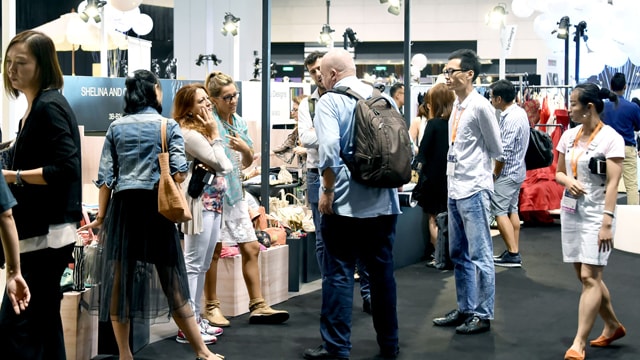
CENTRESTAGE, a platform for Asian fashion companies and designers to launch and promote their labels, successfully concluded on September 9.
The four-day international fair, organised by the Hong Kong Trade Development Council (HKTDC), featured over 210 fashion brands from around 22 countries and regions world over.
The exhibitors presented their latest innovations under three sections: GLAM, ALLURE, and METRO themed ‘Nouveau Playhouse’.
Over 8,500 buyers from 73 countries including Thailand, Vietnam, Japan, Singapore, Indonesia and others visited CENTRESTAGE 2017 to explore the latest trends.
Asian buyers accounted for nearly 40 per cent of the total buyer visitation during the event.
The positive response and serious order queries from the global buyers overwhelmed the exhibitors.
Among the participants was Hausie Showroom, a fashion company that represents more than 20 international brands in Hong Kong. The company made its debut at CENTRESTAGE with a variety of fashion collections, jewellery, and bags.
Vivian Pang-Williams, Founder of Hausie Showroom shared that the company received a good response for its products during the show.
Another exhibitor ASTRA Tailoring from Hong Kong also appeared content with the show. The company launched a new menswear brand with the ‘zero-waste design’ that attracted numerous serious inquiries.
“Our emphasis on ‘sustainability’ brought us many buyers from the Chinese mainland, Singapore, Thailand, and Japan,” asserted Ayumi Kwan, Design Director, ASTRA Tailoring.
Buyers also seem excited with the range of collections showcased at the exhibition.
One of the buyers, Nicholas Chong, CEO of YFS said his company visited the CENTRESTAGE show for the first time. YFS is a fashion retail chain that owns and runs 138 stores in Malaysia.
He also informed that his company will place orders worth US $ 10,000-30,000 each with fashion jewellery brand ‘CIAO’ and ‘FromClothingOf’, a brand that offers casual wear for women.
Many such other buyers like Galeries Lafayette, a leading French department store, and Henry Pang, a buyer of HALO Designer Chic from the Chinese mainland also showed their interest in the collections displayed at CENTRESTAGE.










 Bharat Tex Special Report 2026