ShriVallabh Pittie Group (SVP), one of the largest cotton yarn manufacturers in India, has announced to invest US $ 300 million in setting up a cotton yarn manufacturing plant in Sohar, Oman.
The manufacturer has already signed a land lease agreement with SOHAR Freezone for this new venture which will create over 1,500 jobs in the region.
“Our company has a highly skilled and experienced management team with a strong focus on automation and technology. We source best-in-class machinery from leading global companies to ensure the highest levels of productivity and efficiency,” reportedly said Chirag Pittie, Managing Director, SVP Group.
SV Pittie Sohar Textiles, a subsidiary of SVP Global Ventures Ltd., will operate the factory which is expected to be operational by the end of the year 2019. The SVP Group has over 200 years of experience in the textile business.
The yet to be opened unit will be the first ever cotton yarn manufacturing plant in the region. The facility will import 100,000 metric tonnes of cotton fibre (50 per cent from the US and the rest from India and Australia) annually.
The Sohar unit will produce around 75,000 tonnes of finished yarns. The produce will then be exported to Bangladesh, Pakistan, Vietnam, Portugal, and Turkey through Chinese ports.
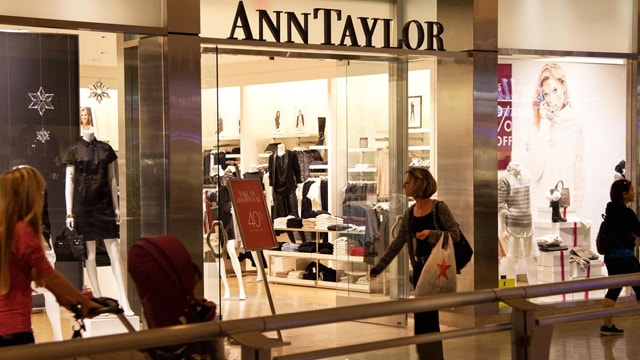
US-based Ascena Retail Group, a leading national speciality retailer offering apparel, shoes, and accessories for women, has announced financial results for the fourth quarter ended on July 29, 2017.
During the quarter under review, the company’s net sales on a GAAP basis were US $ 1.658 billion compared to US $ 1.812 billion in the year-ago period.
Gross margin on a GAAP basis too decreased to US $ 951 million for the fourth quarter as against US $ 1,041 million last year.
Operating loss on a GAAP basis for the fourth quarter was US $ 9 million compared to operating income of US $ 65 million in the fourth quarter of 2016. Traffic at Ascena-owned brands like Ann Taylor, Maurices, Dress Barn, and Lane Bryant remained low.
David Jaffe, Chief Executive Officer of the Group said that the results are not pleasing and the company will not be satisfied until it delivers a better performance.
In the first quarter of fiscal 2018, Ascena expects net sales in the range of US $ 1.58-1.62 billion.
Barry A. Hytinen has been appointed as the new Chief Financial Officer of HanesBrands, a leading global branded marketer of everyday basic apparel. He will take charge from October 16 to replace Richard D. Moss, who has announced to retire by the end of this year.
The 42-year old is an MBA from Harvard Business School and holds a bachelor’s degree from Syracuse University Hytinen as well. He will report to Hanes Chief Executive Officer Gerald W. Evans Jr.
Hytinen is currently associated with Tempur Sealy International, a publicly traded global bedding manufacturer. He has around 20 years of experience in finance.
“Hytinen, who holds fair enough experience in domestic and international acquisitions, global tax and supply chain structure, margin enhancement, and cash generation, matches the needs of our expanding global enterprise,” said Gerald W. Evans Jr in a statement issued by the company.
Hytinen has also served in the role of CFO and other finance-related jobs to host of other companies such as Fogbreak Software, Vignette and General Electric Company.
Dazzle Textile Limited spearheaded by Sahed Hasan as the Managing Director, is a buying house with its very own manufacturing unit (68 machines), which the company plans to increase to 1,000 machines, to cater to a rich clientele.
Rule of Three
First and foremost is Sincerity, because it is very important for any work; second would be Commitment (because if a supplier can maintain his commitment, everything else will be in place in terms of business); and the third quality would be Competitive Pricing.
Sync with Changing Dynamics
With changing times, everything changes; even the buyers syncing with the change become very important.
Biggest Challenge!
We are working with an international company from Europe and their product category is of very high-level and a lot needs to be done to maintain that quality. So, in this case, my suppliers should be able to meet the quality standards if they want to work with us.
In the RMG sector, Bangladesh has done a very good job and has positive future prospects.
Advantage BD
Honesty, good quality of products and commitment
Supplier Pool
I think change is better but not in every case. My associated suppliers already know my product categories as well as the requirements. But having said so, I think new people also should get opportunities.
Business Policies
I will work with a supplier even if its interests/policies are somewhat different from some of my core business principles; it’s not mandatory that all criteria or requirements of a supplier should always match mine or vice-a-versa.
Maintaining the Edge
I always think that the supplier and me are two sides of the same coin; we are attached to each other very closely. So, it is not possible for both of us to work without each other.
Success in business is all about negotiating challenges deftly, which is something Roshan Withanage, the Managing Director of CJ International – Bangladesh, head of the Swedish buying house, has been doing with aplomb for long to help the Swedish company stand out amongst the hordes of buying entities that dot the country’s landscape today.
Starting operations in Bangladesh in 2006, CJ International’s mainstay as far as sourcing is concerned, was home textiles. But that was only till Pakistan started enjoying the GSP facility, which ensured a shift of business (home textiles) from Bangladesh to Pakistan. That CJ International owns an office in Pakistan helped it to deal with this situation effectively. Besides Pakistan, CJ International also has offices in India, Bangladesh, China and Hong Kong in addition to its partners in Latvia, Estonia and Thailand.
Roshan Withanage, Managing Director, CJ International
“There has been a lot of change in the sourcing pattern over the years. Earlier home textiles accounted for almost 60 per cent of our business from Bangladesh. But today it’s 10 per cent of the total business,” explains the MD of CJ International, who adapted well to the changing dynamics and shifted focus to other product categories that have good demands in the markets that the buying house operates in.
Working predominantly with Scandinavia, sweater eventually emerged as the much sought after product accounting for almost half of CJ International’s total business from Bangladesh, while the remaining 40% is shared by knit and woven products and 10 per cent by home textiles (bath robes, towel, etc).
“There is round the year demand for sweaters. During winter, the demand is more for sweaters in heavy gauge while summer and autumn pushes up requirements in lighter gauges,” Roshan explains, adding, “We cater to many big names in Scandinavia including Gina Tricot (Swedish retailer), whose sourcing in Bangladesh is primarily dependent on us. We source everything that is cotton-based across product categories. However, in terms of volume, sweater is still the biggest, followed by T-shirts, then denims, shirts, etc. What we do not ship from here are synthetic items like poplin, georgettes, etc, which are still at a very infant stage in this country”.
CJ International’s offerings in RMG
CJ International’s average FOB of a pair of denim (ladies) is around US $ 8, T-shirt around US $ 3 and sweater is around US $ 8.
This continuous order flow in sweaters has helped Roshan establish a very good control in all the three sweater manufacturing units (in which the buying houses place their order for woollens) as almost 70 per cent of their total capacities are booked by CJ International throughout the year. “Keeping the number of factories limited and sharing a long-standing relationship helps build the trust factor. In the process, we have aided many factories develop their standards by helping them improve in various aspects,” elucidates Roshan, underlining that it is the very same principle that he applies to other factories for the other product categories.
Image Courtesy: cjinternationalltd.com
Despite having a factory base of over 20, CJ International primarily works with only 11. “This is basically to increase order volumes per factory, become a big player in each of them and ensure better quality, and enhance social and environmental compliances,” explains Roshan.
Taking pride in CJ International’s philosophy of acting as clients’ ‘eyes and ears’ and operating as their back office, Roshan’s next target is to cover Europe and Australia in terms of market.
“Apart from Scandinavia, we have running orders from France, Germany and Australia and now we are looking at Poland and Russia also,” he maintains. In Europe, Germany is high up in Roshan’s estimates in terms of potentials, who goes on to add further, “Germans have more dispensable income compared to many other countries in Europe while at the same time German market is also very price-sensitive.”
The United Kingdom has also been a preferred market for CJ International for long. However, with the British deciding to part ways with the European Union, things have changed considerably now, Roshan feels. “The effect of Brexit has been across geographical locations. Besides EU countries and UK, it has differently impacted the manufacturing destinations in other places,” Roshan underlines. British Pound and Euro losing value in comparison to US Dollar have had larger ramifications for the Bangladesh apparel industry in particular as it deals in US Dollars.
“Bangladesh in a way has become expensive for UK as well as other EU nations to do business with. As a result, manufacturers and exporters have to cut prices and lose margins to continue being in the business,” Roshan reveals. According to him, if Brexit proved somewhat ominous for garment exporters in Bangladesh, it was rather the contrary for Turkey (which deals in Euro).
Despite many European countries successfully carrying out austerity drives, following the economic crises that hit Europe in 2007 and 2009 respectively forcing Governments to take decisive action to improve public finances, push through deep reforms, and establish new institutions to manage and prevent crises better and bring their respective economies back on track –the ripple effects of Brexit are going to haunt the garment industry in Bangladesh for some time to come, so feels Roshan.
Being the one who helped develop the Bangladesh operations of CJ International, which now contributes roughly US $ 50 million in the company’s total yearly turnover of US $ 100 million, Roshan is not the one to give up on challenges. He is therefore now looking at expanding in USA, where the company already ships caps and few other items to a select clientele.
Well-equipped with a design studio in Sweden, in-house product development teams (both for design and yarn development) and a testing lab (employing a full-time technician and complete set of equipment including an International Lab Standard washer, a dryer, a GSM cutter and GSM weighing machines among others) and it’s very own knitting factory, Young 4ever Textiles Limited (specialized in all kinds of knitted products with production capacity of over 400,000 pieces per month) takes care of the clients’ diverse requirements. This makes Roshan more than confident about CJ International’s prospects in the US.
“We have a winning combination of Swedish, Bangladeshi and Sri Lankan team that brings the technical expertise, transparency and commitment much needed in this kind of operation. Besides, we also have a strong merchandising division and a Quality Assurance department, which visits each supplier almost every day to ensure that the buyers’ requirements in quality and on-time delivery are maintained. To aid our teams, we also have an in-house lab that checks all goods at least three times per production cycle in addition to any buyer-specific requirements,” wraps up Roshan, assuring a full package for all the prospective clients.
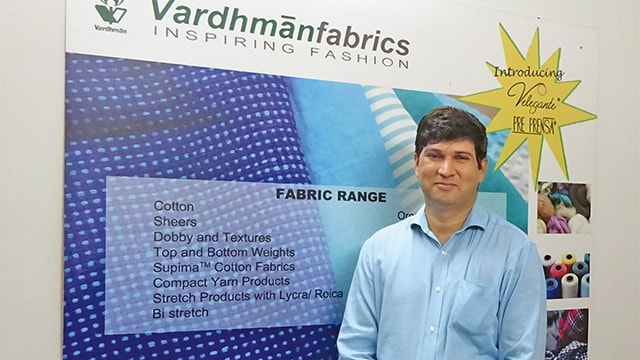
Kulbir Kundu, Country Manager – Bangladesh, Vardhman Textiles
Amongst the biggest names in textiles in India, with one of the largest spinning & fabric capacities, Vardhman Textiles has established its firm ground in Bangladesh since the last 5 years. In a candid discussion with Apparel Online, Kulbir Kundu, Country Manager – Bangladesh, unravels the company’s roller coaster journey so far to sustain amidst the stiffly competitive textile market of this country. With an initial high followed by a distinctly low phase and a gradual revival, this textile giant has rapidly modified its business strategies to carve its own niche regardless of the presence of several small- and medium-level players with the shortest lead time that have emerged in the last few years.
Highlighting the rapidly evolving Bangladesh textile industry and its increasing weaving capacity, Kulbir asserts, “Local mills have increased their capacity and product capabilities. There are also several fresh mills that have ventured in the fabric segment.” He further adds that these mills are delivering reasonable quality fabric. The challenges do not stop here. Lead time is also another constraint for this Indian textile mill as it takes 14-15 days for its trucks to cross the Benapole border successfully due to the poor infrastructure present there. This was one of the prime reasons behind Vardhman’s sluggish performance some time back, more so as the borders were overcrowded for a period of time, leading to further delays. In spite of all these challenges, Vardhman has been able to sustain its volume by adding new customers and shortening production lead time which was possible due to big in-house production capacity from yarn to fabric.
Image Courtesy: India today
Vardhman has also bounced back significantly by diversifying into many new products which it earlier did not have, effectively recovering its lost ground. An optimistic Kulbir states, “About 3-4 years back, we started our liquid ammonia plant. Last year, we added our printing plant as we were losing orders in its absence. In terms of product basket, we diversified our mix. It is now not only in cotton. We create blends like cotton tencel stretch, cotton modal super stretch and difficult products like bi-stretch. These are the types of products which are in demand in the ladies’ wear segment.” Moreover, the country manager confirms that his company is aiming at the product qualities offered by China which is mainly polyester and polyester stretch, cotton polystretch and viscose although originally, they manufactured cotton and cotton stretch at the maximum.
With India being the hub of raw materials like tencel fibre and different types of yarn, these product variations were not difficult to be achieved by Vardhman. They are now producing 100% tencel, 100% modal and are very competitive in terms of their lead time as compared to China. Kulbir clarifies that their focus on their basics or core programs still accounts for 70-75% of their total volume as they have a huge capacity build-up. He shares, “Whatever is the quantity, we can easily deliver them provided we have the projections because we are a big mill with a huge capacity and an extensive R & D centre.” Playing at one end on niche and another on volumes, the company has devised a winning balance.
It is indeed remarkable to note the expansion that Vardhman has undergone in Bangladesh especially in the bottomwear segment despite their earlier benchmark in shirt fabrics. Explaining the factors that inspired them to go for this massive shift, Kulbir avers, “In shirts, the major component is yarn dyed varieties for which local mills are now quite capable as their prices and deliveries are good and their quality is just fine. Because of this tight competition in shirts domain, we started offering different types of blends, washes and finishes.’ Even in fabric finishes, Vardhman offers qualities like moisture management and climate control which are highly appreciated by the buyers and they hope to take it up also in their next upcoming season. Going forward, the focus for Vardhman in Bangladesh is predominantly into the bottoms business for both men and women. Even in shirting which still constitutes a big part of their product category, they have transformed to more modal and tencel based fabrics which is seeing a surge in demand in the women’s clothing section.
With fast-evolving new product categories, Kulbir predicts that though the market growth of Bangladesh is slow (2.5%) in the current year, it would bounce back and achieve the target of 10% annual growth, considering the responsiveness and capabilities of the entrepreneurs in the country. He is quick to admit that this market would never see an absolutely lull phase as it generates consistent business for those who are actively involved in this trade.
With some of the world’s leading brands as its major buyers like GAP, JCPenney, American Eagle, H &M, M & S, s.Oliver and even Inditex, Vardhman continues to prove its mettle in fabric manufacturing. With a strong belief in the concept of made to order, they endeavour to present their clients with new qualities every time by seeking inputs from their buyers and also presenting collections from their own ideas.
The strong design and product development team which creates ideas and converts them into beautiful niche fabrics is the key which gives Vardhman an edge over its competitors. Vardhman’s current strategic orientation is towards keeping the buyers’ interests alive which makes it unique and way ahead of the local mills who are still largely focused on supplying volumes to the buyers.
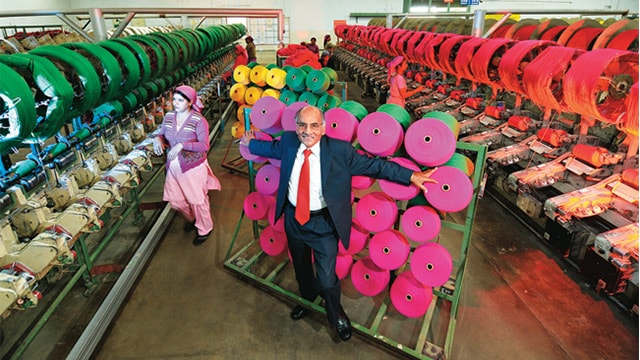
Being focused on a defined goal has paid dividend to Well Group Industries, established in 1973 by Founder Chairman Abdus Salam under Bangladesh Textile Industries (BTI) in a small workshop in Chittagong. With an initial target to produce sewing threads to cater to its growing domestic demand, it has in just over four decades expanded into a conglomerate with multiple interests apart from only sewing threads. WELL THREAD (its flagship product), packaging, food, hospitality, real es tate and readymade garments together generate a combined annual turnover of over US $ 100 million and employ over 20,000 workers. Apparel Online caught up with the dynamic CEO of the Well Group Industries, Syed Nurul Islam, to get an insight on Well Group’s mercurial rise and its diverse offerings in RMG, which Islam prefers to call ‘clothing’, and justifies using the term of his choosing with a rational explanation.
Syed Nurul Islam, CEO, Well Group Industries
“I personally do not like to use the word readymade garment (RMG)… Today Bangladesh is not only about cutting and stitching, but much more as it has matured tremendously. From producing yarns to making fabrics to cutting and stitching to finishing and packaging, we are doing everything. Today the majority of the big names, be it in woven or knits, have their own vertically-integrated set-ups. For basic denim fabrics, Bangladesh is not only self-sufficient but one amongst the best globally. In twill also, we are doing very good and so also in knit,” states Islam proudly.
The readymade garment units of Well Group (Well Fashion Ltd., Well Designer Ltd., Well Mart Ltd., Well Dress Ltd. and Well Fashion Ltd. Unit-2 with combined machine strength of 3000) together produce 20 million pieces of garments (trousers – denim and twill, besides cargo shorts) for names such as Walmart, H&M, JCPenney, Kmart, Carrefour, Aeropostale, George, Sears, Dollar General, Tesco, etc. However, Well Group’s preferred product in its initial days of garment manufacturing was not bottoms, but shirts! “We started in a very small way making shirts with 100 machines in 1999 but have shifted focus exclusively to trousers afterwards,” maintains Islam. Changing demand dynamics of the existing clients and Well Group’s inherent strength in washing are the main reasons behind this shift from shirts to bottoms.
“Having our own washing facility, wash garments was an obvious choice, so we went for bottoms like heavy twills, denims and cargo shorts with diverse wash effects,” Islam explains.
Well Group’s wash facility is equipped with the latest in wet and dry processes as well as power laser, taken care of and supervised by a Sri Lankan expert while another Sri Lankan is in charge of the production units ably aided by two IEs from the same island nation to help ensure smooth and hassle-free garment manufacturing.
Image Courtesy: wellbd.com
Currently, almost 80 per cent of Well Group’s production is cargo shorts with an (average FOB of US $ 6) and remaining 20 per cent caters to women’s denims (average FOB US $ 6 that can go up to US $ 9 depending on wash and value addition). “Walmart is our main client from USA and H&M from Europe and both have big order volumes which suit us well,” avers Islam. Dealing in volumes, Well Group is not keen on adding too many names to its clientele and is content only with a handful, but with voluminous orders. “This is actually our marketing strategy. It is very difficult to handle large number of buyers, who would have different needs and requirements with diverse order volumes,” shares Islam, conceding to the fact that working with only a few clients comes with its own share of drawbacks and briefs. “There are two sides to it. The biggest risk is if the buyer does not have orders, we do not have business. While at the same time when we have very big orders, we cannot entertain other customers as our capacities are filled,” he continues.
Going forward thus, Well Group is investing in a manufacturing unit to resume producing shirts, in tandem with market diversification, keeping the future in perspective. “To start with, we will have 10 lines (500 machines) to make specialized shirts from yarn dyed fabrics,” informs Islam, who has a well-equipped unit for yarn dyed fabric (WELL Fabrics) with weaving capacity of 500,000 yards per month. While in terms of market, Islam is readying himself to look beyond USA (where Well Group exports 80 per cent of its products) and Europe (20 per cent), and sees a very good prospect in Japan.
“We are already in talks with clients there and hopefully by next season, we would have orders from Japan, which again is a non-traditional market for Bangladesh but has very good potential in my view,” Islam underlines, citing Japan’s increasing volume of garment trade with Bangladesh. “You will find a large number of Japanese buyers in Bangladesh these days; even Uniqlo has its own office in Dhaka,” he says, adding, “Japan for that matter is buying apparel worth almost US $ 1 billion from Bangladesh currently; and especially for knits and denims, the prospects are very positive.”
British fashion retailer Marks & Spencer and ShanghaiTex will jointly organise a ‘Plan A 2025’ Business Forum at the 2017 edition of the show.
ShanghaiTex is the leading international trade fair for the textile industry.
The agenda is to promote ‘industry sustainability’. The event will be held on November 28 this year at Shanghai New International Expo Centre in China.
M&S’ Plan A 2025 is the eco, ethical strategy which it introduced to tackle the fresh set of 21st-century challenges.
The Plan A focuses on the core value of the company to protect the planet by sourcing responsibly, reducing waste, utilising recycled materials, supporting fair trade and helping the communities.
M&S has already made its UK operations 28 per cent more energy-efficient using ‘green’ electricity and is also actively encouraging its suppliers to be a part of its carbon-neutral project.
At the Forum, experts from different fields will share the most cutting-edge information and exchange opinions on sustainable industry developments as well.
The fashion month is in full swing and after New York, it’s now time to bid adieu to London Fashion Week’s commotions as well.
The two cities share similar upheavals on the eco-political side, so it comes as little surprise to see that New York’s ‘Americana’ trend has crossed the sea and translated into an edgy ‘Brit-pop’ theme for British designers.
Notably, there are quite a few crossovers like the abundant ‘celebration of femininity’ in all its regalia and a rage of transparency. Taking the infamous ‘Keep Calm and Carry On’ wartime poster quote very close to their heart, the British creatives unleashed their most innovative and artful designs for the upcoming spring season.
The standout trends were a tug of war between heritage checks, last season’s ruffles and shiny transparent fabrics as well as bright new hues like yellow, baby lilac and tomato red.
For Spring/Summer 2018, Christopher Kane championed sheer fabrics, feathers and micro florals in pastels; JW Anderson presented a very naturalistic line-up in dressed down linen, Napa leather and marled yarn knit materials.
Chalayan, RTW, Spring/Summer 2018.
Meanwhile, Hussein Chalayan made a strong case for British tailoring with his reimagined shirting, jumpsuits and impeccable suiting options; whereas Mary Katrantzou, ever the celebrator of all things fancy went all out on bubble hems, eye-catching beading and embroidery in bright colours.
Grabbing eyeballs yet again with its fashion innovations, Burberry too brought back its trademark vintage brown check and plastered it on almost everything. The entire collection was a mix of classic verses street silhouettes like military coats, translucent plastic outerwear, horse-riding shirts and sheer separates.
Burberry, RTW, Spring/Summer 2018
The younger designers also did not disappoint with Richard Quinn’s bodysuits in clashing florals and Simone Rocha’s voluminous Victoriana dresses to Toga’s plastic panelling. At Mother of Pearl, a fun add-on to the brand’s beautiful garments were their ruffle-edged pillows and lush blankets that are actually a part of the brand’s new lifestyle banner.
In addition to the big runway shows in London, various brands, designers and retailers were trying to create immersive experiences that go beyond the traditional 15-minute catwalks.
For instance, Gareth Pugh’s confrontational film presentation of his new collection; Erdem’s Selfridges takeover where the designer has dressed the store in his romantic floral print for 8 weeks which will retail his fall 2017 collection along with an exclusive capsule.
Also, a one-week free exhibition was hosted at the Somerset House showcasing some of London’s biggest design hits. The exhibition not only coincided with the fashion week but also with London Design Festival, making the city a melting pot for design festivities.
India-based Aditya Birla Group’s flagship e-commerce site Abof.com, launched in October 2015, is set to become the second online venture of the company after Trendin.com to shut its operations.
The Group will reportedly close down Abof by the end of this year.
Tough competition from online rivals such as Flipkart and Amazon, and their strategy of offering heavy discounts to attract customers, made it difficult for Abof to survive. The Group cited the same reason behind its move to close down Trendin.com operations last year.
The Group will pay four and a half months’ salary as compensation to all the 240 employees of Abof, reportedly said, Aditya Birla Group HR Director Santrupt Misra, who believes that currently, online ventures are struggling to make money in the Indian market.
Abof was launched by the Group to sell a more limited and fashionable range of merchandise. It also started selling products at discounted prices but fail to garner customers’ interest.
GUESS reduces carbon footprint and energy consumption
American fashion brand GUESS has unveiled its second sustainability report on Thursday (September 21).
The report reveals details about steps taken by the fashion company on the environmental front and the future ideas to be worked on to move forward sustainably.
GUESS has claimed carbon footprint reduction across its stores, distribution centres and headquarters in Los Angeles, California. It has also reduced its power consumption to a great extent by replacing the existing lighting systems with energy-efficient LED lighting.
The company has so far made 286 of its stores energy-efficient in Canada and the US.
The retailer also mapped the water consumption level of the denim products it manufactures, considering global water availability. The company is currently working on a comprehensive water action management plan to address these impacts that will be released next year.
During the past year, GUESS also joined a global industry pledge to advance a circular fashion system. Under the pledge, the brand is supporting an ideology that fashion should last, and be continuously ‘repurposed, reused and recycled’. The company is also going to announce a product take-back programme later this year.
Additionally, the firm has installed new HVAC units and achieved 46 per cent savings in natural gas consumption.
“At GUESS, we understand that we must continue to grow and contribute to the global community with increasing care for people and the environment. We aim to embrace the existing solutions as well as try new ones to address the social and environmental challenges of our time,” says Victor Herrero, Chief Executive Officer, GUESS.
Univogue – a name that is synonymous with quality has collaborated with Bullmer, a pioneer in the field of cutting room technology solutions to become leaner and more cost-effective. The Group’s strength lies in rapid decision making, superior product quality, good capacity and timely deliveries. Speaking exclusively to Apparel Online, Jagath Priyantha, Director, Univogue Group, Chittagong, explains how automated equipment, in cutting areas will broaden product capabilities significantly.
Counted among the leading garment manufacturing companies in Chittagong, specialized in bottom wear, Univogue Garments Ltd. is catering to some of the world’s leading brands like Ralph Lauren, Perry Ellis, Haggar Clothing, DXL, Bodek and Rhodes to name a few. A Sri Lanka-based company, Univogue started its operation in Bangladesh with one production unit at the CEPZ in 1985 and today it is operating four production units, including two sewing units, one cutting and storage unit and a finishing unit with wrinkle-free facilities. For this Group, adding capacity is not a one-time affair, but a growth strategy.
“We have continuously added capacity over the years, as we find that in the industry now, minimum of 10 per cent growth is required to sustain, otherwise we cannot meet our cost. In the last three years, we have increased our capacity by about 30 per cent,” informs Priyantha.
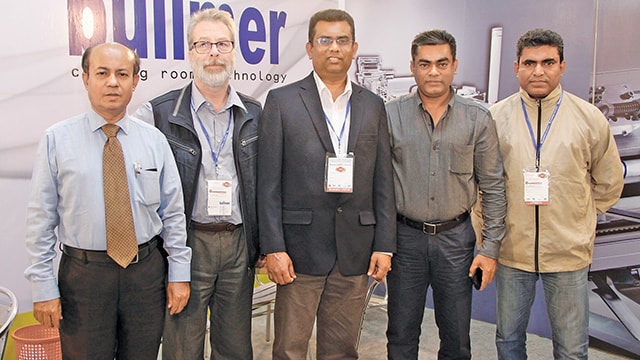
Jagath Priyantha, Director of Univogue Group (C) with team from Bullmer and Uni Asia Associates
The focus today for the company is on adding automation in the cutting room to reduce the labour costs and boost efficiency in cutting. “This year, we have decided to centralize cutting to minimize the cutting cost and also to consolidate the business. Those are the new changes and by centralizing the cutting, we will be able to increase 15-20 per cent capacity for the next year in the cutting areas,” says Priyantha. The efforts for the same are being supported by automated equipment by Bullmer, offering sustainable solutions in cutting areas. “We found that it is difficult to maintain the labour and maintenance costs in manual cutting. For accurate quality, we had been using systems earlier also, but we found that in the current scenario, Bullmer is the most viable solution for us and then we simply went for that.”
Priyantha strongly believes in Bullmer and sharing his experience while working with the very basic machines states, “machines are very work-friendly and the company is offering extensive support regarding the same.” Progressively, Bullmer is also supporting the Group to keep its viability alive. Priyantha further added: “Initially I found that installation was done well. They supported us by giving operators and other workers to train our people. Then we found that systems are not that critical for us to run by ourselves. Now internally, we have trained our people and we also have a technical team that comes in here every month to do the routines and we found that it is working out well.”
The management is very confident of the future and already has an expansion plan under implementation. “In 2017, we will have expansion on sewing and production capacity in place, following centralization of cutting. By the end of this year, we have planned for a turnover of around US $ 70 million and for 2018, our plan is to touch US $ 85 million turnover,” shares Priyantha.
The Group currently is very upbeat; cost reduction with innovative ideas like cutting room optimization, will definitely reap benefits. “The maximum saving comes from the fabric, because in our product, at least 55 per cent cost is of the fabric. We are focusing on optimization front to utilize the fabric to the maximum. The automation basically helps you to discipline cutting room, this will improve monitoring and reduce malpractice,” says the Director of Univogue Group.
The Group is simply looking at cost advantage tactics in its production module to reduce costs, increase revenue and drive profits. Priyantha, sticking to his similar product strategy advocates, “We have more or less set-up our lines for 60 machines. At present, we are having three cutters and four spreaders. The products are chosen to suit our operation.”
















 Bharat Tex Special Report 2026