The Mumbai unit of Textile Association India (TAI) has elected its new office bearers for the period 2017-19.
The names were announced in the 66th annual general body meeting of the association held recently at Century Bhavan Auditorium, Worli.
Vilas Gharat has been unanimously elected as the President of TAU. He has 40 years of experience in textile manufacturing.
Gharat is also the recipient of awards like Best GM in MSTC, Gold Medal in Energy Conservation, Best Vendors Awards from Johnson & Johnson and FTA from The Textile Association (India).
He is presently serving as the Managing Director of Gharat & Associates which provides world-class technical, HRD, quality, solutions and consulting services.
Meanwhile, T. K. Sengupta (Advisor, DFU Publications) has been re-elected as the Vice President. He has been associated with the textiles & manmade fibre industry for 46 long years.
Sengupta has experience in marketing, sales, business & strategic planning, export marketing, resource planning, consultancy and higher management activities.
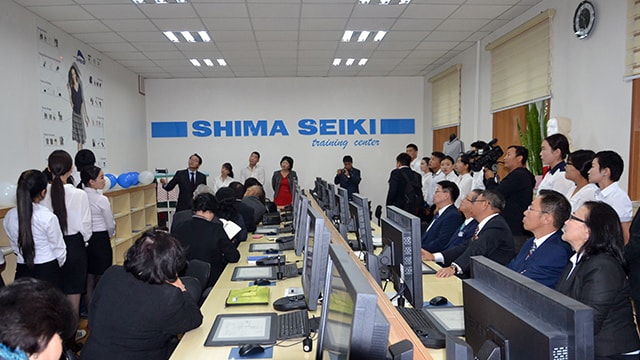
Japanese computerised flat knitting machine manufacturer Shima Seiki is set to host the fourth edition of ‘Global 3D (G3D) Knitting Seminar & Workshop’.
The technology provider will organise the seminar in association with its US subsidiary at its showroom and training centre in Los Angeles, California on October 3rd and 4th.
At the two-day seminar, Shima Seiki will present its cutting-edge innovations in computerised flat knitting technology. On display will be the company’s WHOLEGARMENT knitting machines, computerised flat knitting machines, and much more.
The event will highlight Shima Seiki’s Total Fashion System, featuring its MACH2XS WHOLEGARMENT knitting machine and SDS-ONE APEX3 3D design system at its core.
A wide range of new applications in knitting technology, including sports apparel, aerospace, and the IT industry will be presented at the seminar.
The compact SWG091N2 WHOLEGARMENT knitting machine, capable of manufacturing technical textiles for sports, medical and other industrial applications, will also be presented.
The International Apparel Federation office (IAF) opened its office in Pakistan on September 27. The office was inaugurated by IAF President Han Bekke and Secretary General Matthijs Crietee.
The IAF office has been housed at the Pakistan Readymade Garments Manufacturers and Exporters Association (PRGMEA) building in Sialkot.
The presence of the IAF will pave the way for Pakistan’s textile industry. The country will now have more access to global buyers and major brands.
Additionally, the office will also provide a platform for B2B interactions for apparel importers and exporters across the world.
PRGMEA Central Chairman Ijaz Khokhar is hopeful that IAF will raise important issues such as compliance, gender training and exchanges of delegations being faced by Pakistani textile industry.
On the occasion, the PRGMEA also inked an agreement with the National Fashion & Textile Association Netherlands (MODINT), the largest importers association of home textile, garments and textile.
The signing of the MoU will help Pakistan to increase its textile exports to the Netherlands.
Roshan Withanage, Managing Director, CJ International
Having started its operations in Bangladesh in 2006, CJ International is a Swedish buying house spearheaded by Roshan Withanage as the Managing Director. Besides Bangladesh, CJ International also has offices in India, China, Pakistan and Hong Kong in addition to its partners in Latvia, Estonia and Thailand.
Working predominantly with Scandinavia, sweaters account for almost half of CJ International’s total business from Bangladesh, while the remaining 40 per cent is shared by knit and woven products, and 10 per cent by home textiles (bathrobes, towels, etc). It has a well-equipped design studio in Sweden, in-house product development teams (both for design and yarn development) and a testing lab (employing a full-time technician and complete set of equipment including an International Lab Standard washer, a dryer, a GSM cutter and GSM weighing machines among others) and its very own knitting factory, Young 4ever Textiles Limited (specialized in all kinds of knitted products), with a production capacity of over 4,00,000 pieces per month.
Rule of Three
According to me, the three most important factors for being recognized as a preferred supplier are:
Commitment and Reliability
Quality, and
Transparency/Honesty
Sync with Changing Dynamics
I personally see that very few suppliers are changing as per the global apparel trade requirements. Suppliers need to be fast in feedback and proactive in design and trends. Also, they need to be more accommodative to the buyers’ needs. Those who give a personal and customized response will definitely win in the long run.
Biggest Challenge!
Minimum order quantities are too high, unlike in China. Suppliers are also not geared up to take on new trend-based challenges; they look too much into doing what they have been doing till now.
The Future
The garment exports in Bangladesh will continue to grow not because they are great or they deserve it but due to the simple reason of low labour cost and low energy costs when comparing the competition (which gives less choice to the buyers). If they were proactive, innovative and customer-driven, they could have grown much more.
AO SURVEY FINDINGS
The respondents also agreed that the other major considerations for a preferred supplier would be defined on the basis of: The respondents also agreed that the other major considerations for a preferred supplier would be defined on the basis of:
• Upfront Attitude of Management (Transparency/Partnerships)
• PD Skills/Innovation• Speed to Market
• Product Price/Quality Ratio
Advantage BD
Low prices, and established industry with years of export knowledge (compared to the African countries).
Supplier Pool
Even though I personally would like to agree that a preferred vendor list can help simplify business and give a sense of stability and continuity in supply, a modern business shouldn’t restrict itself to only a limited number of suppliers. But we are not in a position to do so due to the simple fact that more than 50 per cent of the vendors are not reliable or responsible. Therefore, it pays to stick to the known few vendors. Although it’s a matter of time before the industry ups its standards and all the vendors come to an almost equal platform.
With global connectivity improving and advancement of e-commerce, it will be normal to shop around for new vendors more often, but it will take a bit more time in Bangladesh to happen.
Business Policies
I totally agree that we should be flexible enough to change our policies provided that the vendors, who are not the preferred ones, are ethical and do not harm the environment. Being rigid on our own policies will make us lose our competitive advantage in the market as flexibility is the key in this business.
Maintaining the Edge
In this age, when most of the businesses review the supplier list almost every few years to get the best bargain possible, the following qualities/factors can help a supplier maintain that competitive edge:
Be proactive to changes,
Adopt LEAN management,
Be flexible to the buyers’ requirements,
Look for a niche market (can do parallel to one’s core basic products),
Continue absorbing new technologies, and
Look for new supplier markets with low infrastructure costs and labour to establish oneself parallel to one’s current production base.
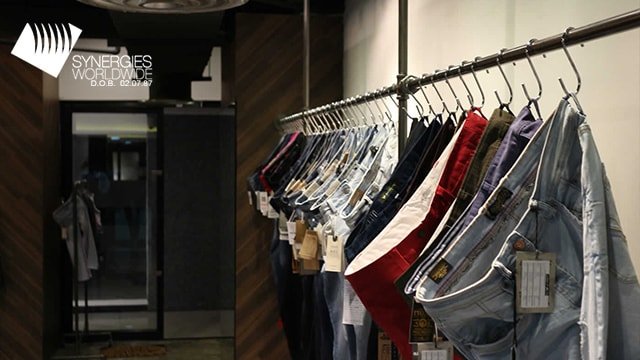
Synergies Sourcing Bangladesh Limited, headed by Atif Ahmed as the Director, is the local sourcing arm of Synergies Worldwide (with global headquarters in Bangkok). It was founded by Munir Mashooqullah, an industry evangelist and a sought-after speaker on supply chain, who retired after 28 years’ of active involvement with the company and handed over the reins to Guido Schlossmann (President and CEO), a former Li & Fung executive.
The global supply chain managing company, which provides low-cost sourcing solutions in apparel, fashion accessories, footwear, home textiles, decorative accessories and other goods for retailers/brands in the fashion and hospitality industries, sources different products from various manufacturing centres based on their core strengths.
Image Courtesy: synergiesworldwide.com
Its’ Bangladesh operations today account for almost 50 per cent of the company’s total sourcing.
Rule of Three
Our first requirement starts from Compliance, moving to Quality and last but not the least, ending at Commitment. These are the most important factors we consider before enlisting any vendor to become our business partners.
AO SURVEY FINDINGS
98% of the buyers are confident that Bangladesh will remain a preferred destination, not only for basic items but also for growing importance on orders for value added and small quantity orders.
Sync with Changing Dynamics
To remain in sync with the requirement of today’s fashion retail business, our country really needs to fast-track improvement and enable further development/enhancement of raw material supplies as still there are so many qualities which we have to import, which consequently increases our lead time, whereas on the other hand, our fast fashion clients are reducing their procurement lead time every season. This remains a challenge for us to compete with the other countries which have vast variety of raw materials (fabric, yarn, etc.) locally available.
Denim apparel manufacturing overall has advanced quite a lot but it still requires some learning, especially in washing process to produce garments with less chemicals and yet give better output. Therefore, awareness and implementation of this knowledge should be ensured very soon. Moreover, green product is the most discussed subject today for which we have already taken major initiatives 3-4 years back by proposing sustainable collections to our clients. Our country needs to fast undergo this shift towards sustainability for a better and assured future.
The Future
The growth of the industry is satisfactory in my humble opinion considering the fact that many of the big retailers are struggling at their sales end. Bangladesh still needs improvement in many of the areas for which manufacturers are closely working with the concerned associations.
Image Courtesy: synergiesworldwide.com
Advantage BD
Bangladesh will remain important for the kind of infrastructure each factory has established. Besides, manufacturing cost is still one of the lowest in Bangladesh. Most industrialists are also continuously working to add automations to enhance productivity to control costs.
Supplier Pool
We do believe in building partnerships with manufacturers as it takes a lot of time and energy to build relations plus technical understanding, but we are still open to welcome new reliable manufacturers as there is always some unique strength in each of them which adds value to our product mix.
Business Policies
We have tried to maintain a flexible yet strictly ethical policy in vendor management in which there is always a room for special consideration as long as it complies with our CSR criteria.
Maintaining the Edge
Well, it’s not easy to define just one area to maintain our competitiveness but sourcing competitively-priced raw materials has been our core focus to maintain the lowest possible cost rather than just bargain on CMs with our manufacturing partners. We try to balance our cost down in every possible area but the challenge continues…!
ShanghaiTex 2017, the four-day long garment technology fair will focus on sports knitting technologies that create high performance sportswear for sports lovers. The fair is scheduled to be held from November 27 this year.
With the textile technology’s focus on the sports market, the ShanghaiTex 2017 Concurrent Event “Sports Arena” will feature three contemporary topics: sports bra, wearable technology and shoe technology.
One of the world’s leading 3D printing innovators, Materialise, will showcase 3D printing technology ath the arena.
Notes Luk, visiting lecturer from Hong Kong Polytechnic University, will share his rich experience in intimate apparel industry. He will address both theoretical and practical matters in various bra issues during the event.
The CEO of HKRITA and Antelope will also explore the latest developments of smart textiles and inspire the industry with innovative ideas on sporting goods market at the event.
Nike has announced its financial results for the first quarter of the current fiscal. During the quarter under review, revenues for NIKE, Inc. stood $9.1 billion, flat to prior year on both a reported and currency-neutral basis.
Beaverton, Oregon-based Nike noted 24 per cent decrease in net income to $950 million in the reporting period. In view of rising competition from Adidas AG, Nike expects a further drop in revenue from North America.
Its gross margins also noted decline while inventories for NIKE, Inc. noted 6 per cent increase $5.2 billion from August 31, 2016. The sportswear retailer did not get the desired results from North America which is its largest revenue contributor. The revenue instead declined 3 per cent, a deviation in more than 10 quarters.
“Looking ahead to the rest of fiscal 2018, we will ignite NIKE’s next horizon of global growth through the strength of our brand, the power of our innovative products and the most personal, digitally-connected experiences in our industry,” said Mark Parker, Chairman, President and CEO, NIKE, Inc in a statement issued.
Nike noted 9 per cent increase in sales from China while revenue from the Europe, Middle East and Africa (EMEA) region grew 4 percent in the particular quarter.
Sweden-based IKEA is ready to open its first store in Halifax area of Atlantic Canada today.
The new store is set up in a vast area (the size of four football fields) at the Dartmouth Crossing, a commercial real estate development in Dartmouth, a part of Halifax area.
The store will feature bright, streamlined showroom with rooms to meet customer satisfaction. A “living wall” – a floor-to-ceiling surface filled with green plants meant to help purify the air – overlooks the store’s restaurant.
According to the reports, IKEA representatives went through a deep R&D to identify the need of the local residences in the Halifax area.
Marsha Smith, President, Ikea Canada said, “Our team went door to door to 70 local residences in Halifax area to offer best of our services and products to them through our new store.
Smith further informed, “Halifax store is Ikea’s most sustainable in the country and also the first store to be LEED-certified.”
However the retailer previously had a smaller location in the Halifax area, but it closed nearly three decades ago.
The new IKEA store in Halifax area employs around 250 people.
Concluding another leg of fashion month, London Fashion Week just ended and that means another set of fashion trends are ready for your perusal.
The city is always famed for its young burgeoning talent that constantly churns fresh ideas and pioneers in eclectic construction techniques. However, this season luxury brand Burberry showed that freshness is not reserved only for the young.
Tapping into the brand’s chav heritage, which was popularly discarded as a fashion ‘faux pas’ in the 2000s, Christopher Bailey revived the trademark caramel check, a brilliant move to highlight their British legacy and ironically claiming an iconic status in pop culture at the same time.
Actually, irony was commonplace at a lot of shows and especially evident in the accessories department. With Anya Hindmarch’s takeaway boxes repurposed as handbags; pillows and blankets becoming the arm candy at Mother of Pearl and Christopher Kane’s return to bejewelled crocs as well as mop shoes in the same collection.
While these may be more ludicrous statements than anything else, the city did offer a plethora of concepts which will translate perfectly to retail frontiers for next season. Here are the main fashion trends that will be key for the UK fashion market in Spring/Summer 2018.
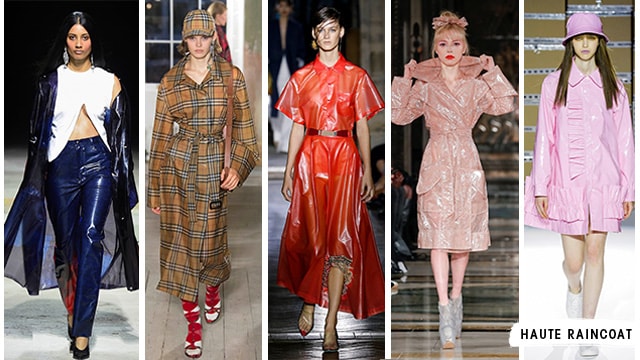
HAUTE RAINCOAT
Fashion East, Burberry, Toga, Pam Hogg and Nicopanda.
Deliriously famous for their damp weather, Brit designers have taken up the humble utilitarian raincoat and made it absolutely ‘haute’ for the upcoming season. Nicopanda presented the rainy outerwear basic in bubble-gum pink with ruffle details; Toga made sleek tailored coats in red and blue that could be mistaken for floor length dresses and Burberry slapped their prominent check on clean silhouettes.
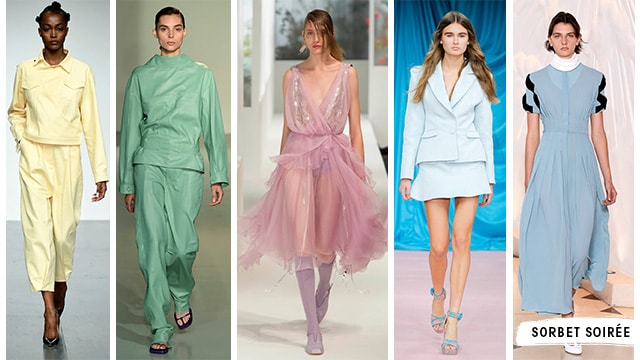
SORBET SOIRÉE
Marta Jakubowski, Joseph, Preen by Thonton Bregazzi, Emilio de la Morena and Emilia Wickstead.
Celebration of femininity continues for another season with soft pastels in a wild variety of colours. A sugary ladylike trend that is always a hot seller for summer collections, it was spotted at Preen by Thornton Bregazzi in sheer candy hues and Emilia Wickstead on long pleated dresses. The sorbet party made its way to Marta Jakubowski and Joseph’s vibrant assortments as well.
RICH SLICE
Christopher Kane, A.W.A.K.E, Toga, Ralph & Russo and Natasha Zinko.
Sometimes better than immaculate construction is its opposite counterpart: deconstruction. Slashing and slicing to repurpose bulkier silhouettes was a big hit at London’s much-loved shows. As seen at Natasha Zinko and Toga, both of which tore out sleeves and destroyed hemlines in outerwear, the trend was continued by A.W.A.K.E and Halpern in a more tailored way for spring 2018.
SILVER HILL
Erdem, Julien MacDonald, Temperley London, Fyodor Golan and Lunyee.
The festive winter mania of metallics in fashion garments has made its way to summer collections in a bright space-silver avatar. The sci-fi inspired material was abundantly spotted throughout Ralph & Russo’s debut RTW show in everything from bodycon dresses to thick coats. Even Ashish UK, who normally plays with bright primary colours went for a black and silver collection this season.
RUFFLE TROUBLE
Erdem, Christopher Kane, Bora Aksu, Simone Rocha and Ralph & Russo.
A garment detail that efficiently couples as an accessory and gives ample architectural dimension to any outfit, the ruffle was sensational at summer collections in London. From Simone Rocha’s overbearing balloon gowns with oversized ruffles and Emilio de la Morena’s snaking shapes around wavy dresses to Christopher Kane’s use of multiple thin frills of sheer printed fabric decorating clean sheath dresses, ruffles are here to stay.
HATCH PATCH
Mary Katrantzou, Marques’Almeida, Anya Hindmarch, Fashion East and Peter Pilotto.
The ‘hippie de luxe’ trend of patchworks and panelling was a strong look that featured in a lot of British fashion designers’ diverse propositions. A bohemian favourite, the style was a mainstay at the youth collective Fashion East’s entire line-up, Peter Pilotto’s shift dresses and Marques’Almeida’s slash and spliced gowns. At Anya Hindmarch and Antonio Berardi, the trend was used in bold outerwear pieces.
PINK Ft. RED
Emporio Armani, Emilia Wickstead, Ashley Williams, Roksanda and Paula Knorrt.
Lo and behold, pink palanquin bearers are still here and they might not leave anytime soon! Last season’s pink was paired with this season’s cherry red all over the runways of London. Ashley Williams put a red belt on a pink dress; Roksanda paired red wide leg pants with a pink flowy gown and Emporio Armani stepped up the colour pairing game with double checks: windowpane on top and glen plaid on bottom.
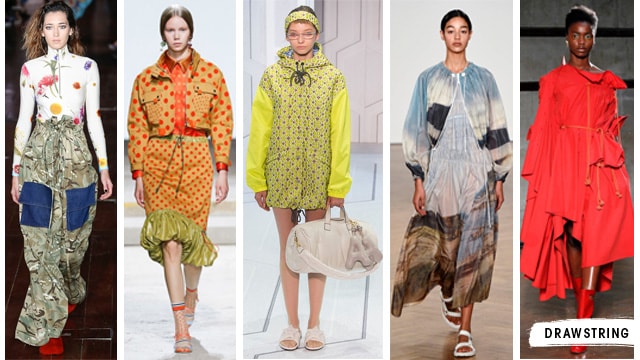
DRAWSTRINGS
Natasha Zinko, Mary Katrantzou, Anya Hindmarch, Palmer Harding and Pringle of Scotland.
Closures have been getting the sportswear touch since last fall and now for summer 2018, the favourite bondage is drawing inspirations from bungee cords. At Mary Katrantzou, hot air balloons was the main theme and her bubble hem skirts were are all tied together with strings. From Palmer Harding’s haphazard tie-up to Pringle of Scotland’s sporty separates, bungee ropes were everywhere.
A buying entity with years of experience in servicing overseas buyers from USA, Europe, Australia, South Africa and Israel, Nahid Trade International (NTI) is represented by its CEO Nipun Nawaz.A buying entity with years of experience in servicing overseas buyers from USA, Europe, Australia, South Africa and Israel, Nahid Trade International (NTI) is represented by its CEO Nipun Nawaz.
Rule of Three
According to me, the three most important factors to be a preferred supplier are:
How Well-organized and Established the supplier is, and how many workers and machines it has; because if it does not have enough workers, it will not manage to finish the orders on time.
Financial Strength, and if it has any banking issues or not, is also very important. Without strong financial standing, the supplier will not be able to complete orders and even if it does so, there will be a lot of risk involved.
Reputation and the Past Track Record.
Sync with Changing Dynamics
The industry is undergoing change to some extent to adjust to the changing requirements of the global apparel trade! We have become substantially adaptable now and have started accepting more fashion stuffs than before as people are interested in fashionable items compared to the basics. Also we have become a lot more flexible in payment procedures; we have started accepting contracts, CAD (Cash Against Documents), and minimum advance and rest CAD as payment modes. All these changes are in pace with the rapid modifications taking place in the apparel trade globally.
Nipun Nawaz,CEO, Nahid Trade International (NTI)
Biggest Challenge!
The biggest challenge is the ‘Deadline’! The lack of professional commitment is the main reason behind failures in delivering orders on time, but suppliers in general have a bad reputation sticking to the timelines. Timing is of utmost importance in our business. But it becomes almost impossible to maintain dates with our suppliers, as a result we cannot keep our commitments made to the buyers, resulting in delayed shipments.
The Future
The future is very good for Bangladesh in garment exports. We are still cheaper compared to many other countries in various product categories. And it is because of this very advantage that we are ahead of our competitors. As per statistics, we are apparently growing every year and if this is the reality, it is very good. But, individually speaking, I think we could have done even better.
Advantage BD
Cheaper price is the biggest advantage for Bangladesh and this is something which keeps us in the preferred list amongst the buyers. However, one has to understand that we are cheaper only in terms of basic items but when it comes to fashionable apparels, we tend to lose the preferred tag and this is one area, I think, we need to improve a lot.
Supplier Pool
Even though a preferred vendor list can help simplify business and give a sense of stability and continuity in supply, many people argue that a modern business shouldn’t restrict itself to only a limited number of suppliers. What these people think is absolutely true. All the big brands in this world may give 70 per cent of their production requirement to the preferred suppliers but for the rest, they always opt working with the one who is not in the preferred list. The buyers also like to compare the services of the new suppliers with the regular/preferred suppliers.
Business Policies
Most organizations rigidly follow a suppliers’ criteria checklist but sometimes vendors’ interests/policies are quite diverse from some of the businesses’ core values. In such a scenario, the supplier must always comply with the requisite and laid down criteria; there is no room to overlook the same. However, there is a probability of ‘if’ here. Suppose a supplier can give a very competitive price and with just the perfect products, I may perhaps check its services once with a trial order and if it does a good work without affecting the business, policies can be altered accordingly.
Maintaining the Edge
To continue being in the preferred list, suppliers have to be more meticulous and sharpen their services in terms of timing and quality. Buyers know the prices very well and if the supplier tries to charge more, this is not going to be acceptable.To be in the preferred list, suppliers must maintain their timing in every aspect of the production till delivery. When you keep your dates and at the end of the production, you deliver 85 per cent perfect products, buyers will be happy and suppliers would continue to be in the preferred category.
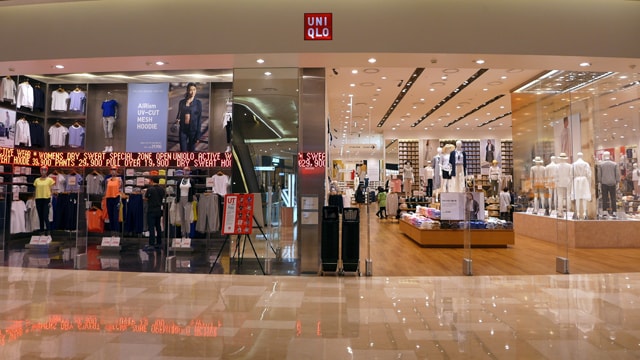
Uniqlo, the Japan-based designer casual wear manufacturer and retailer, announced to launch a new flagship store in Los Angeles.
The new store will be launched in the fall/winter. The store will be more denim-centric and the first of its kind in the city.
The new concept shop will be the 47th Uniqlo store in the U.S. and the ninth in Los Angeles.
Uniqlo is strategically moving beyond its reputation as retailer of fashion basics and now focusing on L.A.’s heritage and roots in denim.
The customers while entering the store will also be introduced to the brand’s heritage in Japanese textile innovation, showcasing the research and development that comes from Fast Retailing’s Jeans Innovation Center through visuals and prototypes.
Hiroshi Taki, CEO, Uniqlo USA said, “We are very excited to bring Uniqlo denim to L.A. in a new and interactive way.”
Uniqlo has more than 1,900 stores in 19 markets worldwide including Japan, Australia, Belgium, Canada, China, France, Germany, Hong Kong, Indonesia, Malaysia, Philippines, Russia, Singapore, Spain, South Korea, Taiwan, Thailand, U.K. and the U.S.
In addition, Grameen UNIQLO, a social business established in Bangladesh back in September 2010, operates several Grameen UNIQLO stores in Dhaka.
Target, known for offering market-competitive wages to its staff, has announced to further increase the minimum hourly wages to US $ 11 from next month from the current US $ 10 an hour.
The company’s biggest arch-rival Walmart too increased the minimum hourly pay to US $ 10 last year.
The Federal minimum wage is US $ 7.25 per hour, and both the retail giants are offering way more than that.
Target has also reiterated its commitment to making it US $ 15 hourly wage by the end of the year 2020.
A minimum hourly wage of US $ 11 is still higher than the remuneration given in many US states and matches the current base wage in Massachusetts and Washington.
The move will benefit thousands of Target employees across the country. Additionally, the company has already planned to hire over 100,000 staff for the approaching holiday season.
“The investment in team members show that we care about more than 323,000 individuals who come together every day with an absolute commitment to serving our guest,” said Brian Cornell, CEO and Chairman of Target.















 Bharat Tex Special Report 2026