Business keyboard_arrow_right Retail keyboard_arrow_right Feature

Lingerie giants like Victoria Secret face stiff ‘niche’ competition


Image Courtesy: victoriassecret.com

Growing at a steady rate over the past few years, the dependency of lingerie for functional as well as fashion purposes has propelled its growth further resulting in the global lingerie market being valued at US $ 33.18 billion in 2015, which is expected to be worth US $ 55.83 billion by the end of 2024. The global market is estimated to rise at a CAGR of 6.4 per cent during the forecast period – 2016 to 2024, according to Transparency Market Research. With this growth, the lingerie market is seeing an overflow of niche brands, and Amazon is definitely not behind. The brand is preparing to launch its own private label, as the industry witnesses a major overhaul in the lingerie market, challenging leading international lingerie brands such as Victoria’s Secret.

Image Courtesy: victoriassecret.com

On the basis of product types, the global lingerie market is segmented into bra, knickers and panties, loungewear, shapewear and others. Various research and reports indicate that the bra segment holds the biggest share in the global market due to its indispensable usage, while the knickers and panties segment too is expected to make a significant contribution to the overall market as these are considered essential items as well. As per market research company Just Style, the world lingerie retail market is now valued at US $ 28.75 billion, while Europe accounts for US $ 11.67 billion of the total figure, and North America for US $ 7.93 billion. Together they have a combined share of 66.3 per cent of the world’s total. The ‘Global Market Review of Lingerie – Forecasts to 2022’ also estimates that the world bra market for 2016 is worth US $ 16.42 billion, as bras account for 55.5 per cent of the world lingerie market. In unit terms, bra sales account for 1596 million units per year. While the world briefs’ market is estimated to be at US $ 9.90 billion, representing 33.5 per cent of the total lingerie market, in unit terms, briefs sales constitute 5,260 million units per year.

Lingerie market.
Image Courtesy: victoriassecret.com

This notable progress is propelling niche lingerie brands to grow as against the existing giants such as Victoria’s Secret, making room in the market for other small players. One such brand is Aerie, the American Eagle Outfitter’s lingerie and activewear brand, which has been performing strongly for the past several quarters despite weak mall traffic and a soft macro-environment. The company’s game-changing campaign was in 2014, when the lingerie brand decided to feature only un-airbrushed models in its ads, which truly worked for the company! Its sales increased immensely thereafter (20 per cent growth in 2015), and is currently showing no signs of slowing down. As an extension to its #AerieReal campaign, the company in April revealed its #AerieMan campaign. This marks its pledge to forego retouching even male models in their underwear and swimwear products, beginning Holiday 2016 (23 per cent growth in 2016). With growing internet penetration, a consistent customer shift from store to online shopping and the increased usage of smartphones and tablets, the company is led to shrink its store count and focus more on e-commerce channel.
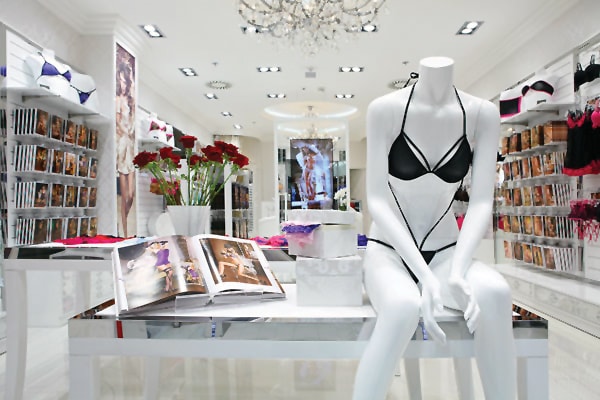
Lingerie.

Meanwhile, the market major Victoria’s Secret, which still dominates the lingerie segment, worth at least US $ 1 billion in US alone, is struggling to gain momentum. The retailer sales is seeing a slump, decreasing at 13 per cent in March, year-over-year, as the company continues to feel the impact of discontinuing its non-athletic apparel and swimwear ranges in 2016. Experts believe that while many retailers are catering to the millennials, Victoria’s Secret being one of them, millennials are against logos, which Victoria’s Secret resonates with. Also, Victoria’s Secret product images on the website are not a representation of an average woman, resulting in millennials opting for other lingerie brands. The brand has also received flak for its ‘Perfect Body’ campaign, whose impact was so negative that the retailer had to pull out the campaign.

This gap in the market and a curiosity to tap the potential of millennials has provided room for niche brands to grow in the lingerie segment such as Lively, Naja, Negative Underwear and Third Love who are promoting their products by providing an inclusive, female-centric identity that’s more about the wearer and less about who might be looking at her. Also, these brands are offering a wider collection of nude shades, hoping to serve various ethnicities and aiming to undercut competitors on pricing through direct to consumer distribution. While mass market brands such as Aerie and Madewell which had launched intimates in February are doing well, Phillips Van Heusen acquired True & Co., a vertically integrated online brand that’s known for its fit, which launched in March. More recently, Amazon’s announcement of entering the market with a private label brand, with its own line called Iris & Lilly, is creating a storm in the market. It has been already launched in the UK with limited assortment of sizes and colours. With its widespread reach of supplier network, Amazon can negotiate for the lowest prices, which is rightfully evident as the company’s cost of a bra is as low as US $ 8 in comparison to Targets US $ 15 and Victoria’s Secret average of US $ 40.

In fact, online stores are continuing to dominate the global lingerie market, offering convenience, varieties and a wide range of offers, discounts and coupons to its consumers. The growing penetration of internet, mobile internet specifically among the millennials, is expected to further drive the e-commerce segment. With the help of accurate size charts and description, lingerie can be purchased through online shopping with an easy option of exchange or return. Hence, industry experts believe that all these factors enable the creation of a broad product range which suits every budget and lures a bigger consumer base in the global lingerie market. New entrants to the market offering products at low cost and the convenience of online shopping, are seen booming in the ongoing lingerie market, which was earlier dominated just by major players.

Business keyboard_arrow_right Retail keyboard_arrow_right Feature

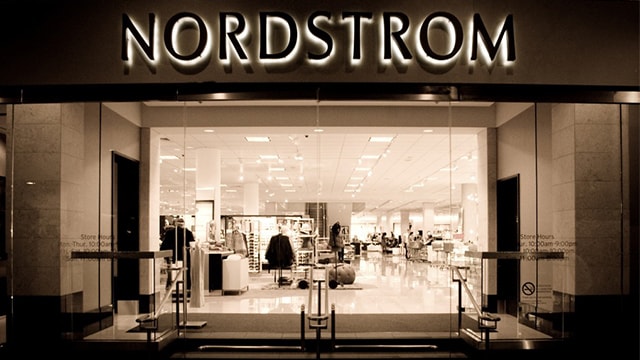
Nordstrom ranks as US shoppers’ favourite owing to impeccable customer service, brand value

Image Courtesy: nordstromhttpnypost.com

The US market has seen a slew of shop closures and many retailers are finding it difficult to keep their customer base interested. Some iconic names like American Apparel, The Limited, Abercrombie & Fitch, Wet Seal, Gymboree have either closed down or are on the verge of bankruptcy. Yet, there are a few other retailers/brands that continue to grow and remain preferred shopping destinations for consumers. A recent study by Market Force Information (Market Force) covering 10,000 consumers, found that Nordstrom continues to rank as the nation’s favourite fashion retailer fifth year in a row on parameters of value, atmosphere and ease of finding items. The retailer has built an enviable reputation of having an incomparable customer service and has hence, earned a loyal fan base.

Even in a very challenging retail environment, the retailer achieved a record sale of US $ 14.5 billion in 2016 because of the significant improvement the company was able to achieve along the supply chain to enhance value and keep its customers happy, the core of being a favourite fashion retailer. According to retail analyst, Nordstrom has managed to accrue (and maintain) a loyal fan base for a number of reasons – serving up street style-worthy, budget-friendly fashion, championing beloved Indie Brands’, famous customer service, and for its epic anniversary sale. The Nordstrom Anniversary Sale originated in the 1960s and is a one-of-a-kind sale – every July, the company brings in new styles from highly sought-after brands for men, women and kids. The retailer is committed to having a unique breadth of offering from accessible to luxury price points and the Anniversary Sale follows suit. It’s the ultimate sale with something for everyone in every category: clothing, shoes, handbags, accessories, home and beauty. It’s a sale the whole nation waits for!

Ashley Graham & Hana Mae Lee

Brands new to Anniversary Sale this year included Good American, Good Man Brand, Cinq a Sept, ATM Anthony Thomas Melillo and J. Crew, along with returning customer favourites like FRAME Denim, Rag & Bone, Current/Elliot, Elizabeth & James, Ashley Graham Lingerie, Nike, Stuart Weitzman and more. The Anniversary Sale also featured merchandise from Topshop/Topman, Madewell and Charlotte Tilbury which are available exclusively at Nordstrom. “We’re fortunate to have a terrific team of buyers who start working with our merchandise partners months before the Anniversary Sale begins,” said Scott Meden, Nordstrom Chief Marketing Officer, and added, “Our partners know how important this annual event is to our customers, so we’re excited to be able to bring in a fantastic assortment of new styles at reduced prices that aren’t available anywhere else.”

Nordstrom, Inc. is a leading fashion specialty retailer based in the US. Founded in 1901 as a shoe store in Seattle, today Nordstrom operates 354 stores in 40 states, including 122 full-line stores in the United States, Canada and Puerto Rico; 221 Nordstrom rack stores; two Jeffrey boutiques; and two clearance stores. The company net sales increased 2.7 per cent and comparable sales decreased 0.8 per cent, in the first quarter of 2017, compared to the same quarter last year.

Vendor partnerships for value…

To keep its customers happy, the retailer works very closely with its vendors across the world to create value. Besides its huge vendor base, a small but growing portion of overall product offering comes from Nordstrom Product Group (NPG), the retailer’s family of private label brands. In 2016, NPG included 54 brands manufactured in 484 factories across 30 countries. India has the second highest number of vendors in this category (after China) with 59 associated factories. NPG is committed to working with agents, manufacturers, factories and mills to ensure that final consumers obtain compliant private label merchandise. The Product Integrity team supports NPG by proactively researching, interpreting and communicating rules, bans, regulations and standards for all private label products. In addition, a third-party testing programme has been implemented to ensure that products meet these standards.

The NPG is dedicated to providing garments, allowing comfortable movement while flattering the figure. The retailer’s technical designers work with suppliers to achieve consistent fit and quality by maintaining standards while achieving the brand’s cost targets and design integrity. The Technical Design team manages the fit process from design through commercialization. On the production front, a special Production Planning team manages the production timeline from order commitment through production execution and delivery. The planners communicate order commitments to the manufacturers, maintain costing and handle purchase order management. Together, the retailer and its global vendors strive to offer new products at best prices.

Top five NPG suppliers for Nordstrom in 2016 by volume were: 1. China (275 factories); 2. India (59 factories); 3. Vietnam (16 factories); 4. United States (48 factories); and 5. Bangladesh (1 factory)

NPG also tested eight new packaging reduction programmes in 2016, including use of less tissue papers in Halogen cashmere sweaters and removal of some of the paperboards used in men’s dress shirts and underwear. NPG’s women’s division stopped packing denim and casual knit tops in individual plastic bags and instead now packs multiple products in one large bag… These packaging-reduction pilots kept more than 20 tonnes of packaging out of the supply chain.

With a vision of a happy value chain, the retailer is also working with two factories in northern India, to pilot Project Prerna, an initiative from the non-profit organization Impactt Limited. The initiative is to train factory management and workers on effective communication strategies to increase worker satisfaction. More than 2,000 people are participating in the programme, with workers and supervisors already reporting about improved working relationships and clearer paths for advancement.

Business keyboard_arrow_right Sustainability keyboard_arrow_right Feature

PVH Corporate Responsibility Report India Focuses on Women, Children, Water Conservation

Image Courtesy: www.pvh.com

Launching new corporate responsibility (CR) strategy with ten commitments with an aim to drive positive impact throughout its value chain – from source to store – empowering people, preserving the environment and supporting the communities, PVH Corporation has come up with its CR Report 2016.The report mentions: “Increasingly, we are seeking ways to take safety lessons that we have learned in Bangladesh and apply them in other production countries, including India and Ethiopia.” The company also collaborated with many top brands like Nike, Patagonia and Columbia Sportswear on a training programme for fire and safety trainers in India and China. The report highlights its initiatives with regard to India also. Supporting children and women, water saving, fire and safety training are some of its focus areas in India.

With a total US $ 8 billion annual revenue, the company is working harder in 2017 with an increased focus on the environment and level two suppliers in its supply chain which covers raw material suppliers and wet processing units, including fabric mills, dye houses, printers, laundry/wash/finishing units, trim suppliers, embroidery units, converters/agents, moulders and tanneries. It even plans to roll-out a global animal welfare policy this year. Owning brands like Calvin Klein, Tommy Hilfiger, Van Heusen, Izod, Arrow, etc., the company sources good volume of apparels from Indian apparel exporters.

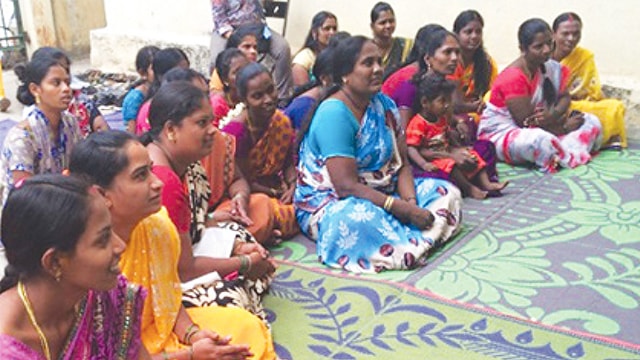
Women participating in parenting session at an Angawadi Center in Bangalore

PVH is even developing water reduction and stewardship initiatives for its facilities, supply chain, product design and sourcing communities. In this regard, the company has plans to prioritize Southern India for collective action initiatives to protect water resources in these communities. Last year, it expanded ‘Save the Children Partnership to India’ and team members from ‘The PVH Foundation’ and ‘Tommy Cares Amsterdam’ were excited to have the opportunity to see first-hand how its grant supports children’s education in Bangalore. They even met with associates at PVH India to learn more about how they support local community initiatives. The next phase of the company’s multi-year grant will support early education for underprivileged children in Bangalore. “We aim to help more children attend Government-run pre-schools (‘Anganwadi Centers’) and improve the quality of education they receive, giving them a better start in life,” the report confirms.

PVH Corporation took several important steps in 2016 to improve the quality and transparency of reporting like it reported on environmental commitments for the first time, and set a global greenhouse gas (GHG) reduction target for direct operations. It also completed its first CDP Climate and Water Questionnaires and obtained Fair Labor Association (“FLA”) re-accreditation for the third time.”

To further support ‘Save the Children’ project, it has also established a dedicated training programme and space for Anganwadi workers and teachers, empowering mothers and caretakers through organized monthly “Parenting Sessions”. Additionally, it plans to advocate for higher educational standards at Anganwadi Centers with local Government officials. PVH has also directed US $ 1 million to support programmes in Sub-Saharan Africa as part of its US $ 5 million multi-year commitment to ‘Save the Children’.

The PVH Foundation team visited Bangalore for ‘Save the Children Program’

Hence, in its totality, 2016 was a year full of action for PVH and it introduced two new features in its assessment tool based on feedback from key stakeholders and testing with a pilot group of suppliers. The first feature was evaluation of working hours in greater depth in order to better distinguish between special circumstances and workers systematically working overtime. By tracking working hours during peak, normal and low-production months, it can be better to recognize factories with poor management systems and provide them with appropriate tools for improvement. Its second feature was rewarding suppliers who created positive impacts (beyond the scope of the assessment), by capturing best practices during assessments, rather than simply penalizing non-compliances. Examples of best practices might also include providing free transportation or professional development opportunities for workers.

“During a year of continued volatility in the retail environment, PVH delivered a strong underlying financial performance in 2016. We continued to evolve and strengthen our approach to CR by launching our enhanced CR strategy. The strategy consists of ten commitments that represent a holistic, interconnected approach to create positive impacts across three key focus areas: empowering people, preserving the environment and supporting communities. Our steadfast approach to these principles has been continuous even as we made several transformative acquisitions, dealt with significant macroeconomic issues, and focused on the rapid evolution going on in our industry.” – Emanuel Chirico, Chairman & CEO, PVH Corporation

As a significant influence of all these initiatives, the company piloted a capacity-building programme with a small group of high-risk, orange-rated accessories factories and was able to identify effective practices that led to distinct performance improvements in working hours and compensation practices. It established clear expectations for remediation and provided Key Performance Indicator (KPI) tracking tools to help these suppliers identify risk proactively and make positive changes. All of the participating factories have addressed their most critical issues under this programme and moved from an “orange” to a “yellow” rating.

PVH in the PVH in the last year…

• PVH University was launched, offering on-demand leadership and development classes.

• Signed United Nations Women’s Empowerment Principles.

• Re-accredited by the

FLA (Fair Labor Association) for the third consecutive time.

Ten commitments of PVH’s CR Strategy CR strategies of PVH consist the following: Human Rights, Safe Workplaces, Inclusion & Diversity, Our Associates, Responsible Chemical Management, Water, Sustainable Packaging, Sustainable Materials, Greenhouse Gases, Communities. These commitments are aligned with the UN’s Sustainable Development Goals, covering issues such as clean water and sanitation, affordable and clean energy, and inclusion and diversity.

PVH’s CSR efforts do not stop here. It aspires to scale greater heights than those already attained. Therefore, the company has also launched a new global human resources and payroll solution (workday) in the US and Canada that will be rolled out to the rest of its offices globally, starting in Asia in 2017. The customized benefits portal connects directly to workday, where associates can access all of their data, including pay and benefit information, in one location. In 2016, it completed the programme of chemical management training for all its level 1 supplier and supply chain teams and began to train some of the level 2 suppliers, providing a total of approximately 6,300 hours of training. For the company, 2016 was a foundational year for its sustainable packaging initiatives. PVH also held its first sustainable packaging summit in the same year to explore insights, resources and solutions that will help its businesses reduce their packaging and send zero waste to landfill.

Business keyboard_arrow_right Sourcing keyboard_arrow_right News

Indorama Ventures locks acquisition deal with DuraFiber Technologies

Image Courtesy: whnt.com

Thailand-based Indorama Ventures Public Company Limited (IVL) has finalised an acquisition deal with DuraFiber Technologies for its Mexico operations.

IVL is a global chemical producer while DuraFiber is a well-known producer of durable technical textiles for industrial, tire reinforcement, and speciality applications.

The acquisition will help IVL strengthen its high value-added automotive (HVA) portfolio with Mexico’s sole domestic tire cord fabric producer. It will also reinforce the company’s presence in the fast-growing markets in Mexico and Europe.

IVL aims to capitalise on the opportunities available in automotive fibre market, which is expected to grow at a 6 per cent CAGR in 2017-2021.

“The acquisition of Durafiber will give us an opportunity to deal with the wide range of applications in the automotive fibre market, and expand capabilities to deliver best-in-market services to our customers,” said Aloke Lohia, Group CEO of Indorama Ventures in a statement issued by the company.

Business keyboard_arrow_right Sourcing keyboard_arrow_right Feature

“Quality, commitment and attitude are main attributes of a preferred supplier”: Market Fit Dhaka

Image Courtesy: www.market-fit.com

Created in 1974, Market Fit Group’s first domain of intervention was leather, quickly followed by textile, which is presently its main activity. Today, Market Fit Group operates in 8 major sourcing countries as a fashion supplier. Regarded as the pioneer of global sourcing in the textile industry, Market Fit Group began its operations as a family-owned business to steadily expand its operations across the world. Based in Hong Kong, it has marketing offices in the UK and France. It also has several sourcing offices as well in Bangladesh, India, Pakistan, Vietnam, Shanghai, Cambodia and Istanbul. Dealing in diverse categories – womenswear, menswear, kidswear, sportswear, maternitywear, uniforms, etc., Market Fit Dhaka primarily caters to the European markets.

Rule of Three

There are many factors that go into selecting a preferred supplier but the three significant ones remain Quality, Commitment and Attitude (towards a problem, if any).

Sync with Changing Dynamics

Though the industry is in sync with the changing requirements of the global apparel trade, to me it is yet not responsive as it should be.

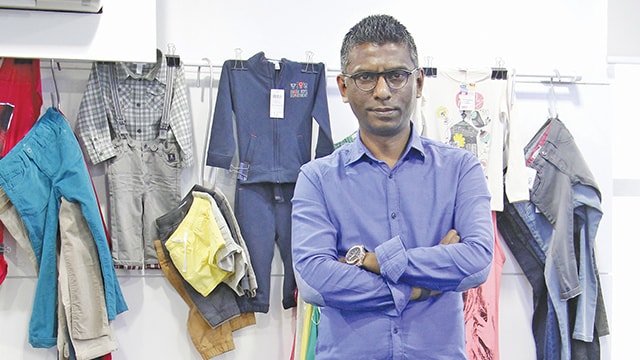
Mohammed Nadeem Haider Rouf, Managing Director, Market Fit Dhaka

Biggest Challenge!

The biggest challenge is that everybody wants volume in basic orders. They are not experimental or aggressive to try new product categories. Sometimes, owners/top management want to undertake such endeavours but the mid-level/production people are not very keen on the same. In general, big factories are reluctant to go for these product changes while the medium and small factories have no financial strength to accept the challenge of working with new product3 categories.

The Future

Future is still good, but we (all the stakeholders) need to wake up, be aware of and protect ourselves from the controllable threats and challenges. The current global, political and economic situation doesn’t permit us to be reluctant. We need to be proactive at least for the controllable threats and require readying ourselves to face the uncontrollable ones. For me, the growth rate could be even better.

Image Courtesy: www.market-fit.com

Advantage BD

The size of the industry is its main advantage according to me as other LDC countries cannot make and offer such capacities overnight that we already have. Experience, knowhow, etc., are the other factors that will keep us in the contention.

Supplier Pool

Even though a preferred vendor list can help simplify business and give a sense of stability and continuity in supply, many people argue that a modern business shouldn’t restrict itself to only a limited number of suppliers. I also believe in the same. But being a sourcing entity, it’s always a complicated process as we need to pick the best one, which is not an easy job to say the least.

Business Policies

Most organizations rigidly follow a supplier criteria checklist but sometimes the vendors’ interests/policies are somewhat diverse from some of the business’ core values. In such a scenario, I will continue with a vendor if it can provide me the best of the products at the most competitive price even if it does not align with some of our core policies. Because the present changing market demands do not expect us to stick to the conventional methods; we have to take calculative risks.

Maintaining the Edge

Quality, commitment and attitude towards problems/threats/situations and a positive mindset are the qualities/factors that according to me can help a supplier maintain the competitive edge.

Business keyboard_arrow_right Retail keyboard_arrow_right News

H&M sales up 7% in 9-month period to August

Image Courtesy: redhillbelfry.co.uk

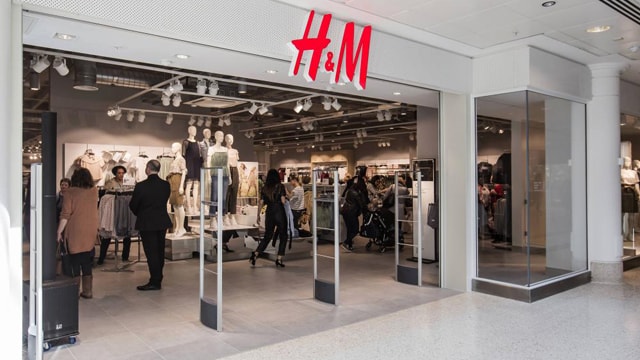
Swedish fashion retailer H&M has announced its financial results for nine months ended August 31, 2017.

During the period under review, H&M’s sales including VAT increased by 7 per cent to SEK 173,290 million. Its sales excluding VAT amounted to SEK 149,597 million in the same period last year.

The fashion retailer’s profit after financial items reached SEK 15,936 million compared to 16,630 million in the nine-month period of last year. Profit after tax was SEK 12,191 million against 12,722 million in the same period of 2016.

In the third quarter, H&M’s sales including VAT soared 5 per cent to SEK 59,383 million compared to 56,802 million during the corresponding quarter of 2016.

Sales excluding VAT stood at SEK 51,229 million during the quarter against 48,982 million.

In the review period, H&M opened new stores in Kazakhstan, Colombia, Iceland and Vietnam. The brand will now launch a store in Georgia later this autumn, and in Uruguay and Ukraine by 2018.

DCC Print gears up to push Bangladesh garment industry towards US $ 50 bn mark

Image Courtesy: dcc.co.in

Printing plays an important role in value addition, and as Bangladesh gears up to achieve the magic figure of US $ 50 billion by 2021 in apparel exports, value addition is going to be one of the key contributing factors. Country Manager of Bangladesh’s first and only integrated printing solutions provider – DCC Print Vision LLP, H N Ashiqur Rahman, speaks to Apparel Online underlining his company’s initiatives to help the industry achieve this long-cherished dream to befittingly commemorate the country’s 50 years of Independence.

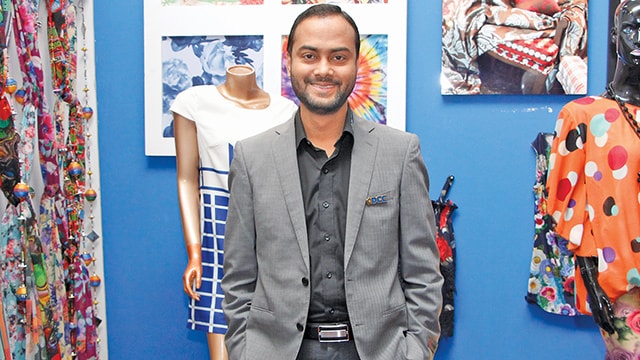
H N Ashiqur Rahman, Country Manager – DCC Print Vision LLP

“Last year, garment export was worth around US $ 28 billion, and to reach the target of US $ 50 billion, the industry would have to almost double the exports, either in terms of volume or value. Honestly speaking, doubling up volume seems impossible! A concerted effort at value addition (to command better price points) alongside volume increase would perhaps be the best shot at reaching the US $ 50 billion landmark,” explains Ashiq, stressing that Bangladesh’s absolute reliance on foreign nations to get value addition through prints, is cutting into the profit margins of the garment exporters. “If they can do the same in Bangladesh, it would yield better margins. And this is what DCC is helping them achieve,” he reasons with a futuristic view.

“Last year garment export was worth around US $ 28 billion, and to reach the target of US $ 50 billion, the industry would have to almost double the exports, either in terms of volume or value. Honestly speaking, doubling up volume seems impossible! A concerted effort at value addition (to command better price points) alongside volume increase would perhaps be the best shot at reaching the US $ 50 billion landmark.” – H N Ashiqur Rahman, Country Manager – DCC Print Vision LLP

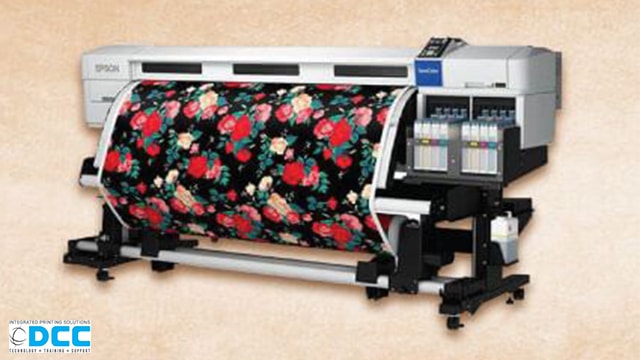
Headquartered in India, DCC offers an entire range of printers – screen, digital and sublimation – with the aim to make printing technology available and also let all the levels of the industry be aware about their knowhow to increase the focus on value addition. The company’s customized solutions in software (‘Wasatch’ – considered one of the best in the world), and hardware (zero-maintenance heat press machines from Monti Antonio, Italy, sublimation printer from Epson, etc.), have enabled DCC to already get the desired industry attention.

Image Courtesy: dcc.co.in

“In Bangladesh, I did not see a single company working towards integration of the printing process, which is an amalgamation of diverse but critical aspects. We are the first to join all the dots to offer the best possible solutions,” underlines Ashiq confidently. Ashiq’s long-standing association with the apparel industry in his more than a decade-old career in diverse roles for various companies has made DCC get an incisive reach in the industry.

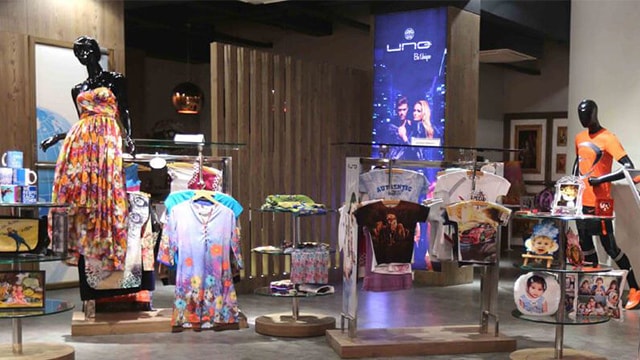
Christened as an ‘Xperience Zone’ and spread over 4000 square feet in the heart of Dhaka, DCC has come up with its first ever showroom offering complete solution/support as far as printing is concerned, be it certified training, complete range of raw materials, machines and design development support for the entire supply chain from fabrics to garments. “We are helping to train the manpower with requisite skills along with rendering free sampling facility. Using our services and people trained by us, many manufacturers have already bagged decent orders from the prospective clients, which is slowly but surely building the trust factor,” underlines the Bangladesh Country Manager of DCC. The company has signed a Memorandum of Understanding with BGMEA under which people trained by DCC are awarded certificates by the Center of Excellence for Bangladesh Apparel Industry (CEBAI) – an institute for skill development under the joint initiative of ILO and BGMEA and funded by H&M, and Swedish International Development Cooperation Agency (SIDA), with a view to establish a replicable model of industry-driven training and support services. This, along with DCC’s excellent services, has helped significantly increase the company’s acceptance not only amongst the garment manufacturers but also the buying houses, a vital cog of the apparel industry credited with earning valuable foreign currency through substantial overseas orders.

Image Courtesy: dcc.co.in

“We are soon going to organize a seminar for the buying houses to make them aware of our services and offerings. Earlier they would not place orders with local manufacturers for value-added items… But with the coming of DCC, things are changing,” claims Ashiq. The overwhelming enquiries (currently numbering around 50-60) from all the big players in the industry, is a testament to Ashiq’s claims.

“We are still in the process of educating the customers, but enquiry about materialization percentage is very good, surpassing even our expectations,” Ashiq states, confident of putting up an excellent performance in the coming days, which stems from the company’s unique services and solutions under one roof; including modern printing technologies, inks and consumables, software, service support, tech consulting, hands-on training and application support.

Business keyboard_arrow_right Sourcing keyboard_arrow_right Feature

Bangladeshi Apparel Buyer KNA Sourcing highlights future strategy and plans

Image Courtesy: knasourcing.com

If the growing popularity of the Bangladesh garment industry in the global arena has opened up new avenues for the garment manufacturers, it has also spurred the growth of the buying entities, with everyone vying to cash in on this big opportunity. But rising competition amongst buying houses, coupled with lack of proper and long-term planning, is proving to be the undoing for many.

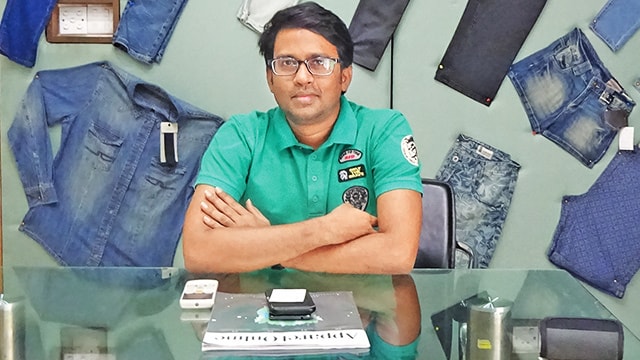
KNA Sourcing Limited, started by Md Kayum Mollah (Chairman), Nasim Uddin Mazumder (Managing Director) and Md Arman Hossain – Director in 2013, is an exception though. Seasoned professionals with more than 15 years’ of experience – during which Kayum, Nasim and Arman worked for manufacturing houses and sourcing entities in various capacities, before starting their own business – are treading the path rather cautiously, and with a clear-cut plan.

“Currently, I am catering to four customers in Europe and one each in Canada and Germany,” informs Mollah, adding, “We source all kinds of products from Bangladesh for them.” Though sourcing a range of products, bottoms (denim and non-denim) and shirts (formal and casual) are the mainstay of KNA. In bottoms, denims (FOB range from US $ 4.75 to US $ 10.50 depending on value additions) constitute 70 per cent of the total volume, while non-denim (twill, cotton, stretch twill, canvas, etc.) accounts for the remaining 30 per cent. The average FOB of shirts sourced by KNA is around US $ 6.5 plus.

Md Kayum Mollah, Chairman – KNA Sourcing Limited

A watchful entrepreneur as he is, Mollah first plans to increase his clientele in the existing markets and serve them satisfactorily before looking for opportunities beyond. It is this very approach aimed at client satisfaction that has now led Mollah to venture into garment manufacturing.

“We have started garment manufacturing from June 2016 to provide the best of services and comfort to our customers,” says Mollah. Located in the garmenting hub of Ashulia, Spartan Fashions (four lines and 250 plus machines with plans to add three more lines soon and a worker strength of 450) produces all kinds of bottoms (denims, non-denims) and workwear. Competitive prices, quality products and an improved turnaround time have been the other motivating factors behind the coming up of the production unit.

Image Courtesy: knasourcing.com

Already Sedex certified, Mollah has now proceeded for BSCI and even plans to go for the Accord certification for Spartan soon, which would not only help him to route more orders sourced from the existing clients to Spartan but also add new names in the clientele. “Most of the bottom orders from clients (for all of which Spartan can fulfil the laid down criteria) are placed with Spartan itself while the remaining orders go to another unit,” he explains strategically. Spartan also takes in orders from other buying houses to fill its capacities. For shirts, KNA prefers to work with only three factories in the country. “We do not place any orders with factories that we do not know very well. Secondly, the factories we plan to work with need to be fully compliant, fulfilling the clients’ requirement,” states Mollah on the various parameters that go behind shortlisting a supplier unit. Product specialization of each of the factories decides who gets to manufacture which product.

Keeping in sync with future, Mollah has also set up an in-house product development team, to give KNA that extra edge.

“It’s a very small team with just three people,” explains Mollah, who globe-trots with his PD team to pick up the new developments from various places, and elaborates, “We travel a lot, attend several events and even see the developments in every mill that we source raw materials from. We also pick up inspirations from our clients.”

Based on the styles and inspirations picked up from various sources, KNA develops its own collection which it presents to the prime clients. “So they take some from our collection and suggest their own, based on which we come up with even more developments,” says Mollah on a parting note, expressing hope that the new manufacturing unit would help him play around and come up with innovative products to grow his business in the coming days.

Business keyboard_arrow_right Retail keyboard_arrow_right News

Calvin Klein opens stores in China and Germany

Image Courtesy: mr-mag.com

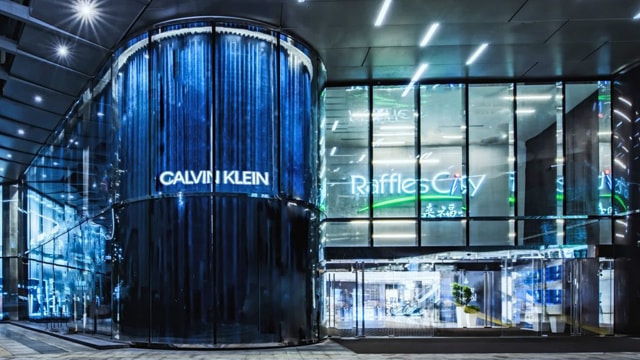
PVH-owned fashion brand Calvin Klein has opened stores featuring its latest retail design concepts in Shanghai (China) and Düsseldorf (Germany).

The two-storey 6,000 square feet Shanghai store located at Raffles City has offerings for both men and women. CK Calvin Klein, Calvin Klein Jeans, Calvin Klein Underwear and Calvin Klein Performance apparel and accessories are available for consumers at this latest store.

The new design concept for each of these retail locations communicates the brand’s minimal, modern aesthetic with a fresh addition of colour and sumptuous materials to enhance the consumers’ shopping experience.

According to Steve Shiffman, Chief Executive Officer, Calvin Klein, the company’s latest flagship openings in Shanghai and Dusseldorf show its commitment to technological innovation and unmatched brand equity for the global audience.

“The company aims to offer a best-in-class retail experience to important markets and shopping destinations globally,” added Steve Shiffman.

Indian garment trade body TEA urges Centre to resolve export issues

Image Courtesy: bloombergquint.com

Tirupur Exporters Association (TEA) officials held a meeting with Union Minister of Commerce and Industry Suresh Prabhu in New Delhi on September 27.

The officials submitted a memorandum to the Minister asking him to look into the issues related to exports, including GST implications.

According to TEA President Raja M Shanmugham, if Government fails to address the export-related issues, the exporters may lose their buyers.

The Minister, however, has given the trade association an assurance on the matter raised and also spoke about releasing a special package to bail out the exporting units from the crisis.

Prabhu also informed TEA about his upcoming visit to the knitwear hub of India to check the ground realities.

Furthermore, the TEA President also met the Commerce Secretary Rita Teaotia who also assured support for the sustenance of exports.

A meeting between TEA officials and Santosh Kumar Gangwar, Union Minister of State for Labour and Employment was also held in the capital where they discussed the construction of an ESI Hospital in Tirupur for the garment workers.

Business keyboard_arrow_right Retail keyboard_arrow_right Feature

Indian Fashion Retailer Aza credits rigorous selection process for its brand’s growth

Fashion is changing.

India is emerging as the next front runner in luxury fashion retail with Indian designers spearheading the accessible fashion movement. Designers are moving away from the razzmatazz associated with fashion weeks and the crème-de-la-crème to focus on a larger audience through various domestic and international retailers.

During Lakmé Fashion Week Winter Festive 2017, AO/FFT had the opportunity to catch up with the founders of Aza, Dr. Alka Nishar and her daughter, Devangi Nishar Parekh.

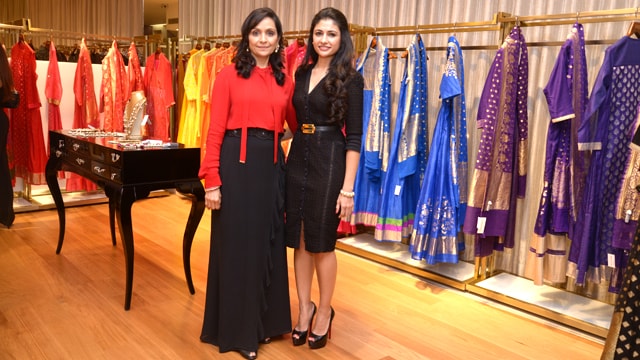
Dr. Alka Nishar and Devangi Nishar Parekh, Founders of AZA

Together, they took us through their business strategy, designer vetting process and selection procedure, while emphasising the role that buyers are playing in propagating this business.

As India of the late 80s and 90s was gently transforming into a country with a voice of its own in terms of fashion and design, notable talent started arising to fill in a void that had previously been dominated by the West. People started becoming more aware and fashion conscious, willing to shell out a few extras for a coveted product. As the demand spiked, so did the need for a unified space that could house the country’s leading designer pieces. This is where and when Aza was born.

In an attempt to provide a one-stop-shop solution for brides and their families, Aza opened its door in 2005, with an enviable line-up of India-based designers. Since then, the brand has evolved not only as a luxury fashion retail space but also as a platform for emerging designers to showcase their work.

In fact, many of the leading names of the industry today like Rahul Mishra and Nachiket Brave launched their first collection at Aza.

“To enable a more engaging shopping experience, Aza was one of the first stores in the country to introduce the concept of Fashion Consultants, who would assist customers in their purchasing process. Through this concept, emphasis is laid on selection of an outfit based on the kind which would be suitable for a particular occasion depending upon the particular body type or skin colour. This in itself provides a more personal and seamless experience to the customer.”   Devangi Nishar Parekh told Apparel Resources

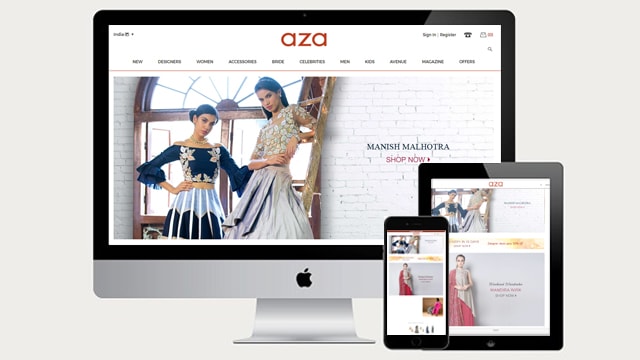
AZA’s e-commerce portal | www.azafashions.com

Over a span of 12 years, Aza has evolved from a brick-and-mortar space to a more far-reaching online platform through azafashions.com, thereby expanding its customer base to not only the domestic market, but also the international segment through the world of e-commerce. The digital expansion was made possible once Alka’s daughter Devangi Parekh, joined AZA after graduating in entrepreneurship from Cornell University and an MBA from Wharton. Using her knowledge base to Aza’s advantage, she introduced the digital strategy that opened international avenues for the India-based company. The company reported a growth that continues to exceed 25 per cent on a monthly basis.

“We have a very strong merchandising team that works season to season screening designers who would be included on our list.” Devangi credits the success of its brand to this rigorous selection process. “We evaluate the key pieces pertaining to specific seasons and events based on the demographics and income bracket being catered to, with a keen bend towards aesthetics.”

Design curation is a defining factor that differentiates luxury e-commerce from e-commerce, the latter targeting mass fashion. What draws – and eventually, retains – a particular clientele to such products is the essence of aesthetics that have been selected among a pool of others, to only view the best.

In fact, to be a part of the Aza’s curated edit, designers need to have a strong identity in terms of techniques and details. Their brand should be truly unique to be recognised among a sea of contenders.

Trends are subjective to age, cultural preferences and location; as something that would perform well in the Indian subcontinent, won’t necessarily be that big a hit in places like US, Canada or UK.

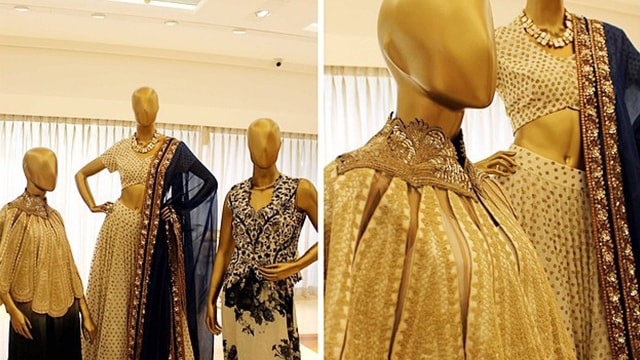
AZA showcases a wide variety of trend in silhouettes and details

Aza is quite cognizant about this and hence, changes if any, are incorporated in terms of colour, sleeve variation and fabric implementation specific to different regions.

One of the preferred avenues for retailers to scout for new and emerging design talent are the fashion weeks held in India; namely, Lakmé Fashion Week (LFW) and Amazon India Fashion Week (AIFW) that showcase twice a year. These fashion weeks are known for introducing sure shot winning trends of the year such as 2D design interventions, thread work layered with crochet on top of a fabric, and French knots.

For ages, people have been confined to the thresholds of embroidery, sequins and crystals but there has been an evident shift now towards experimental design. The audience is now demanding a change in the way bridalwear is perceived. A fusion of Indian and western influences with respect to cuts, details and silhouettes has observed a dramatic increase. In the traditional sense, a play of handloom fabrics and weaves has bought the heritage fabric back as a fashion statement.

“It’s about how differently you treat a particular fabric that any other designer can procure from the market and apply onto it, innovative methodologies innate to a particular designer.” Dr. Alka Nishar | Founder, Aza

For any retailer, it is essential to expand into categories along with expanding its retail presence to ensure commercial success and perform well within the industry. Aza has taken giant leaps forward with this focus and taken a keen interest in curating its menswear segment.

Gone are the days when menswear and womenswear were compartmentalized with distinct features. Today’s day and age demands for aesthetics that balance out both. Men are no longer limiting themselves to basic fits but are instead, venturing out to experiment with colour, silhouettes and textures.

Menswear collection at AZA

Designers such as Kunal Rawal and Antar-Agni are combining the best of masculine and feminine influences to channel in the emerging demand for such changes in the menswear segment.

Business keyboard_arrow_right Sourcing keyboard_arrow_right News

Coats honoured at Corporate and Financial Awards 2017

Image Courtesy: ft.com

Coats, the world’s leading industrial thread manufacturer, bagged two awards at the recently held 6th Corporate and Financial Awards 2017 on September 26, 2017, at The Brewery in London, UK.

The manufacturer was felicitated with Gold in the ‘Best Online Report: AIM/Small Cap’ category for its short and interactive annual report (2016).

Coats’ annual report, themed ‘Harnessing Talent and Technology in Textiles’ featured a redefined online presence. The mobile-friendly site provides the users with a concise and consistent form of navigation.

The panel also praised the design of the content-rich website, giving the users a quality browsing experience.

Another award for ‘Best In-house Corporate and Financial Communications Team’ was given to Coats for the effective communication within the company as well as with the stakeholders.

The thread manufacturer was also appreciated by the jury for its skills in managing the global interactions at such a large scale.