The Malaysian government has been asked by the Federation of Malaysian Manufacturers to ratify the Trans-Pacific Partnership (TPP) deal, since it gives access to a huge duty free market.
As per the TPP deal, tariffs will be removed on 85 per cent of Malaysia’s trade with its new free trade agreement (FTA) partners — Canada, Mexico, Peru and the United States, and help save US$1.2bil (RM5.3bil) in tariffs for Malaysia. This will, in turn, boost the economy of the country and have a positive impact on the trade and investment sector.
According to a cost-benefit analysis, Malaysian textile sector, which contributed to only 1.4 per cent of total exports in 2014, will register the largest gains in exports within the first decade of the implementation of the Trans Pacific Partnership agreement. This has been said assuming that all tariffs are eliminated and non-tariff measures (NTMs) are reduced by 25 to 50 per cent across the prospective 12 member countries, revealed in a study released by the PricewaterhouseCoopers’ (PwC), ‘Potential economic impact of TPPA on the Malaysian economy and selected key economic sectors’.
Moreover, the textile industry in the country is expected to increase its exports by 20 per cent with the elimination of duties on textiles in the TPP countries.
It may be noted around 62 per cent of Malaysia’s trade is covered by seven bilateral FTAs with Japan, Pakistan, New Zealand, India, Chile, Australia and Turkey and five regional FTAs through ASEAN (ASEAN and China, Korea, Japan, India and Australia-New Zealand).
Also Read – Malaysian textile sector to make largest ever gains from TPP: PwC
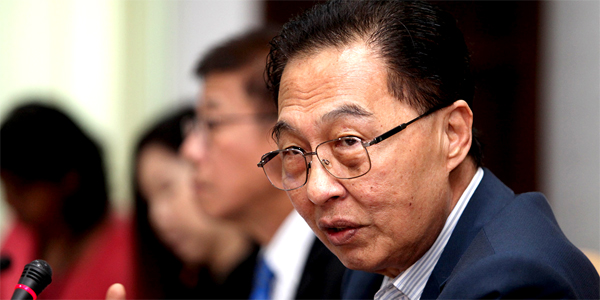
Speaking on the issue, Datuk Seri Saw Choo Boon, President, Federation of Malaysian Manufacturers said, “Textile and apparel, automotive, machinery and equipment, electrical and electronics (E&E) products, rubber products are among the products to benefit from duty free access.”
Boon further added, “We call on all parties, especially the government to take the important step in becoming part of the TPPA. Malaysia has benefited from the FTAs signed till date and there was ample evidence that liberalising economies like Chile, China and South Korea have performed better than more inward-looking ones at comparable stages of development.”
Meanwhile, Malaysia will do away with the import duties for several sensitive products like E&E, petroleum and chemicals that helps manufacturer to procure better quality raw materials.
Malaysia is the fourth most trade-dependent nation after Hong Kong, Singapore and Vietnam with total trade accounting for 1.5 times of the gross domestic product.
Identifying the limit Boon said, “We recognise the confines of the domestic market and know that we can only generate new and additional sources of growth and investment by expanding our boundaries to the rest of the world, a promise that the TPP and other FTAs hold.”






 Bharat Tex Special Report 2026