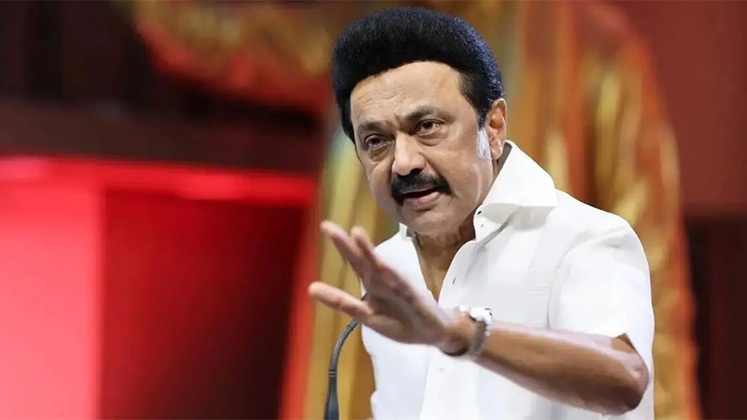
Tamil Nadu Chief Minister M K Stalin has written to Prime Minister Narendra Modi seeking urgent intervention to resolve the US tariff issue through a bilateral agreement, warning that prolonged inaction could trigger large-scale job losses in the state’s export-oriented sectors, particularly textiles.
In his letter, Stalin said exporters in Tirupur, widely regarded as India’s knitwear hub, had reported the cancellation of confirmed orders worth Rs. 15,000 crore (US $ 1.66 billion), alongside production cuts of up to 30% across manufacturing units. He said the tariffs were sharply squeezing profit margins, forcing exporters to offer steep discounts to retain buyers, thereby undermining their competitiveness and long-term viability.
Stalin said the impact was spreading across multiple districts, with exporters in Tirupur, Coimbatore, Erode and Karur collectively facing daily revenue losses of around Rs. 60 crore (US $ 6.64 million). He warned that many small and medium-sized enterprises were being pushed to the brink of closure, adding that similar pressures were emerging in footwear clusters in Vellore, Ranipet and Tirupatthur.
The Chief Minister attributed the disruption to what he described as a punitive 50% tariff imposed by the United States on Indian exports, noting that new orders were rapidly drying up while existing demand was being diverted to competing markets.
He said orders from Tirupur were increasingly shifting to countries such as Vietnam, Bangladesh and Cambodia, which currently enjoy a tariff advantage. Stalin cautioned that once supply chains are re-routed, regaining lost markets becomes increasingly difficult as sourcing relationships tend to become entrenched.
Highlighting the broader economic stakes, Stalin said Tamil Nadu accounts for around 28% of India’s textile exports and employs approximately 7.5 million people in the sector. The state also contributes about 40% of India’s leather and footwear exports, supporting employment for more than one million workers.
He warned that the ongoing trade impasse was not only an economic setback but also a looming humanitarian challenge, with potentially severe and lasting consequences for employment, particularly among women and young workers.
Stalin urged the Central Government to take swift action, saying an early resolution would help revive exporters’ prospects and reinforce India’s standing as a dependable global manufacturing hub.