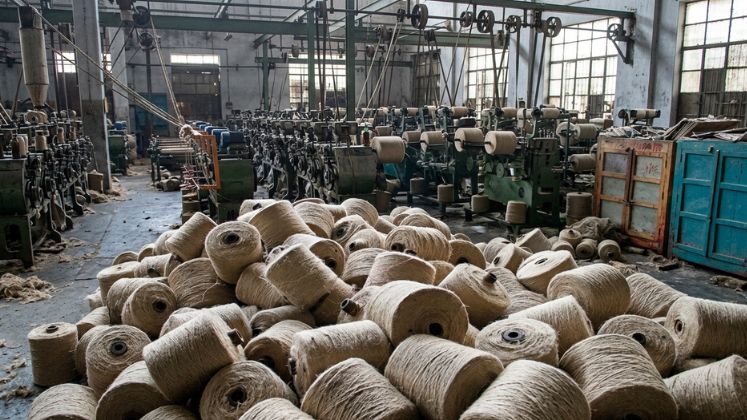
The Ministry of Finance has revised anti-dumping duties on jute goods, including jute yarn, hessian and sacking, imported from Bangladesh and Nepal following a mid-term review by the Directorate General of Trade Remedies (DGTR).
The earlier anti-dumping duty was imposed in 2017 and extended in 2022. The revision follows a nearly 50% increase in imports from Bangladesh and Nepal over the past four years. Imports from the two countries now account for about one-seventh of jute goods consumed in India.
The revised duty has shifted from the earlier structure to mill-specific rates based on the pricing of individual exporters. Higher duties have been imposed on exporters that did not cooperate with the DGTR investigation.
The Indian Jute Mills Association (IJMA) stated that the revised duties are expected to increase domestic demand for jute products, improve capacity utilisation at Indian jute mills and support employment.
Domestic jute companies, including Gloster, Cheviot Company and Ludlow Jute & Specialities, could also see lower pricing pressure from imports following the revision.
Separately, the DGTR has recommended a countervailing duty on jute goods imported from Bangladesh and Nepal after finding that exporters in the two countries receive cash incentives, export grants and tax concessions. The DGTR classified these benefits as prohibited export subsidies and recommended the countervailing duty to offset their impact on Indian producers.
The DGTR also found that subsidised imports had caused material injury to the domestic jute industry by affecting prices, production, capacity utilisation, sales and profits.
The countervailing duty recommendation is awaiting notification by the Ministry of Finance. India’s jute industry employs around four lakh workers and supports approximately 40 lakh farm families involved in raw jute cultivation.