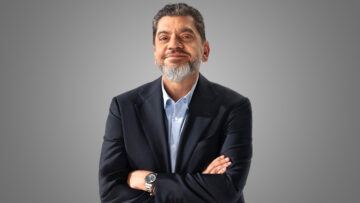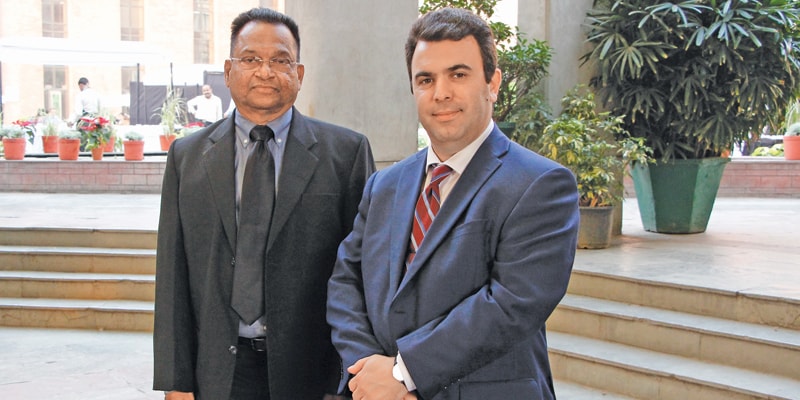
Completing 16 years of its inception, Worldwide Responsible Accredited Production (WRAP) has more than 250 certified factories in India and 2,300 factories across the world which employs more than 2 million workers. One of the largest independent factory-based certification standards for this industry, WRAP is more than just a certification and management system audit agency; in fact it has become a way to add value to the bottom line of apparel manufacturers. Though satisfied that the Indian apparel industry is moving in the right direction, Avedis H. Seferian, President & CEO, WRAP strongly believes that a lot of things still needs to be done. During his recent visit to India, Seferian had a long discussion with Team Apparel Online on many issues that he is very passionate about…
Value from WRAP when there are many other such certifications
WRAP is more acceptable to buyers compared to other such standards; so WRAP opens up many doors for apparel manufacturers and reduces the need of multiple audits. The certification gives a strong reliability and assurance to the buyers that the factory has been verified with required due diligence. These factories already have some kind of audit or inspection in place. Secondly, and equally important point is that it directly benefits by making sure that one runs the factory in a way that gives comfort and profitability. As apparel industry has high labour turnover which costs a lot, WRAP certification helps to reduce employee turnover, because if the factory is run responsibly, why would anybody leave. WRAP is not just a check audit, it is a management system audit, where it is made sure that all relevant kinds of policies and procedures are being properly followed and executed. It is a more human, proactive, preventive and predictive approach to compliance.
We do not give just a programme, we back the programme in a way that helps further enhance the confidence of the factory. Garment factories are very dynamic places, and audits just give you a snapshot of that time; and even if you have a good audit, things change, like expansion, downsizing, etc. and all these things can bring changes later. When we go to factories we don’t behave or work like policemen. Our job is to promote social responsibility, so we want to help the factories achieve that. We promote ‘ability’ of factories by providing them resources be it documentary support or open training to make sure that the factory knows not only what they need to do, but also why it matters and how they can achieve it. And these things distinguish WRAP from other certifications. Our pro-activeness is something that prevents anything from happening rather than taking care of any problem once it happens.
WRAP, across the world and India
Our efforts in the last few years have seen good results and we are proud of whatever WRAP has achieved by supporting the industry; but do agree that these certified factories are very small part of the apparel manufacturing industry across the world, so there is much work to be done. As far as our target is concerned, it is like moving the goalpost; our target is growing day by day to support the industry. We want to touch 3,000 factories this year. India has more than 2,000 good factories, and out of these 14 per cent are WRAP-certified. Multiplicity of standards is also one of the reasons for this. Factory’s first priority is to satisfy their buyers, no matter if it is by a particular certification or their own audit or any other way. 85 per cent of the WRAP-certified factories in India are at gold level, 14 per cent are at platinum level (it takes at least three years to get a platinum certification), and 1 per cent is at silver level.
Indian domestic companies are also coming forward for certification as they are also concerned for their image, as well as customers’ reactions. In coming days, the movement will pick up more pace. Entry of more and more western brands is also impacting positively. Some Indian brands have started certification efforts of their vendors. To some extent it is right that compliance is more buyer-driven, so it is taking much more time to come into the domestic market, but some NGOs are playing good role in this regard.
Current market conditions and compliance cost
Whatever market conditions prevail, it is always about competitiveness, social responsibility and certifications that make any company a desirable partner. A mind shift has to occur, as many factories still see social compliance as a necessary evil or obstacle, something they have to do. An unfortunate consequence of this thought-process is that you see compliance as a cost that needs to be minimized. This has to change. Factories have to recognize that this is an investment and not a cost. Once this happens, recognition of the return on such investment, that it is making the factory more competitive, will gain prominence. It takes almost US $ 2000 (which includes WRAP fees and audit charges) to get certified. WRAP does not see that as a huge cost, looking at it from an investment perspective, as it can probably bring orders worth, may be US $ 2 million.
Despite all initiatives, still a lot is to be done
It is not enough to stand and see where we are today, vis-à-vis where the industry was 20 years ago; no doubt a lot of progress has been made, one can argue about the pace, but we are moving in the right direction. It is a reality that the numbers of non-compliant factories are diminishing and there are several reasons for that, like the market is changing. We are now at a point where social compliance is necessary for any reputable brand of manufacturer. It is a threshold requirement like price, quality and delivery. In a 24X7 global social media scenario, everybody is a reporter; there is no place to hide things anymore, so companies are coming forward for a change. We are confident that we will get more and more factories certified as manufacturers are realizing the benefit of compliance. It helps them to fulfil the law of the land which is not as easy as it seems. WRAP is giving them peace of mind.
Biggest issue for apparel industry
Sustainability is the biggest issue today across all the industries and same will continue in future as well. In regard to India and the apparel industry, I must say that there are some pockets where we have made good progress. Similarly in some pocket we have not made good progress, while in other cases, we are missing a lot. Overall increasing awareness is one of the good examples. There is good progress on the child labour front, but on migrant workers issues we need to do more. Environment too needs a lot to be done. All in all, we are in right direction but need more energy for the same.
Will world ever have single accepted certification?
After spending 15 years in this industry, Avedis has concluded that probably we are never going to have a single accepted code because even if all of us agree that 99 per cent things we do is the same, 1 per cent differs from organization to organization on value basis and this will never change. But, having said that what is possible is greater harmonization among existing codes; so we are closer to mutual recognition of standards so that more coordination spreads. And this is already happening. WRAP is at the forefront of this movement as more and more people are coming on board.
More negative reports by NGOs in recent years
Reports are not completely false nor are it is true that some companies are missing on compliance, or that they have double standards. All these reports are reflection of the fact that more people are involved now in these things; more debates and conversations are taking place, so more reports are coming out. These reports are going to have a positive impact by recognizing just how widespread these problems are and the need to tackle them with systematic approach.