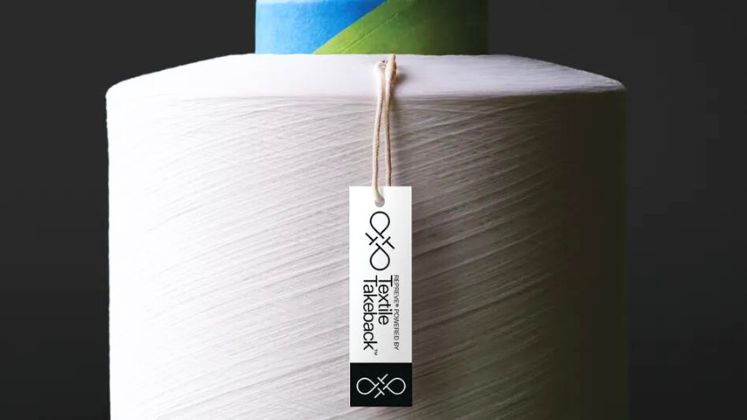
With the introduction of two new products, UNIFI, Inc.—a pioneer in recycled and synthetic yarn—now offers the world’s broadest range of regenerated performance polyester under the circular REPREVE® brand. With the help of its unique Textile TakebackTM technology, UNIFI® is now able to provide white-dyeable filament yarn and ThermaLoopTM, a ground-breaking insulator. This marks a significant advancement in the scalable textile-to-textile recycling market.
Produced with a minimum of 50 per cent textile waste and 100 per cent recycled polyester feedstock, the two new products meet virgin-quality standards. Using patented technology, the Textile TakebackTM process recycles post-industrial and post-consumer textile waste from throughout the world into materials of the future. In order to recover trash and prolong the life of resources, UNIFI will collaborate with international brands to further improve value along the supply chain.
The new circular REPREVE filament yarn is a white, dyeable, high-performance polyester that is made for the most demanding applications. Its versatility spans industries, applications, and colourways. With the inherent FiberPrint® tracer technology in the circular REPREVE polyester line—which also includes black filament yarn and black and white staple fibre—all goods can become U-Trust® certified.
ThermaLoopTM insulation provides performance, recovery, and thermal efficiency. It comes in down-like fibre, fiberball, and padding varieties. The padding is designed using REPREVE low melt fibre, a ground-breaking invention that makes it possible to produce synthetic cushioning that is 100 per cent recycled. ThermaLoop’s introduction of black insulation, inspired by UNIFI’s “waste nothing” principle, demonstrates the range of textile waste that may be used as feedstock.
Both of the new goods are currently available everywhere and can be smoothly and disruption-free integrated into the current supply chains. For businesses that depend on polyester, especially fashion labels, this commercial scalability addresses a significant obstacle. These brands have long aimed to produce cyclical clothing in order to achieve sustainability objectives. These goods help UNIFI reach its target of recycling 1.5 billion T-shirts’ worth of textile waste by the 2030 fiscal year.