The unprecedented situation we all find ourselves in due to the outbreak of this pandemic has led to societal and economic shutdowns in every country to contain it. The consequences of these have left the apparel, footwear and textile industries with challenges never seen before.
This crisis is relaying a shock to the world economy and to the fashion industry with retail businesses suffering temporary closures, brands adjusting to declining customer spending, and factory workers in countries like India, Vietnam, Cambodia, Bangladesh and China furloughed because of cancellation of orders or the factories working on reduced capacities. The impending economic crisis, as the horror of the virus is dragged on for the better part of a year, is expected to wipe out more than 30 per cent of the fashion industry’s business in 2020 alone.

What’s more is that a McKinsey report has put forth disturbing statistics claiming that almost 80 per cent of companies in the US and Europe will be in financial distress by the end of this crisis. However, the news is not all bad for every sector of this vast industry. Although it seems unlikely, the sustainable market, which found itself a misfit in mainstream retail with higher prices and smaller scale, has become one of the most trusted avenues to shop.
With consumers being more conscious of their purchases, not only are sustainable brands able to offer their services more readily due to shorter supply chains, bigger brands are also faced with insurmountable hurdles as their orders lay scattered all over the world. Other than this, analysts predict that rising economic uncertainties with each passing day will make the consumers depend more on brands they deem responsible and reliable. And for most, reliability translates to sustainability and transparency.
The conscious shift to sustainability
Every pandemic the world faces leaves an indelible impression on the psyche of the general public, thereby changing the norms of the society altogether. Be it the 1918 flu epidemic that heightened hygiene standards, increasing the use of electric washers and the frequency of washing clothes or the 2003 SARS outbreak that originally provided the much-needed impetus for online shopping instead of venturing outdoors, we can safely agree that the macro-trends in fashion will see a significant shift.
Similarly, a report involving research analysts from various esteemed organisations like BCG, SAC and Higgs Co predicts for a more sustainable future for fashion post the flat-lining of the outbreak. The patterns are already emerging with the need for remote working, adoption of home delivery and e-commerce services and the importance being given to brand values.
Sustainability is bound to become a basic expectation across the industry. Since fashion and beauty are items considered ‘close to the body’, a health crisis as such has elevated consumer expectations of the trust they place in a brand. During and after the lockdowns, consumer spending has and will have decreased considerably, leading to more conscious purchases. Brands that can hold the faith of the consumer with fair work conditions, ethical and transparent supply chains are seeing positive results from consumers in every country. Social and environmental responsibility and accountability has become the need of the hour.
“We are doing better this month than we did during Christmas,” Cora Hilts, Founder and Chief Executive Officer at Reve en Vert, a platform selling luxury fashion focused on sustainability, told Bloomberg. “People are shopping more online and have more time to make conscious decisions.”
Another factor where fast fashion loses faith is quality and durability, two elements that become imperative at a time of economic uncertainty and high levels of unemployment. “Despite the struggles of the moment, macro-trends demand significant action for sustainability within the industry. After COVID-19, fashion leaders will reshape what it means to be a sustainable business – with a unified approach that integrates environmental, social and purchasing considerations into core business practices, and the development of sustainable products as an area of innovation. Expectations for the entire industry will be reset around greater collaboration, more equitable partnerships and collective responsibility across all parts of the value chain,” as per the study, Weaving a Better Future: Rebuilding a More Sustainable Fashion Industry After COVID-19.
Transparency comes first
A report by the United Nations Development Program and the Ellen McArthur Foundation found that fashion’s contribution to the annual global carbon emissions has risen to account for 10 per cent of the total, more than that of international flights and maritime shipping combined.
Fashion Revolution’s Transparency Index analyses 250 fashion brands with annual revenues of over US $ 400 million for its Transparency Index. The brands receive points, from 0 to 250, for how detailed their disclosure is for their social and environmental policies, practices and impacts, including supplier disclosure, living wages and waste and recycling, which are then translated to percentage points. Unsurprisingly, the average score lay at only 23 per cent, a considerably low score. While fast fashion and sportswear brands fared better, the state of transparency for luxury houses is deplorable. Most of their sourcing and manufacturing do not happen in their home countries, and these processes rarely become public knowledge on grounds of being trade secrets.
This is where sustainable brands pull ahead. Most brands are still reluctant to either reveal where things are produced or have major facilities overseas. But, the shorter supply chains of green brands allows for more transparency and a better control on the use of chemicals or providing fair wages.
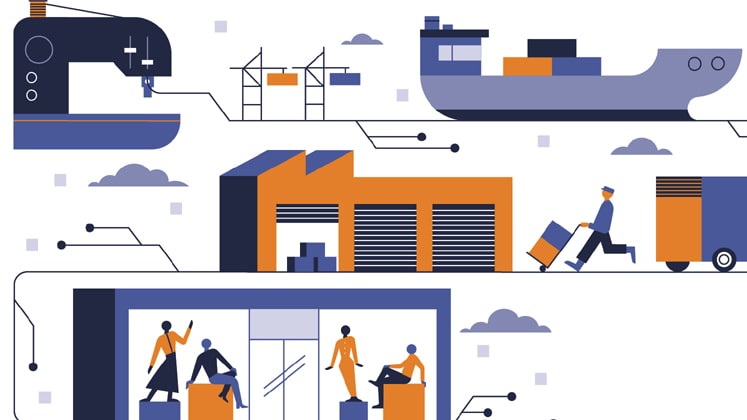
The supply chain for bigger brands is so fragmented that they might not even be aware of where all their raw materials are pooled in from. Most fashion brands find themselves completely paralysed due to the lockdowns, which leads to the consideration that post-virus supply chains will have to shrink to avoid essential products being stranded for months in distant ports in case such scenarios are repeated in the future.
Also Read: Fashion in the time of COVID-19: Indian designers share their strategies to stay afloat
Hence, most brands are considering shifting base back to their countries instead of collecting bits and pieces from the world over. Additionally, instead of shipping to different countries from a singular location, brands are also looking at making production localised for different regions. French wool and textile manufacturer Chargeurs SA shifted some of its production lines from fabrics and garments to equipment for medical workers. Within a few weeks, they are bearing the responsibility of being one of the French Government’s major providers of face masks and are manufacturing several million a week. Now the company is planning to shift production lines in its US, Asian, and South American factories too, rather than shipping masks to those places all the way from France.
Also Read: Technology turns garment makers into PPE manufacturers
And, this might not only be a conscious decision on the part of brands individually. The European Union is drafting an economic recovery plan, and policymakers in several nations are already calling for measures that push for shorter supply chains to ensure manufacturing of critical components in the region.
In conclusion, the fundamentals of the fashion industry will have to evolve with changing times in order to remain viable both in the eyes of the consumers and to overcome the hurdles they might face in the coming future. Transparency and sustainability are two aspects that have emerged victorious, beating out the brands that were thought to be invincible.