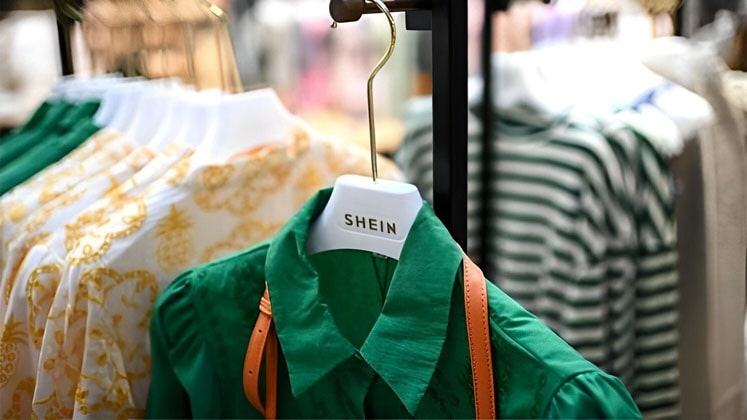
Chinese fast-fashion retailer SHEIN defended its business strategy, claiming that demand-based production, not forced or inexpensive labour, was to blame for its low costs. SHEIN, a fast-fashion retailer that was established in China in 2008, has quickly established itself as a leader in the industry by providing its young, social media-savvy clients with affordable collections that sell quickly.
Peter Pernot-Day, the director of strategy for the Singapore-based company, said that SHEIN is “an on-demand manufacturer the global pioneer of this technology” when in Paris to attend the launch of a SHEIN pop-up shop.
According to Pernot-Day, SHEIN has removed “inventory risk” and “the most significant component of garment cost” by testing goods with a small run and ramping up manufacturing if there is a demand. According to Bloomberg, SHEIN’s global sales increased by 60 per cent in 2021 to US $ 16 billion, placing it second only to Swedish high-street brand H&M.
SHEIN intends to develop a digital marketplace that will enable customers to use its platform to purchase additional goods from other manufacturers.
Pernot-Day stated that its ability to offer exceptionally low pricing, such as T-Shirts for about US $ 5.50, was due to doing away with the danger of having unsold inventory and warehousing.
Pernot-Day stated that while the company accepts “fair criticism” for its product pages’ lack of information about recycled content and other traceability elements, he said, “we’re trying to enhance how we describe and categorise our products.”
He emphasised that SHEIN is “very connected digitally” to information on sourcing from vendors.
According to Pernot-Day, the company performed up to 300,000 chemical tests this year alone. She also mentioned that the company collaborated with Oritain, a product analysis company that also does business with the US government.
“We’re still learning,” he said and added that the company has a lot of suppliers and products, which is a challenge.
Additionally, Pernot-Day insisted that SHEIN has “no suppliers in Xinjiang” in northwest China, where aid organisations have charged the company of exploiting Uyghurs as forced labour.




 Bharat Tex Special Report 2026