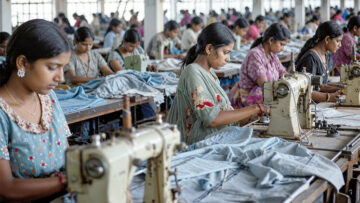
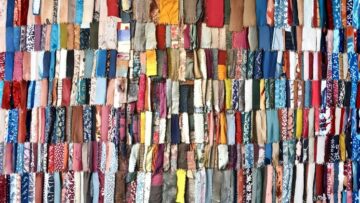
As sustainability pressures mount and landfills overflow, the textile industry finds itself at a critical crossroads. With polyester making up 54% of the global textile market—more than all other fibres combined—the need for a truly circular economy has never been more urgent. Simply because polyester does not bio-degrade.
While PET bottle recycling has often been hailed as a sustainable solution, it largely addresses plastic waste, not textile waste. Moreover, once recycled into textile-grade yarn, polyester cannot be recycled again, creating a one-way trip to the landfill/incineration plants.
To tackle this, Texfil, a subsidiary of Filatex, a leading polyester yarn manufacturer, has developed what it claims is the first truly circular textile-to-textile recycling technology called Ecosis.
“PET bottle recycling helps, but it’s not the final fix. Our innovative process transforms all forms of polyester textile waste —both pre- and post-consumer— back into its virgin state,” stressed Vedansh Bhageria, Vice-President, Filatex India Ltd.
This is achieved through a seamless three-step process: first, depolymerisation breaks down the complex polyester chains in textile waste into their basic chemical building blocks (monomers); next, purification removes dyes, additives and other contaminants accumulated during the lifecycle of the fabric; finally, molecular regeneration rebuilds these monomers into high-quality polyester that is chemically identical to virgin material.
The result? A closed-loop solution that turns discarded garments into fresh raw material—again and again— reducing dependence on fossil fuels, conserving water and cutting greenhouse gas emissions.
The biggest hurdle in recycling polyester has always been colour as most textile waste comes dyed and removing those dyes without damaging the integrity of the material is extremely difficult. But with Ecosis’ patented process, all kinds of dyes are completely stripped away after depolymerisation and the monomer is filtered and purified, leaving behind monomer which can be re-generated into polyester that looks and performs like new. The company has already secured a patent in India, with applications pending in the US and Europe.
Currently running as a pilot project, Ecosis offers GRS-certified circular recycled polyester products such as PET chips, partially oriented yarn and draw textured yarn—designed to meet the rising demand for sustainable textiles.
Its target clientele includes leading global brands, especially those in the EU that must comply with the Extended Producer Responsibility (EPR) mandate. The EPR directive requires brands to take responsibility for the entire lifecycle of their products, from design to disposal, including funding systems for collection, sorting, reuse and recycling of textile waste.
Ecosis is also in talks with some of these brands to build a supply chain where the brands send their own waste to be recycled.
Fuelling this model is local textile waste. Vedansh noted that Gujarat’s textile industry alone generates enough pre-consumer polyester waste—about 300 to 400 tonnes daily—which would support Ecosis’s future commercial operations.
At present, they recycle one tonne of polyester waste each day, but plans are underway to scale commercially. A Rs. 300 crore (US $ 35 million) manufacturing facility in Dahej, Gujarat is expected by September 2026. Once operational, this plant will recycle up to 110 metric tonnes of polyester textile waste per day.
“Currently, there is no commercial plant anywhere in the world that recycles textiles back to textiles at scale. While several companies—including a few of our international competitors—have announced plans to set up such facilities, none have launched one yet. We maybe one of the first ones to have a fully integrated facility,” explained Vedansh.
Ecosis, in partnership with Greenstory, is also conducting a detailed Life Cycle Assessment (LCA) to ensure their process meets the highest sustainability benchmarks.
“Backed by the expertise of Filatex India Ltd., a leader in polyester manufacturing, we leverage our four decades of industry knowledge and cutting-edge technology. This strong foundation will enable us to deliver exceptional quality and scalability, setting new benchmarks in the industry,” concluded Vedansh.




 Bharat Tex Special Report 2026