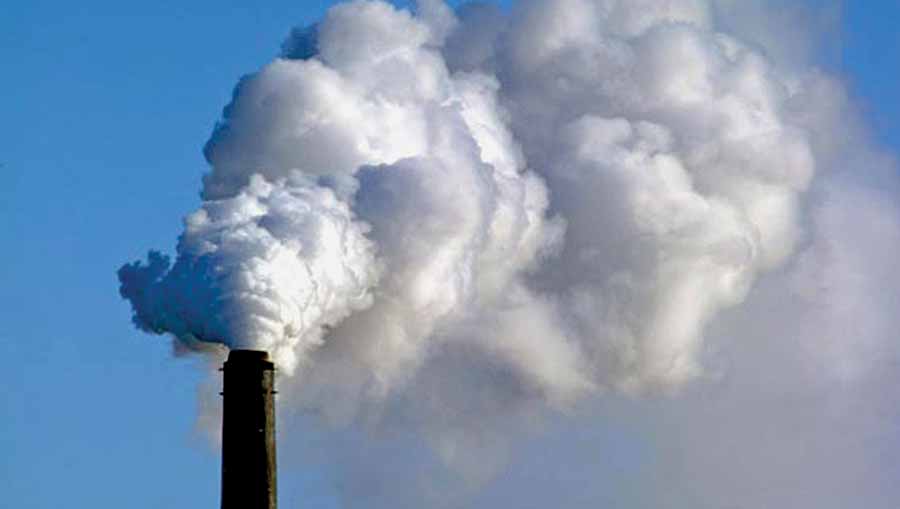
Enabling the textile industry, which is a huge contributor of GHG emissions, to measure their carbon footprints with the Green House Gas (GHG) Protocol conforming to the latest guidelines, the Carbon Footprint Project has a total of 13 companies and individual units from the cluster participating to improve production processes. “The project has enabled better awareness amongst the employees in electricity management and better involvement in timely preventive maintenance by technical staff,” claims Animesh Saxena, MD, Neetee Clothing. In order to provide awareness regarding climate change and carbon footprint, the project was implemented in three steps starting from a training program including interactive sessions between the participants and discussions on global warming, carbon foot printing, impacts of climate change on the textile industry, global market trends based on sustainability and textiles, GHG Protocol, CDP, risks and opportunities, etc. The participants were also trained on the usage of the software for performing the carbon footprint calculation wherein demo accounts were created to help account managers to get an understanding on the working of the tool and the results displayed. While the second step integrated site visits by Cool Earth on a one-on-one basis with all the participating units, including a review of the training session, which was followed with the review of the software implementation ‘Our Impacts’.
[bleft]
Increasingly being recognized as a major challenge, climate change has resulted in many retailers and manufacturers to initiate projects and programmes in order to keep a check on their carbon footprint, and in the process further raising awareness regarding risks related to it. Amongst them is Okhla Garment and Textile Cluster (OGTC) group of companies in collaboration with Cool Earth and through support by GIZ, which have embarked on a mission to measure and reduce the total amount of carbon emission and other greenhouse gases in the entire process of production.
[/bleft]
Currently, the ‘Go Green’ movement of protecting the environment is heading towards its third cycle of assessment and till date the quality of the data collected from each of the participants has shown improvement. “Our boilers are now run by CNG kits rather than diesel, whereas conscious monitoring of running of personal and company cars continue. This has resulted in our turnover increasing by 20 per cent whereas our diesel consumption is down by 10 per cent in terms of quantity, but it is a continuous process and we are still at it,” informs Sharad Duggal, Director, Dimple Creations Pvt. Ltd. The project is first of its kind in the Indian garment industry where the textile cluster has jointly come together to work on carbon emission management strategies, which enables and equips them to move ahead to be amongst the sustainable and conscious suppliers in India.
Supporting them is Cool Earth, who is helping the OGTC companies to perform their carbon footprint measurement, while providing training to key resource managers on climate change. Being the first to bring ‘CDP certified GHG management software’ to India, Cool Earth, has also customised ‘our impacts’ software for performing carbon footprint in the country. Nonetheless the sustainability implementing firm faces challenges. “The low level of awareness makes it difficult at times as we have to continuously train the managers on how to track data and avoid making mistakes in data collation. Also some of the managers in charge are slow in completing the program once it is initiated, either due to paucity of time or lack of interest, which affects the quality of calculation,” notifies Anoop Sood, Director, Strategy, Cool Earth Sustainability Services Pvt. Ltd.
Through this project, OGTC focuses on curbing the use of fossil fuels while increasing the use of renewable energy to improve energy efficiency and encouraging the participants to lower their carbon emissions. Already major international brands such as Nike, Adidas, H&M, Marks & Spencer, Tesco, Walmart, etc. have pledged to reduce carbon emissions but in the process they are only willing to work with those suppliers which imbibe sustainable measures throughout their production. “Though there was initial hesitation to spend for efficient products, but with time we realized the importance of recycling all natural resources like water and lubricant. We started extensively using recyclable materials and knowing the importance of having a green building, using natural light and solar energy. We are also promoting a paperless work system and using more of quality and sustainable branded items such as ISI or BSI,” asserts Animesh.
[bleft]
“The project has helped managers (our key resources) of various units like transportation & freight, facility & production; merchandising heads understand why their organization is working on carbon management and the need to tackle carbon emission reduction and energy conservation. We have noticed positive changes in our work place as well as in individual behaviour.” – Sanjeev Garg, CEO, Genus Apparels
[/bleft]
Now the participants are in a position to use this data on their own, for reporting their emission on a voluntary basis to organizations like the Carbon Disclosure Project (CDP), to their retailers, websites, etc. “At present we have strict control on the consumption of electricity, replacing diesel with CNG kits to run boilers while the boiler timings are directly controlled by the Senior Management. Further we have discontinued the use of poly sheet rolls in factories,” confirms Sharad. Equally enthusiastic of the potential savings, Animesh states, “We have achieved 15 per cent in the first year and our target for the second year is 20 per cent, wherein we intend to incorporate LEDs, copper with electronic chokes, using VFDs in washing machines and constantly maintaining power factor by going in for ‘5 star’ rating electrical equipment. We have also involved the supervisory and managerial level staff to constantly monitor and control the use of electrical and steam equipment.”
Most importantly, the project has resulted in overall improvement and sparked an interest amongst the participating units to become environment friendly, being initiators of the green movement for the others to follow. Nonetheless the awareness seems to be restricted amid the apparel suppliers, though a few of them have started using energy efficient machineries, incorporating practices to reduce solid waste generation and setting up internal processes based on sustainable methods. With this project, it is hoped that the cluster addresses carbon emission mitigation earnestly and achieves carbon neutrality in the long term. “It also shows that the Indian garment industry is taking its tentative steps in learning and discerning how it can manage and reduce its carbon emissions in the fight against global warming,” concludes Anoop optimistically.





 Bharat Tex Special Report 2026