India’s leading vertically integrated home textiles giant Trident Group is doing a plenty of CSR activities for the welfare of society as well as its staff; be it environment conservation or society upliftment. Its human resource policies and business excellence initiatives are among the most progressive and comprehensive ones in the industry and are directed to improve productivity, workplace safety and gender equality. Through its Hastkala initiative, the company extends its support to several self-help groups of women in tribal areas of Punjab and Madhya Pradesh. By providing them with raw material for making handicrafts, Triden not only gives due recognition to their remarkable talent, but also enables them to earn a livelihood.
Today, Trident is associated with more than 200 families through this initiative. Similarly, its Saksham Initiative facilitates the recruitment of differently-abled people to bring them at par with the ‘mainstream’ of society. Saksham has succeeded in providing employment opportunities to over 20 differently-abled people, who are of sound mental health and are now able to earn their livelihood.
Also Read – Home Furnishing will be 70 per cent of Group Revenue by 2018 for Trident
The organization sees marriage as a new beginning for the company’s female members. To facilitate financial support, shagun is facilitated in the form of Rs. 11,000, Rs. 21,000, and Rs. 51,000 (based on member tenure) under Asmita Shagun Scheme. More than 100 female members have received this benefit thus far. As part of the Asmita Sole Female Earner Initiative, Trident Group provides women, who are the sole earners for their family, with additional paid leaves and annual bonus. About 100 sole female earners benefit from the Sole Female Earner Initiative.
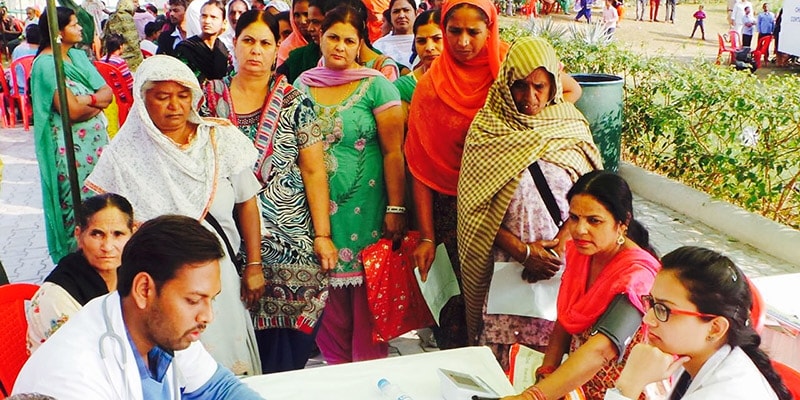
The company has also facilitated a mobile dispensary and mega medical camp tie-up with CMC Ludhiana that has, so far, benefited more than 46,000 people. About 400 people have received free eye surgeries and 2000 people have received free spectacles. With a view to promote education among youth, almost 60,000 students (at Barnala) have been provided with notebooks. Female students with merit (at Budhni) have been also facilitated with support for continuing education.
The home textiles manufacturer’s facilities have the capability to produce 360 million pieces of terry towels, 43.2 million metres of bed linen, a million pieces of Bathrobes as well as 115,200 tonnes of yarn and 6,825 tonnes of dyed yarn per year.