India has the potential to unlock nearly US $9.4 billion (around Rs 78,500 crore) annually from textile waste by strengthening collection, sorting, and recycling systems, according to a joint report by FICCI and RECEIC. The report notes that about 85% of this value lies in reuse pathways, which remain underdeveloped.
It is estimated that India generates about 7.25 million tonnes of textile waste each year. However, a large portion remains underutilised due to fragmented collection systems, lack of standardised sorting, and limited recycling capacity.
Post-consumer textile waste systems are highly fragmented, with nearly 45% of waste not entering recovery pathways and instead being diverted to landfill or incineration.
A recommendation for a national Extended Producer Responsibility (EPR) framework has been made for textiles, investment in collection and sorting infrastructure, standardised grading and traceability systems, integration of informal sector workers and expansion of recycling capacity.
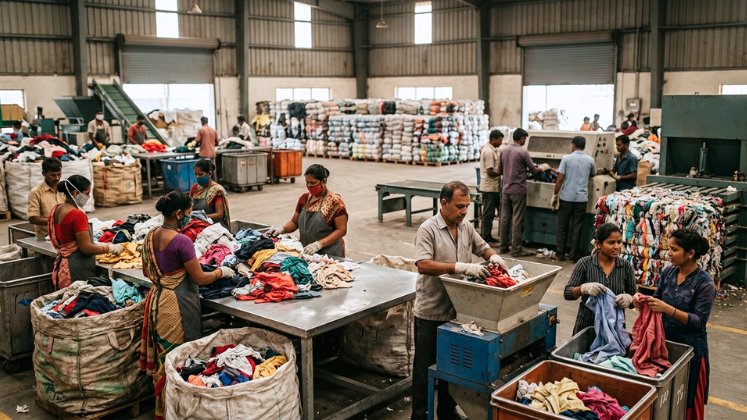
A key bottleneck identified is sorting, described as the ‘value gate’ of the textile waste ecosystem. However, over 95% of sorting in India is manual, with limited technology adoption and absence of a standardised grading framework.
Policy and infrastructure gaps have also been noted, including the absence of a dedicated Extended Producer Responsibility (EPR) framework for textiles, weak source segregation and inadequate traceability mechanisms.
On recycling, India’s ecosystem is dominated by mechanical processes, with limited chemical recycling capacity, constraining the ability to handle blended fabrics and scale circularity, it added.
While circular materials can significantly enhance supply chain resilience and reduce dependence on virgin resources, achieving this will require coordinated action across policy, industry, and infrastructure.





 Bharat Tex Special Report 2026