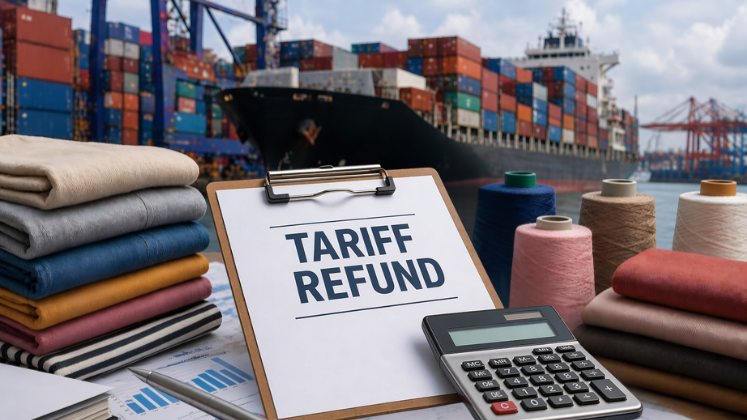
The United States government has initiated a large-scale process to refund more than US $166 billion in tariffs imposed by Donald Trump, following their invalidation by the US Supreme Court earlier this year.
In February, the court struck down a sweeping set of reciprocal tariffs, ruling that they had been imposed unlawfully under the International Emergency Economic Powers Act. The judgment marked a significant blow to a cornerstone of Trump’s economic policy and opened the door for widespread reimbursements.
On Monday, US Customs and Border Protection (CBP) confirmed that the first phase of its refund-processing platform is now operational. The system enables importers and customs brokers to begin filing claims to recover duties previously paid. Known as the Consolidated Administration and Processing of Entries (CAPE), the platform initially covers approximately US $127 billion in tariff payments eligible for electronic refunds.
CBP had estimated in March that more than 330,000 importers could qualify for reimbursements linked to over 53 million shipments. To receive payments, eligible parties must submit claims including shipment details, tariff classifications and proof of payment. Approved refunds, along with applicable interest, are expected to be processed within 60 to 90 days.
Eligibility for refunds is restricted to those who originally paid the tariffs—primarily US importers and businesses. Exporters and end consumers are not permitted to file claims directly.
According to the Global Trade Research Initiative (GTRI), Indian goods account for nearly US $12 billion of the total refund pool. Approximately 53% of India’s exports to the US—largely textiles and apparel—were subject to elevated tariffs, making them the largest contributors. Of this amount, textiles and apparel are estimated to comprise around US $4 billion.
However, the refunds will not be disbursed to Indian exporters. Ajay Srivastava, founder of GTRI, stated that payments would be made solely to US importers and that exporters had no legal entitlement to claim them. He added that Indian exporters therefore had no direct legal route to recover these funds.
Any potential benefit for exporters will depend on commercial negotiations with US buyers. GTRI noted that exporters could attempt to recover a share of the refunded duties by revisiting contracts, introducing rebate-sharing clauses, seeking price revisions or issuing credit notes. Supporting documentation such as invoices and tariff data may be used to demonstrate how costs were absorbed.
The think tank further observed that exporters with stronger bargaining power, particularly in textiles and engineering goods, may be better positioned to secure favourable terms in future transactions. Industry bodies, including the Apparel Export Promotion Council (AEPC), Engineering Export Promotion Council of India (EEPC) and Chemexcil, are expected to assist exporters with guidance on renegotiation strategies and sector-specific approaches.





 Bharat Tex Special Report 2026