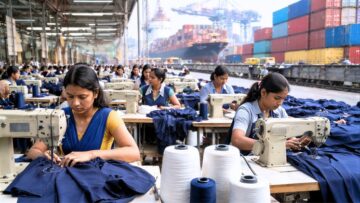
To address the crucial topic of wages at both factory and industry level, H&M group rolled out a strategy five years ago with the aim to ensure that all its suppliers pay fair living wages to the workers. The brand has now laid the foundation and processes for fair living wages from 3 to 655 factories since 2013, that employ about 930,000 garment workers.
H&M launched the Fair Living Wage strategy to uplift this cause. After being presented at the Conference on Living Wages in International Supply Chains in Berlin on 25 November 2013, the processes were launched in three factories supplying to H&M. The strategy was based on two conclusions: Workers should earn a wage that is enough to live on and H&M’s responsibility as a buyer to influence the process of fair living wages and not to impose specific wage levels.
Wages had to be set through negotiations between the parties involved in the labour market: Governments, Employers and Worker Representatives.
Factually, the achievements of the strategy spell out that: 500 factories (67 per cent of total) spread across ten countries are now successfully implementing improved wage management systems; 594 factories (73 per cent of total) are now implementing democratically elected worker representation which involves about 840,000 garment workers; 100 per cent tier 1 factories in Bangladesh achieved democratically elected worker representation in December 2017; and finally, 655 factories (84 per cent) are set to improve their wage management system, or are implementing democratically elected worker representation, or both.
“I’m so proud of the dedicated work hundreds of colleagues around the world have done these past five years. We’re doing something that nobody has ever done before. The results of our work in creating the foundation for fair living wages are exceeding our expectations, reaching close to a million garment workers. Now, the work continues – together with the rest of the industry”, says Anna Gedda, Head of Sustainability H&M group.
For the coming future, the Ethical Trading Initiative (ETI) will be conducting an independent evaluation of the proceedings and will present the results in December 2018. These experiences and learnings will further pave the way to outline the next steps that will be taken to achieve lasting and sustainable change towards fair living wages.