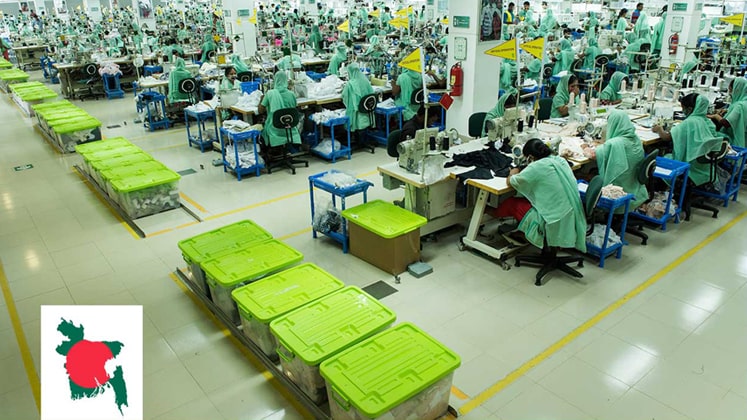
Following the Rana Plaza building collapse, Bangladesh’s apparel manufacturing sector undertook extraordinary efforts to construct green factories, improve workplace safety and protect the environment from industrial pollution. Such has been the push for green manufacturing in Bangladesh that out of the 27 green industrial establishments in the world that are ranked in the top ten, 14 are garment and textile factories from Bangladesh. Nevertheless, garment makers feel such efforts need to be incentivised as they rue buyers are not paying anything extra for products from the green factories.
“The buyers don’t pay a single cent extra for green factory products,” says KM Rezaul Hasanat, Chairman and CEO of Viyellatex Group (Viyellatex Group operates two state-of-the-art green garment factories), while Md. Fazlul Hoque, Managing Director of another green unit (the Plummy Fashions Limited) maintains that buyers are not mentally prepared to pay premium prices to suppliers of green garments.
A wake-up call as it was, the tragic Rana Plaza incident of 2013 led Bangladesh to take significant steps towards ensuring safe and secure work environment and sustainable manufacturing practices.
“After the Rana Plaza collapse, we have had to work on many issues under pressure,” says Vice President of Bangladesh Knitwear Manufacturers and Exporters Association (BKMEA), Mohammed Hatem in reference to the 2013 Savar building collapse which claimed lives of around 1,134 people besides injuring 2,500 more.
The incident which is considered the deadliest structural failure accident in modern human history and the deadliest garment-factory disaster in history led many garment makers in Bangladesh to come up with latest green units that not only offer safe and secure work environment but are at once sustainable and provide significant benefit in various aspects.
After the Rana Plaza collapse, there were huge international pressures to improve factory working conditions and therefore health and safety issues. As a result, two international bodies such as Accord (European retailers) and Alliance (North American buyers) started their activities in Bangladesh to better the working conditions, and safety of the factory workers. By the end of 2018, both of the bodies were successful in implementing their objectives and improving the working conditions, health and workplace safety of the factories of Bangladesh.
“This is like rise from the rubble. We have taken the issue of sustainability as our core area of concern in a proactive manner after the Rana Plaza disaster. It is the strongest counter narrative of Bangladesh RMG industry,” underlines the President of the Bangladesh Garment Manufacturers and Exporters Association (BGMEA), Dr. Rubana Huq, adding, “Buyers did not force us to set up eco-friendly factories. Entrepreneurs have done the work of their own accord. As a result, it is, at least, a source of pride for us.”
Also Read: The diverse facets of labour issues in Bangladesh garment sector
As per entrepreneurs even if eco-friendly installations cost 5-20 per cent more than the normal, long-term benefits cannot be overruled. Eco-friendly installations can reduce electricity consumption by 24-50 per cent, carbon emissions by 33-39 per cent and water by 40 per cent as there is an obligation to use sunlight, energy saving lamps and solar power to reduce electricity consumption while in order to reduce the use of groundwater, rainwater has to be conserved as well as recycled by processing water-efficient taps and used water.
Garment manufacturers are mainly motivated towards green garment units for environmental reasons, safe working place, less energy consumption and factory reputation although there are many challenges including huge infrastructure cost, high maintenance cost, etc.
Today, sustainability is increasingly becoming a buzzword in global fashion, with high-end brands using recycled fabrics in their latest designs and even consumers and brands are starting to see sustainability as a necessity, which makes all the more sense to embrace sustainable manufacturing practices.
Also Read: Embracing sustainability: Looking closely at the thrift clothing marketspace in India
So, while incidents like Rana Plaza painted Bangladeshi RMG industry as unsustainable and unsafe, it has actually been leading the green revolution. What followed subsequently was a green wave, which made Bangladesh the trendsetter in the realm of green garment manufacturing.
Even though, the first one among such top-rated factories is situated in Indonesia, Bangladesh is not lagging behind. A very recent report by USGBC (LEED) stated that out of top 27 environment-friendly establishments, 14 belong to Bangladeshi garments and textile factories. Having such recognition from the USGBC (LEED) is highly laudable for the garments and textile sector of Bangladesh.
As per a data compiled by the Bangladesh Garment Manufacturers and Exporters Association (BGMEA), Indonesia has the highest-ranked garment factory in USGBC LEED Platinum category with 101 points out of 110. Among the local units, Remi Holdings Limited has achieved 97 points, Tarasima Apparels Limited 93, Plummy Fashions Limited 92, Mithela Textile Industries Limited 91, and Vintage Demin Studio Limited, AR Jeans Producer Limited and Karooni Knit Composite Limited got 90 points each.
Designer Fashion Limited attained 89 points, Green Textile Limited Unit-3 and Kenpark-2 achieved 88, while Columbia Washing Plant Limited, Toshrifa Industries Limited (fabric division) and Cute Dress Industry Limited ranked ninth with 87 each.
The tenth Platinum rated factory is Echotex Limited with 86 points.
Besides Bangladesh, Sri Lanka has the fourth-rated factory in Platinum category. Ireland, Mexico and India have sixth-rated, Pakistan seventh, Taiwan, the United Arab Emirates and India ninth, and Italy, Poland, Taiwan and India have tenth-ranked factories, the BGMEA data showed.
The Leadership in Energy and Environmental Design (LEED) certification from the US Green Building Council (USBC) is a point-based system, where a rating level is achieved once a project meets all the pre-requisites and earns minimum points. Depending on the number of points earned, a project may be labelled as LEED-certified, LEED Silver, LEED Gold, or LEED Platinum.
In Bangladesh, a total of 144 garment factories have already received the USBC LEED certification. Of these units, 41 belong to Platinum category, 87 to Gold, 14 to Silver, and the rest two are certified. Besides, more than 500 local factories are also registered with the certification body.
“We are far ahead of any other competing country in setting up eco-friendly garment and textile factories,” underlined the BKMEA Vice President, adding, “It is unfortunate that we have lapses in branding. It is very good if we can work collectively in the field of branding.”
Green industry initiative is a major driver towards sustainable industrial development around the world and Bangladesh’s economy has been targeting a middle-income status by 2021, and for such development to occur, a sustainable development is required, for which green industry is one of the major drivers.
However, even if Bangladesh is the global leader in terms of green garment factories but such green units bring little cheer to the owners as buyers are not ready to pay premium prices for the eco-friendly initiative, industry people rue.
“The buyers do not pay even a single penny extra for our green initiative. Sometimes we have to negotiate with them for premium prices but not as a green garment factory. It is ironic that we do not get premium prices from our buyers despite making our factory buildings environmental compliant with global standards,” emphasises Md Fazlul Hoque.
Meanwhile, interacting with the media, the BGMEA President also lamented the same.
About 99.9 per cent of all buyers do not pay a premium or extra price for products made by green producers, Rubana Huq said adding there is no mechanism in purchasing that require buyers to pay premiums for a company’s sustainability practices.
She also said since most corporate entities pledge to maintain compliance with various global platforms, such as the Water Stewardship Council, Environmental Stewardship Council and Race to Zero, the industry needs to have some mechanism in the purchasing system that provides incentives for factories that go beyond mere compliance.
Given the current trend of green manufacturing practices in Bangladesh, a little incentive from the buyers can go miles towards giving a further fillip to the green practices in the country, which is going to benefit all the stakeholders in the long for sure.
Also Read: Report underlines state of women workers in Bangladesh garment sector