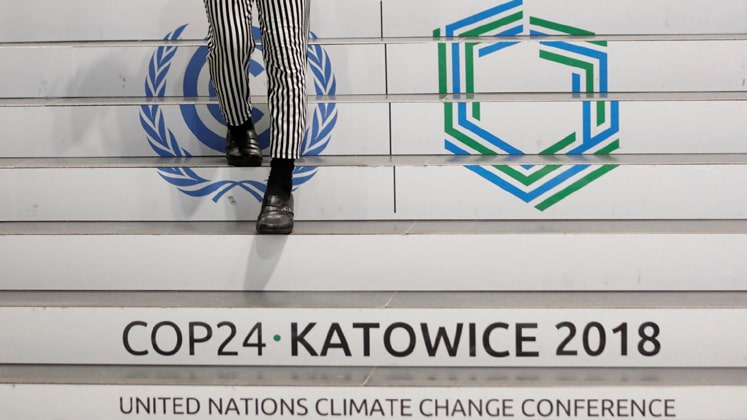
Under the auspices of UN Climate Change, fashion companies have been working to identify ways in which the broader clothing, textile and fashion industry can map comprehensive plans for their commitment towards climate action. In 2018, the Fashion Industry Charter for Climate Action came into being and contained the ambitious vision of achieving net-zero emissions by 2050. It was launched at COP24 in Katowice, Poland, in December that year.
The Fashion Industry Charter for Climate Action goes beyond previous industry-wide commitments. It lays out a target of reducing greenhouse gas (GHG) emissions by 30 per cent by the year 2030 and setting realistic commitments for decarbonisation for the fashion stakeholders, drawing on methodologies from the Science Based Targets initiative. This target – which is one of many goals enshrined in the Charter – is a clear demonstration that the fashion industry is serious about urgently acting on climate change and is keen to set an example to other sectors around the level of commitment required to meet the scale of the climate challenge.
The Fashion Industry Charter brings together many Signatories and Supporting Organisations to work together to identify and address gaps, strengthen existing efforts and share tools and resources in the form of Working Groups. The idea behind Working Groups is to band together relevant stakeholders, experts and initiatives in this field to achieve said targets faster and to amplify the best practices.
The areas specified in the Charter that can be worked on in Working Groups include raw material, manufacturing/energy, policy engagement, logistics, leveraging existing tools and initiatives, promoting broader climate action, decarbonisation pathway and reduction of GHG emissions and brand/retail owned or operated emissions.
Are fashion stakeholders doing enough?
Standearth, an international environmental organisation that has played a pivotal role in pushing brands such as Levi’s to become conscious of their impact and join the Fashion Industry Charter, put forth a report last year bearing grim news. According to the organisation, only two brands – Levi Strauss and American Eagle – have commitments that will help them achieve the Paris Agreement’s goal to limit temperature increases to 1.5 degrees Celsius. While it’s been one of the hottest trends to jump on the bandwagon of becoming signatories to the charter or pledge carbon-neutrality, Standearth says no one holds fashion brands accountable.
Many brands have made public claims or expressed in conversations with Standearth their plans towards the achievement of said goals, but have ultimately slacked off. Signatories to the UN Fashion Charter, which includes some of the stellar names of the fashion world, promised to reduce their carbon footprint by 30 per cent within the next 6 years. But sadly, it “doesn’t reach the 40 per cent reduction needed to align with the UN Paris Climate Agreement,” the report says, adding that over 70 members of the Sustainable Apparel Coalition, a group of companies that claim to care about the environmental impacts of their products, haven’t set any meaningful climate goals.
While a lot of attention is being paid to reducing the use of energy at factories and mills, as well as converting to the use of cleaner sources of energy, the Standearth report highlights another area that needs to change in a major way: the materials that clothes are actually made of.
What’s important to note is that the majority of companies that are responsible for fast fashion or environmentally unhealthy products did sign on. There are more than 90 participating brands and 28 supporting organisations including Chanel, the Fossil Group, Decathlon, Fast Retailing, Nike, adidas, Aldo Group, Farfetch, Gap Inc., H&M, Hugo Boss, Puma, Inditex, Kmart Group, TheRealReal, and G-Star to name a few. But are they doing enough to decrease their environmental impact? That is the question they need to ask themselves.

At the end of 2019, these fashion companies launched a public communiqué during the UN Climate Conference COP25 in Madrid, calling energy ministers in nations that heavily manufacture fashion to promote usage of renewable resources and remove subsidies on fossil fuels.
Waking up to the challenge
While there may have been many setbacks, whether it is the pandemic that has opened their eyes to the value of sustainability or being constantly flagged for not doing enough, global brands are ramping up their efforts to do more for the environment.
H&M Group recently provided an update on its endeavour to become more sustainable, revealing that it has almost reached the goal of using 100 per cent recycled and/or sustainably sourced cotton. The Sustainability Performance Report 2019 outlines that the Swedish brand will no longer source conventional cotton for any of its collections this year onwards. If we talk on the whole, 57 per cent of its materials are now sustainably sourced, and it expects to reach 100 per cent transparency and ethical sourcing by the year 2030.
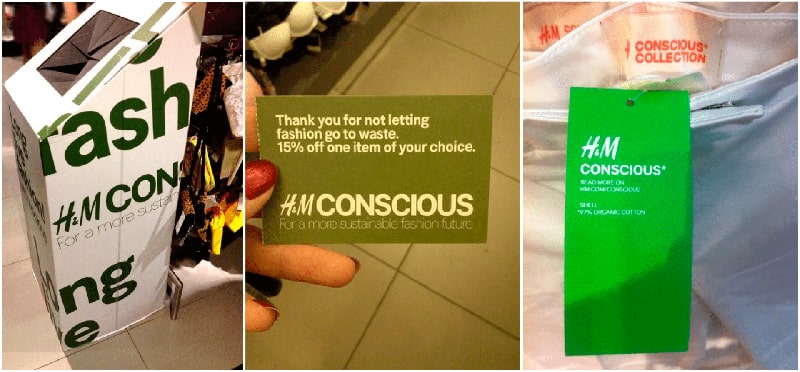
Earlier in March, the Group announced a new B2B initiative named Treadler offering external firms access to its global supply chain to help other companies in their endeavour to achieve sustainable social and environmental change. In February, they also announced shifting to Circulose in its Conscious Collection, a newly patented material by H&M, made from discarded textiles. In the past year, the company has also launched, invested or become a part of several circular initiatives involving rental, resale and repair.
Even adidas announced its collaboration with sustainable shoe brand Allbirds create a sports performance shoe with the “lowest carbon footprint ever recorded.” As part of its ‘End Plastic Waste’ initiative, adidas pledged to reduce its greenhouse gas emissions by 30 per cent by 2030 and to achieve carbon neutrality by 2050, which coincides with the goals of the Paris Agreement.

Another news that is partially hopeful comes from non-profit Fashion Revolution’s fifth edition of the Fashion Transparency Index. It looks at 250 of the world’s biggest fashion brands and retailers, and ranks them according to how much they disclose about their social and environmental policies, practices and impacts. This year, H&M, C&A and adidas/Reebok made it to the top three slots scoring 73, 70 and 69 per cent respectively, out of 250 possible points, followed by Esprit with 64 per cent and Marks & Spencer and Patagonia at 60 per cent each. Although this is a step up for a brand like H&M that held the fourth spot last year, it leaves much to be desired.
The move for sustainability is not one to be borne only by the physical retailers. Online fashion retailer Zalando, the Sustainable Apparel Coalition and technology company Higg Co have announced their new collaboration, a new global sustainability standard for fashion brands and retailers, meant to accelerate sustainability industry wide. With the updated version of the Higg Brand & Retail Module (Higg BRM), Zalando will make sustainability assessment mandatory for brands selling on its platform. The version has been developed with the help of SAC, and although Zalando is the first e-tailer to adopt it, it opens new doors for sustainability in the online sphere.
As part of this push toward industry-wide change, Zalando will gather comparable sustainability data from its partner brands to understand where the challenges of the industry are both individually and collectively, while Higg BRM data will help the e-tailer identify trends and explore how to develop solutions to drive meaningful and lasting improvement in collaboration with its partner brands.
Although brands seem to be owning up to their share of responsibility when it comes to sustainability, we have a long way to go before we make fashion not wasteful and reform every arm of the supply chain and retailing to fully acknowledge its impact and change for good.
Also Read: The feasibility of the conscious shift to sustainability