Impact of COVID-19 on the Indian economy
In addition to the alarming health impact COVID-19 poses, the virus has posed the most significant economic challenge to the global economy since the great depression of 1930s, impacting our national economy in unmatched ways. Estimates place the number of people who have lost jobs at 90 million and many continue to fear getting laid off. While the central government has announced relief packages to minimise the impact of the virus on the economy and business, a decline in the GDP is very likely resulting in prolonged economic troubles across sectors.
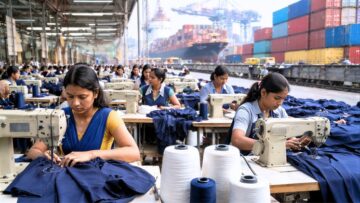
Further, India’s economy is largely informal. ILO estimates that over 85 per cent of all employment in India is in the informal sector. Workers in the informal economy (including large numbers of migrant labour) are a key driver of our economy and our businesses. Global and domestic business entities – large and small – employ regular and casual workers in a range of industries, including garment and textiles, agriculture, automotive, electrical, and other major sectors. Apart from such workers, these industries employ millions of casual daily wage and piece-rate workers, sub-contracted workers through labour agents and smaller formal and informal enterprises, including large numbers of migrant workers and home-based workers. Most of these workers are in the informal economy and do not have any social protection. It is these workers that have been hardest hit by the economic slowdown. Lockdown of business operations has forced many to return to their villages due to the absence of income, resulting in increased vulnerability, exploitation, and poverty. Even after restrictions are lifted, both demand and supply of labour are likely to be drastically impacted in both formal and informal sectors.
Hence, the economic impact of COVID-19 would be protracted necessitating immediate and systematic efforts to offset excessive damage, especially for the poor and vulnerable sections of our society.
Responding to the economic crisis – Central and State Government initiatives
The central and the state government of India announced several packages to rev up the economy including legislative amendments. Several states of India (13 by now and more expected to follow) have announced relaxations in labour laws of varying degrees to drive economic growth, particularly in the manufacturing sector. While specific details of relaxation in labour laws differ among the different states, major changes proposed include; (i) increased working hours (from 8 to 10-12 hours), (ii) temporary exemption from certain necessary provisions for worker safety including toilets, drinking water, adequate lighting and first aid equipment for workers, (iii) no inspection of firms employing less than 50 workers and in the small and medium enterprises, (iv) amended Industrial Disputes Act to increase the threshold for lay-offs, (v) increasing worker precarity by dilution of the Contract Labour Act (vi) limiting the submission of annual returns to once a year as opposed to multiple returns under various labour laws. Some of the states have promulgated ordinances (as yet not signed by the President) to effect these changes, whereas other states have notified modification of labour laws through state specific rules. Further, there is a proposal for a migration commission (in UP and some other states) to regulate migrant worker employment.
Impact of modifications on labour laws
We, the members of the Working Group on Women in Value Chains (WiVC), strongly believe that relaxation of labour laws has far-reaching adverse implications on the rights and well-being of workers, including women and children; and would contribute to further informalisation of the workforce. It needs to be noted that these changes have been made without social dialogue and consultation process (especially with those who are directly impacted by the change in the rules) and the due legislative oversight being applied. These are also in contravention to international labour standards of the ILO to which the Government of India is a signatory. Though the labour laws mainly apply to the organized sector, the impact of these relaxations goes beyond. They reduce the worker’s ability to demand dignified and safe working conditions. Some of the proposed actions are a violation of various international legal instruments ratified by India including ILO’s core and other conventions. ILO has released a statement on 13 May, which says such amendments should emanate from tripartite consultation involving the government, the workers’ and the employers’ organisations and be compliant with the international labour standards, including the Fundamental Principles and Rights at Work (FPRW).
We believe these changes (relaxations) could have the following implications:
– Extended working hours would disproportionately impact women workers, lead to increased stress, domestic violence and can further reduce the female labour force participation rate as the economy re-opens.
– Even where the women are able to work, it will also have a significant detrimental impact on childcare. Reduced time with the parents for childcare could lead to elder siblings (particularly girls) taking responsibility of providing child-care, resulting in school dropouts against the ‘Beti Bachao Beti Padhao’ initiative of the Government.
– Due to the pandemic, women are already facing increase in care and household work and increase in domestic violence. Such measures would increase their vulnerabilities.
– Relaxation of laws could compromise working conditions and focus on safety measures at workplaces, long hours inducing stress and fatigue leading to accident hazards. It can have long term occupational health and safety risks
– Reduction in welfare benefits provided by employers (such as day care facilities, crèches, access to daily ration etc.) can lead to increased vulnerability especially for women and children.
– Doing away with inspections by Labour Commissioners can create a regulatory black hole where unethical employers can get away with hiring labour below the minimum wage or hiring child labour. Whilst the payment of wages act, the child labour regulations or bonded labour act remain in force, the relaxation on inspections would negatively impact the implementation of these laws
– Puts workers at greater risk of exploitation, intimidation and even of forced labour. These measures shift the burden of COVID-19 generated economic crises on the most precarious workers, especially women workers.
We fear that the reputation that our country has built over decades of an economy with strong and stable labour laws which promote workers’ welfare will be irreparably damaged. A number of these provisions are against the spirit of the Sustainable Development Goals (SDGs), National Guidelines on Responsible Business Conduct (NGRBC) and the draft National Action Plan on Business and Human Rights (NAP) that we are looking to adopt. This is likely to have negative impacts on India’s competitiveness as the gap between buyer driven labour standards/regulations (as demanded by MNCs/international businesses) and our public regulations expands. It risks drawing Indian suppliers into a regime that would make them uncompetitive in the international market, since buyers are likely to avoid manufacturing clusters vulnerable to violations of internationally recognised labour rights. As international businesses will be concerned about supply chain risks, so too will international financial actors be concerned about ESG (Environmental, Social and Governance) standards. There is evidence that companies with robust ESG standards have better performed in the market during the pandemic. Increasingly, financiers are taking cognizance of sustainable practices and ESG-respecting funds and capital may favour markets where international labour laws are consistently upheld.
Suggested response plan
We recognise the need to facilitate industrial development and manufacturing base in India; and the need for reforms in labour laws. But we feel that due social dialogue and consultation with relevant stakeholders needs to be undertaken prior to execution. We as members of working group on WiVC suggest the following actions for different stakeholders:
– The central government should ensure that the proposed amendments are not passed in their present form, and Government (central or state) should respect the requirement of triparty consultation before proposing any amendments in future
– Civil society groups should engage with brands, buyers, manufacturing units/suppliers and government duty-bearers to ensure the health and safety of workers
– Major brands and suppliers should adhere to internationally recognized labour standards and promote the safety and security of workers engaged in various tiers of the supply chain (including informal/ home based workers)
– Access to social security schemes and other entitlements should be promoted for vulnerable workers and their families
– Advocate with responsible government duty-bearers and together with trade unions and workers’ associations where violations are identified, including violations in payment of wages and exploitative or unsafe working conditions. There should be collective action to reduce worker abuse and exploitation, while permitting and facilitating safe migration for workers seeking jobs in other states.
– Advocate with the Reserve Bank of India and with financial institutions to integrate robust Economic, Social and governance (ESG) factors into their financing decisions as this will not only encourage more sustainable practices by companies but also improve the quality of the financing portfolio.
About the Working Group on Women in Value Chains (WiVC)
The working group on WiVC group is an informal and voluntary multi-stakeholder group contributing to women’s empowerment in value chains. This group has committed members who are individually working with businesses, women workers and labour organisations. WIVC works on gender equality and economic empowerment of women in value chains (especially focusing on the less formal / unorganized workers and sectors including home based workers and factory workers in SMEs). It has 15+ member organisations consisting of Civil Society Organisations (CSOs), social development agencies, research organisations, Multi Stakeholder Initiatives (MSIs) & value chain experts.
A list of member organisations of the Working Group on Women in Value Chains is provided below:
SEWA Bharat, GPN Studies, Traidcraft India, HomeNet South Asia, Fair Wear Foundation, CARE India, International Development Research Centre, Center for Responsible Business, Fair Labor Association, Society for Labour and Development, Center for Education and Communication, Save The Children India, Oxfam India, Change Alliance, World Benchmarking Alliance, Thomson Reuters Foundation& Open Space