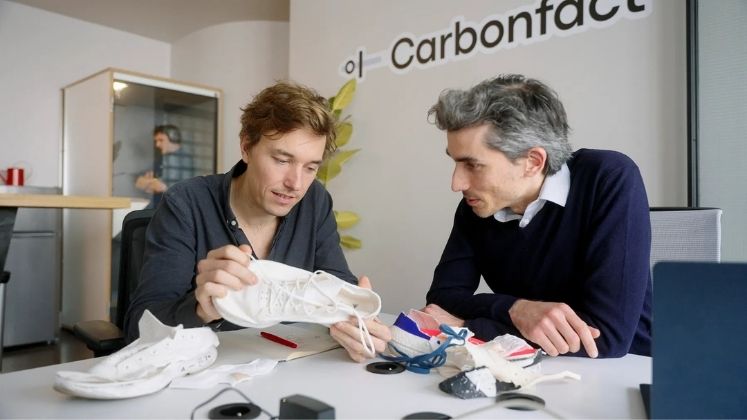
Carbonfact, a carbon management software platform for the apparel and footwear industry, has secured US $ 15 million in round Funding intended to assist fashion brands in automating their environmental reporting.
The data collecting and reporting procedure related to the carbon footprint of fashion brands’ retailers and suppliers is automated by Carbonfact’s platform.
Carbonfact acknowledges that in order to comply with the new reporting requirements, data must be manually verified and consolidated across the supply chain and business, which is error-prone and unscalable. This announcement comes just after the EU passed the Corporate Sustainability Due Diligence Directive (CSDDD) and ahead of the introduction of the New York Fashion Act, the SEC Climate Disclosure Rule, and the EU’s Corporate Sustainability Reporting Directive (CSRD).
The difficulty faced by the sector in obtaining precise and original data from several supply chain layers is also covered by Carbonfact.
Y Combinator-backed Carbonfact has onboarded over 150 garment and footwear manufacturers in the 18 months since its seed investment, including Columbia, New Balance, Carhartt, and Adore Me, which announced its relationship with Carbonfact last year. In the first quarter of this year, the company experienced a sharp spike in demand, indicating the growing regulatory pressure on the textile industry to monitor and report emissions.
Alven, an established investor, is leading the Series A. In addition to being a new investor, Headline joins the board. Y Combinator, an existing investor, took part as well.
Over the next twelve months, Carbonfact’s top priority will be to support textile manufacturers and retailers in measuring and developing strategies to lower their emissions in compliance with impending legislation, as well as to grow its worldwide onboarding teams.
Fashion firms can now use a new set of modelling tools from Carbonfact to see how supplier choices and product design might impact carbon footprints before things are manufactured. This frees them up to concentrate on cutting emissions rather than making up for them.