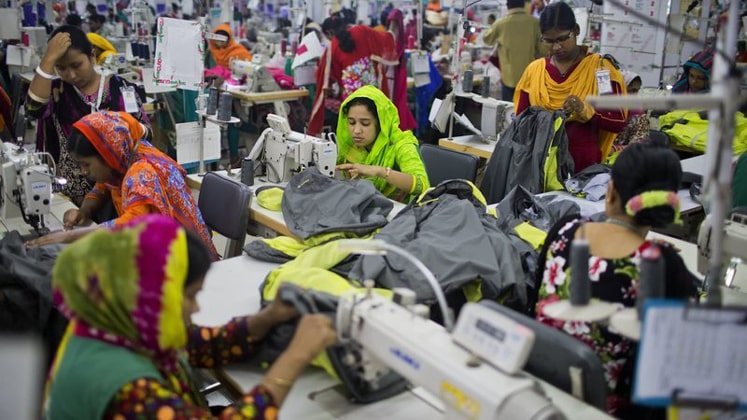
Titled, ‘Bangladesh clothing factory safety deal in danger, warn unions’, the report published by The Guardian recently has evoked reactions from the apex garment makers’ body in Bangladesh with the Bangladesh Garments Manufacturers and Exporters Association (BGMEA) expressing its disappointment over the report.
Media reports maintained this while adding that the newly elected BGMEA President Faruque Hassan has written a letter to The Guardian in this direction in which he, reportedly, stated that BGMEA was ‘extremely disappointed’ to see that global trade unions and their affiliated parties have been spreading misinformation and maligning the role of the trade body (BGMEA) in the tripartite organisation of RMG Sustainability Council (RSC) even as it went on to highlight, “The RSC, which was set up to carry forward the achievements made by the Accord on workplace safety in Bangladesh, is governed by an equal number of representatives from brands, manufacturers and trade unions,” and going on to underline that all policies and procedures developed by the Accord have been carried over to the RSC, and the RSC is a consensus-based decision-making body without any majority voting.
The letter also maintained that there has not been a single proven case of any manipulation by the BGMEA of the RSC process and stated that the RSC is fully committed to a high level of transparency to allow all relevant stakeholders to monitor remediation at a factory-by-factory level.
The garment makers’ body further added that the RSC resumed inspections in September last year and has managed to accomplish 1,821 inspections in 904 factories even as it has conducted ICU Deep Dive in 202 factories, said the BGMEA adding that during the pandemic, with hard work and without all resources of the Accord, the RSC has performed 75 factories’ certification independently, whereas in seven years the Accord issued recognition letter to 280 factories.




 Bharat Tex Special Report 2026